ANTS
The most common pest that service technicians face are ants. Ants are true insects with a complete metamorphosis. Similar to termites and bees, ants are social insects with colonies made up of queens, infertile female workers, soldiers and drones. Workers can be tunnel builders, foragers, or nursery maids, depending on the colonies needs. Male ants or drones have one purpose in the colony and that is to impregnate the queen. The male dies shortly after mating.
- In the following descriptions regarding size, some ant species are listed with variable lengths, such as 1/16 to 1/5 inch.
- Polymorphic means colony members vary on size depending upon their job.
- Monomorphic means workers are all the same size.
- In all species, the Queen is the largest member
- Some species have multiple Queens which enable them to produce larger colonies.
- Others have a single Queen, with smaller colonies and a shorter colony life span
One of the first steps in identifying an ant species is to determine whether they are a single node or 2 node ant. To do this, locate the petiole, which is the waist area connecting the thorax to the abdomen. On top of the petiole there will be either 1 or 2 nodes or bumps. The descriptions in most literature devoted to identifying ant species will be split between 1 and 2 node ants. The nodes, length, body coloration, and nesting sites are all important ingredients in the identification process. Locating the nest is essential in gaining control of ants. By identifying the type of ant, its harborage sites, a workable plan of attack can be launched against these formidable adversaries.

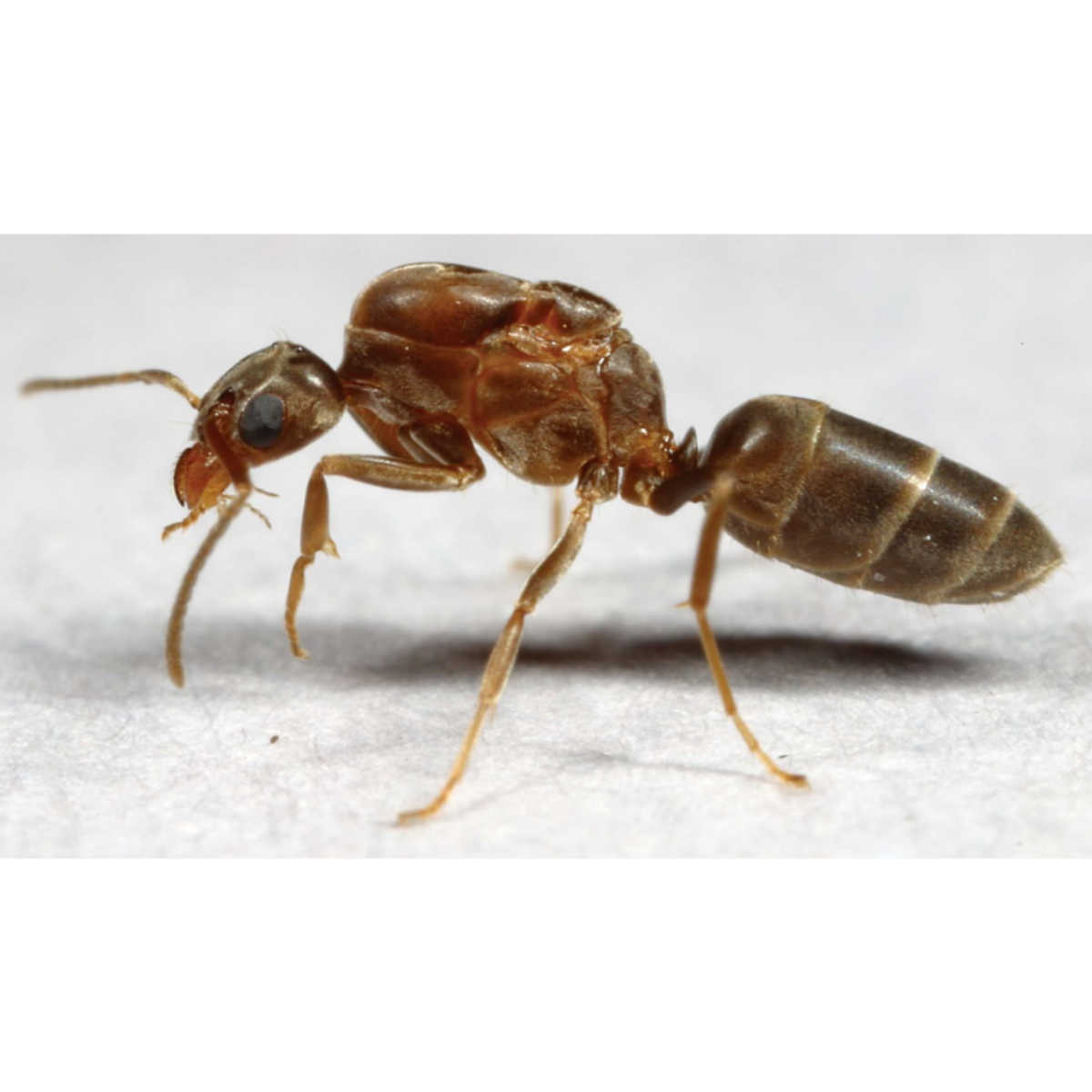
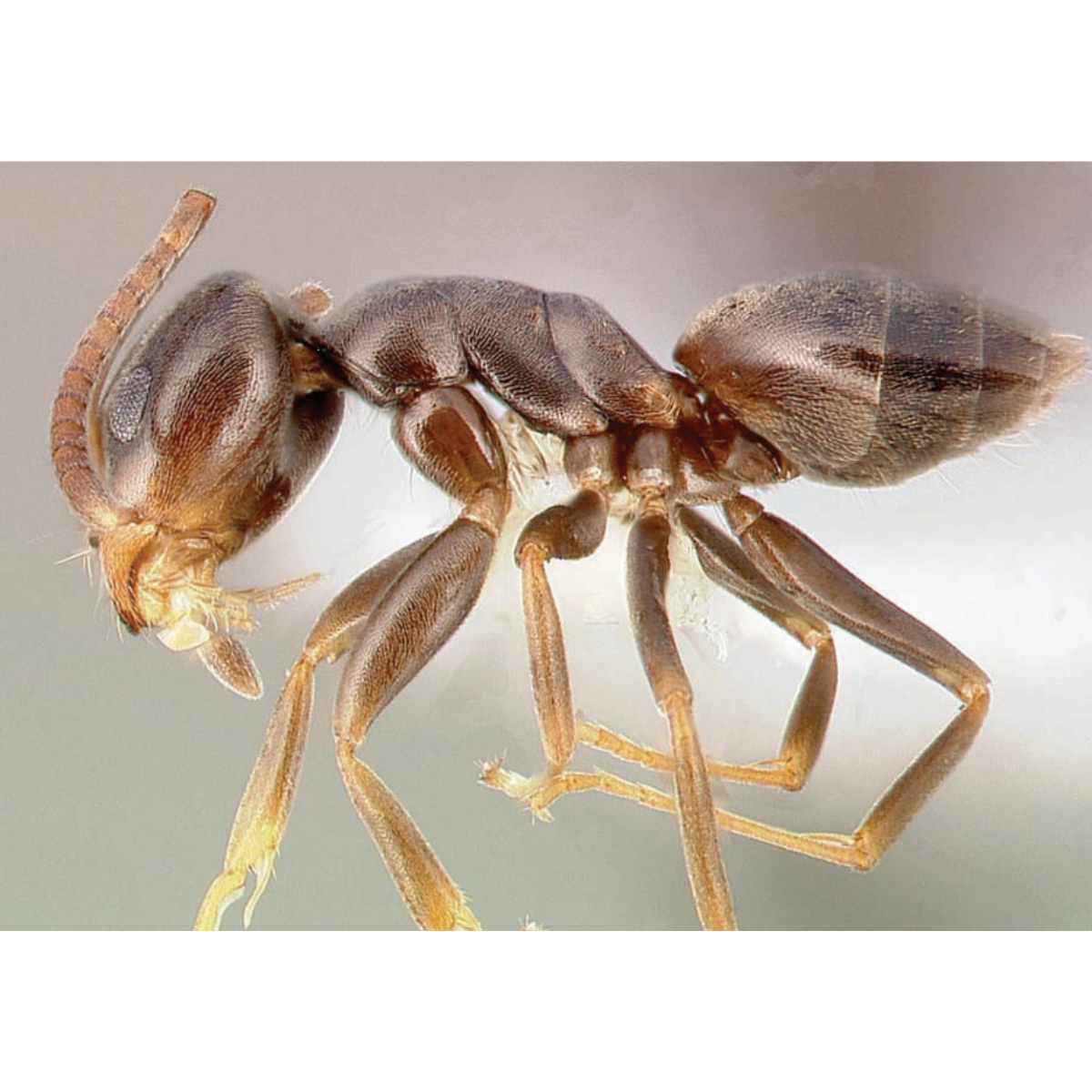
ARGENTINE ANT
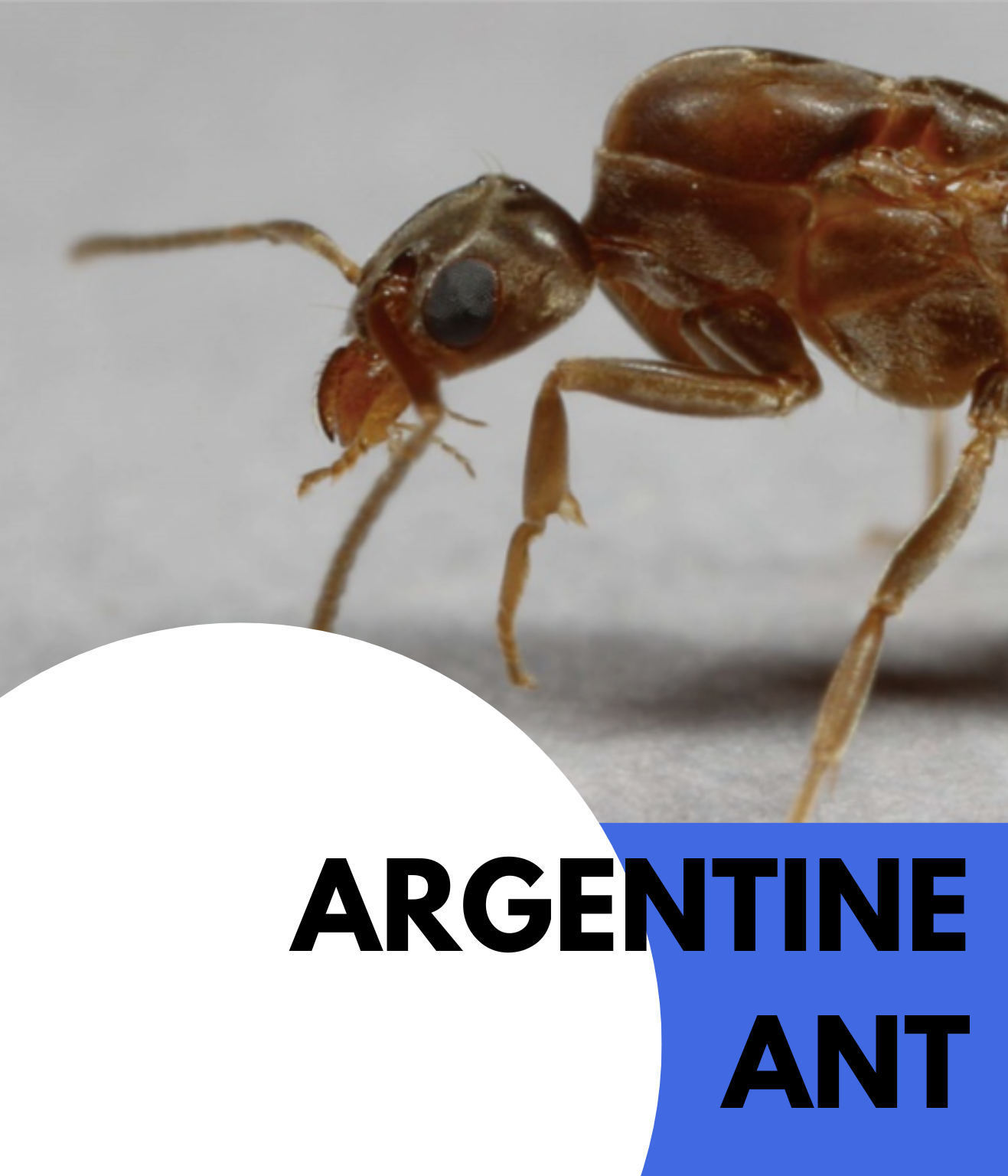
- 1/8 inch long
- Monomorphic
- Dull brown in color
- Single node
- Feed on sweets and proteins
- Nest outdoors, in soil, under stones, around root systems
- Does not bite or stings
- Have multiple queens, and can have colonies numbering in the millions
- When introduced into new areas, they drive out native species because of their ability to increase colony population rapidly
- Tends or farms Aphids and scale for their honeydew
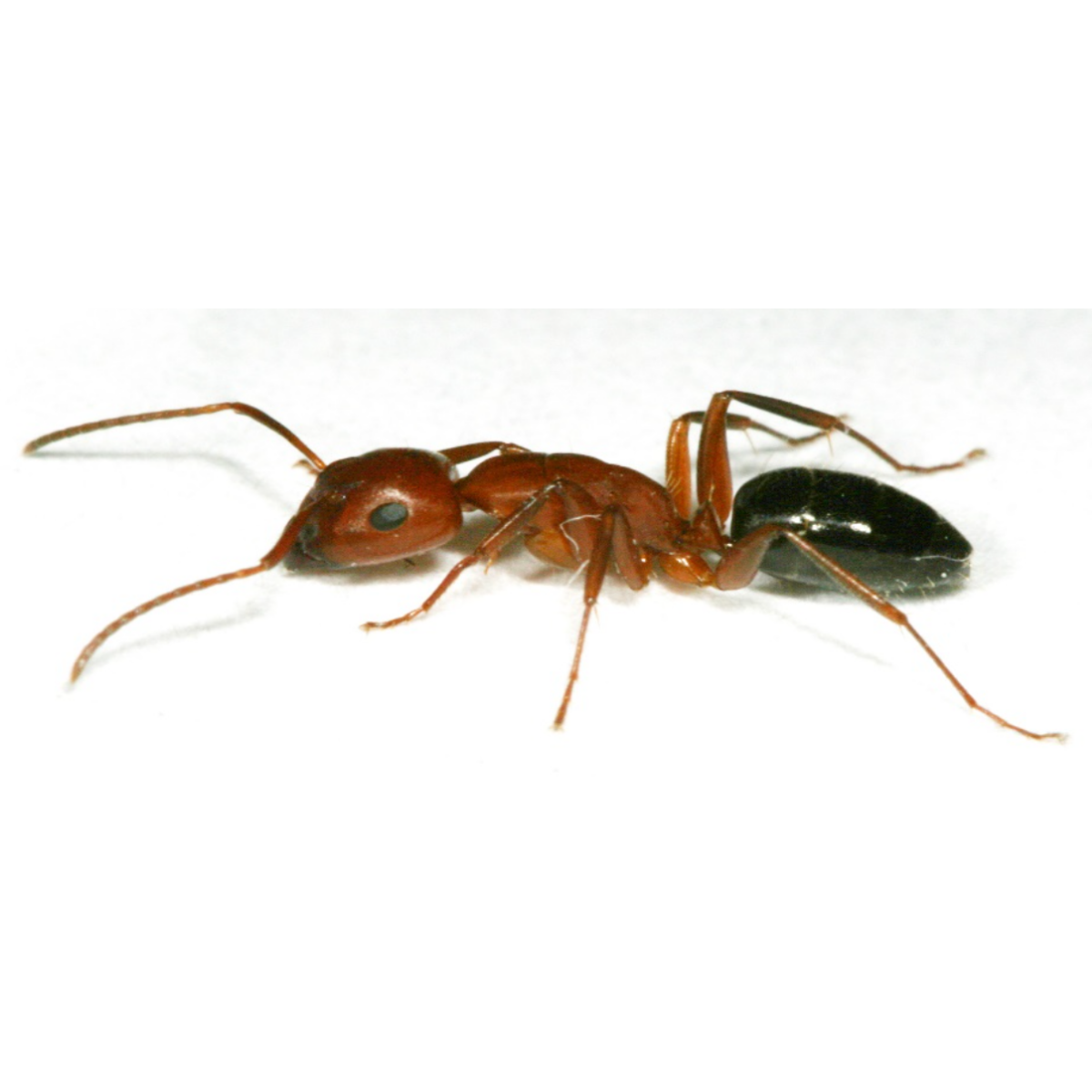
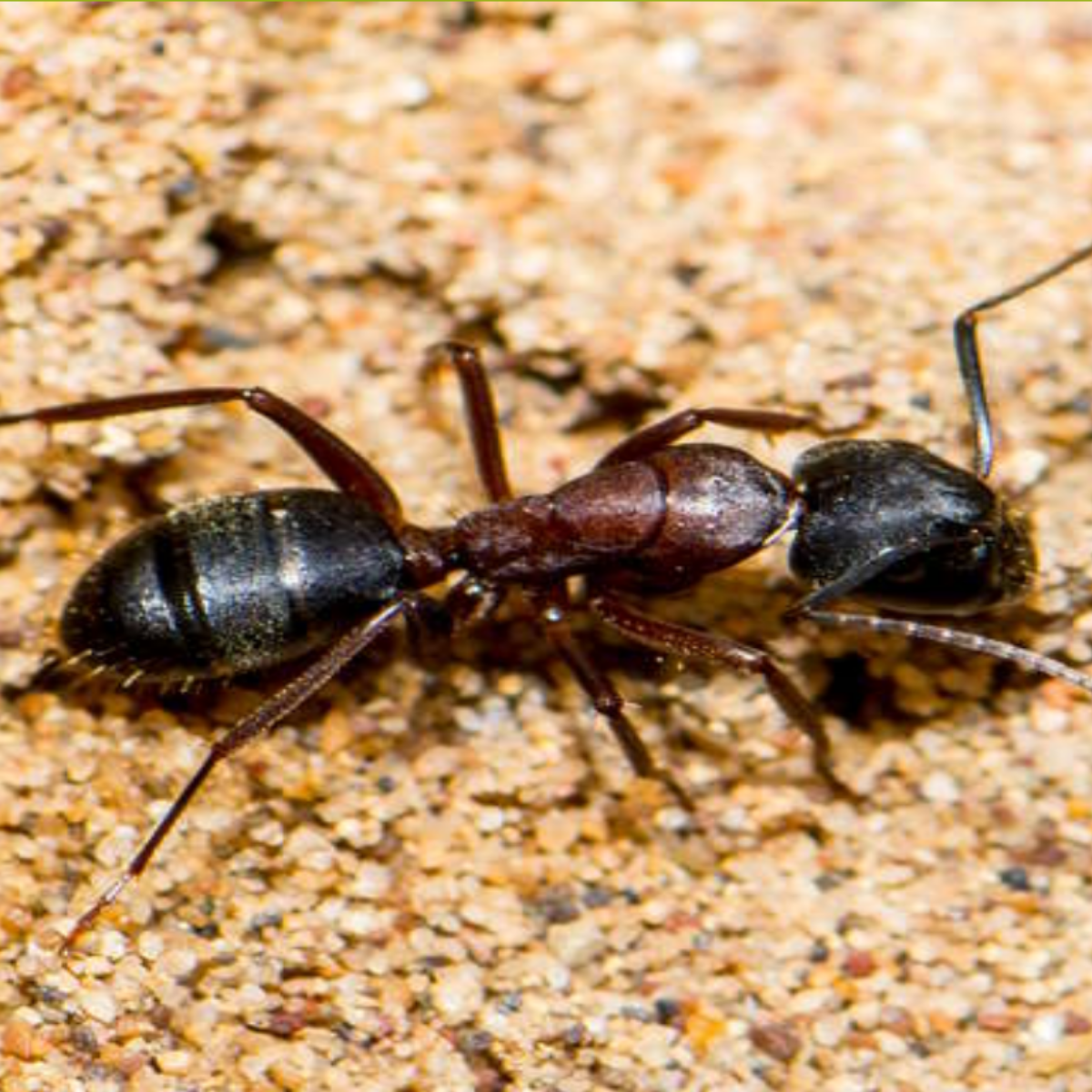
CARPENTER ANT
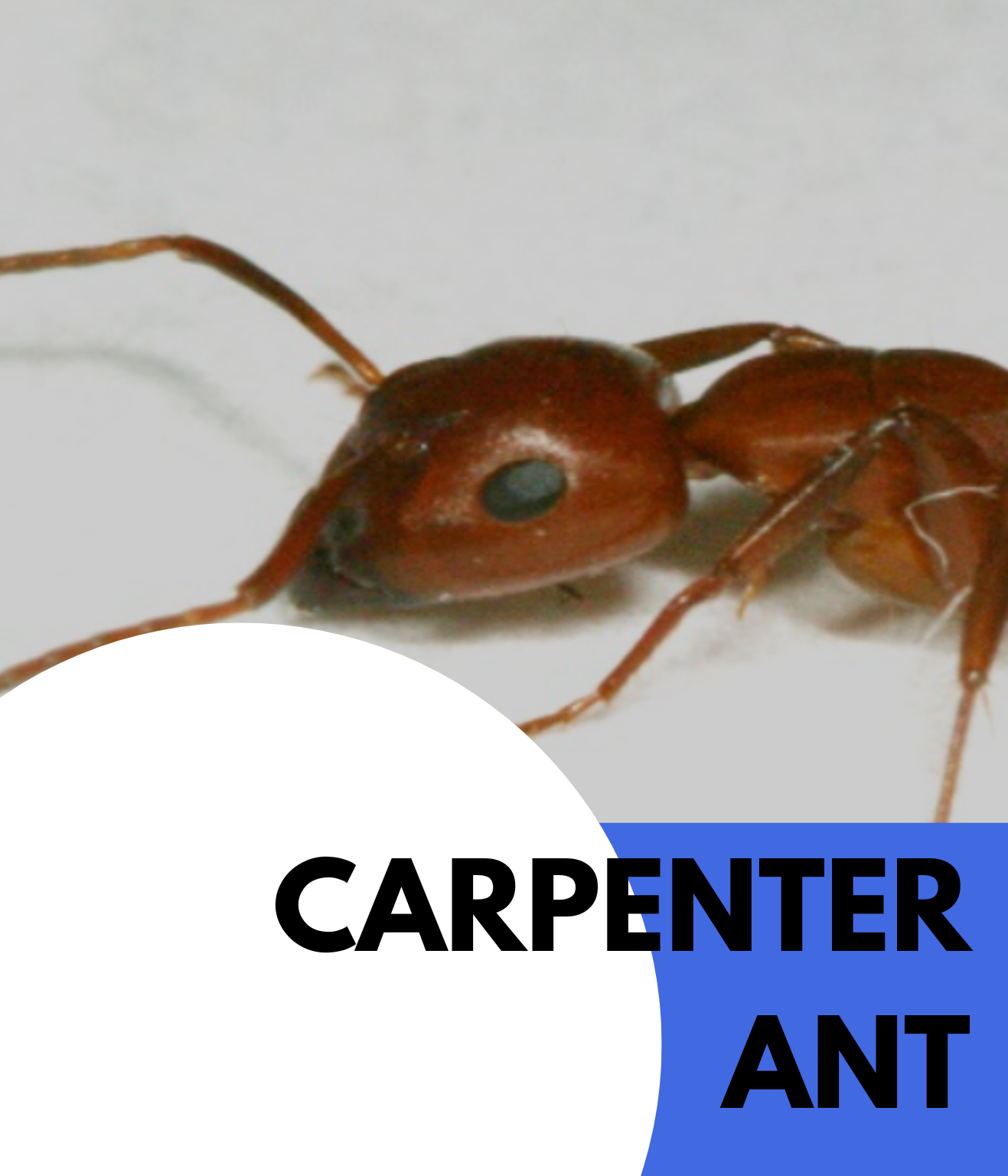
- ¼ to ½ of an inch long
- Polymorphic
- Most are all black, a few species are red or bicolor, red & black
- Single node
- Feed on sweets, and dead insects
- Nest in both indoor and outdoor, tree stumps, firewood, hollow
doors, window frames or other voids in structures. - Can bite
- Has single or multiple queen colonies
- Unable to digest wood but will bore into it to provide a nesting site, leaves sawdust like evidence below or near Harborage
- Distinctive circle of hairs around abdomen
ODOROUS HOUSE ANT
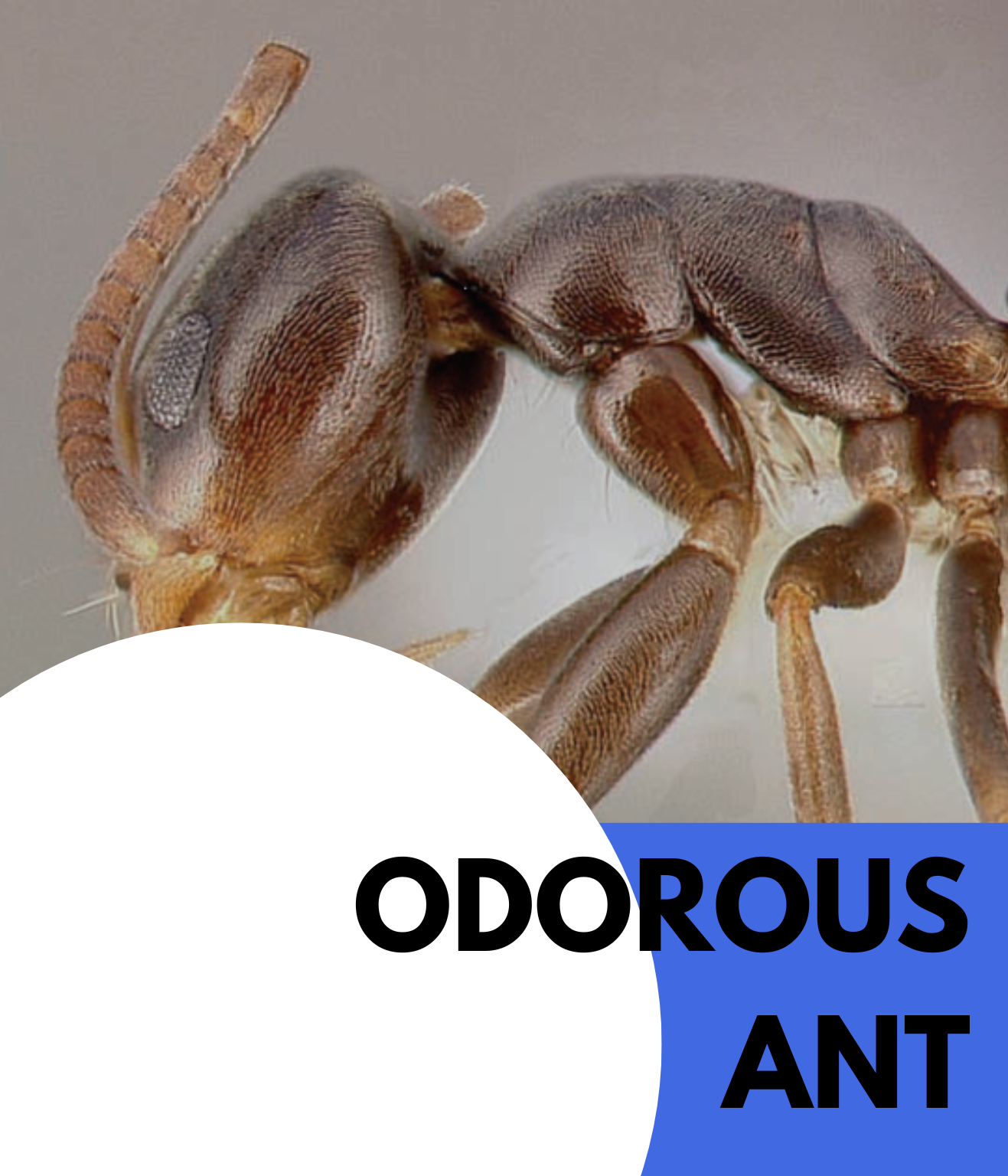
- 1/8 of an inch long
- Monomorphic
- Dark brown to shiny black
- Single node, hidden under abdomen
- Feed on sweets and insects
- Nest outdoor in soil and debris; if they do enter homes found mostly in inside wall voids and near space or hot water heaters.
- Neither bites or stings
- Have multiple queens with large colonies up to 10,000 workers
- Tends Aphids and Scale for their honeydew
- Very strong odor when crushed
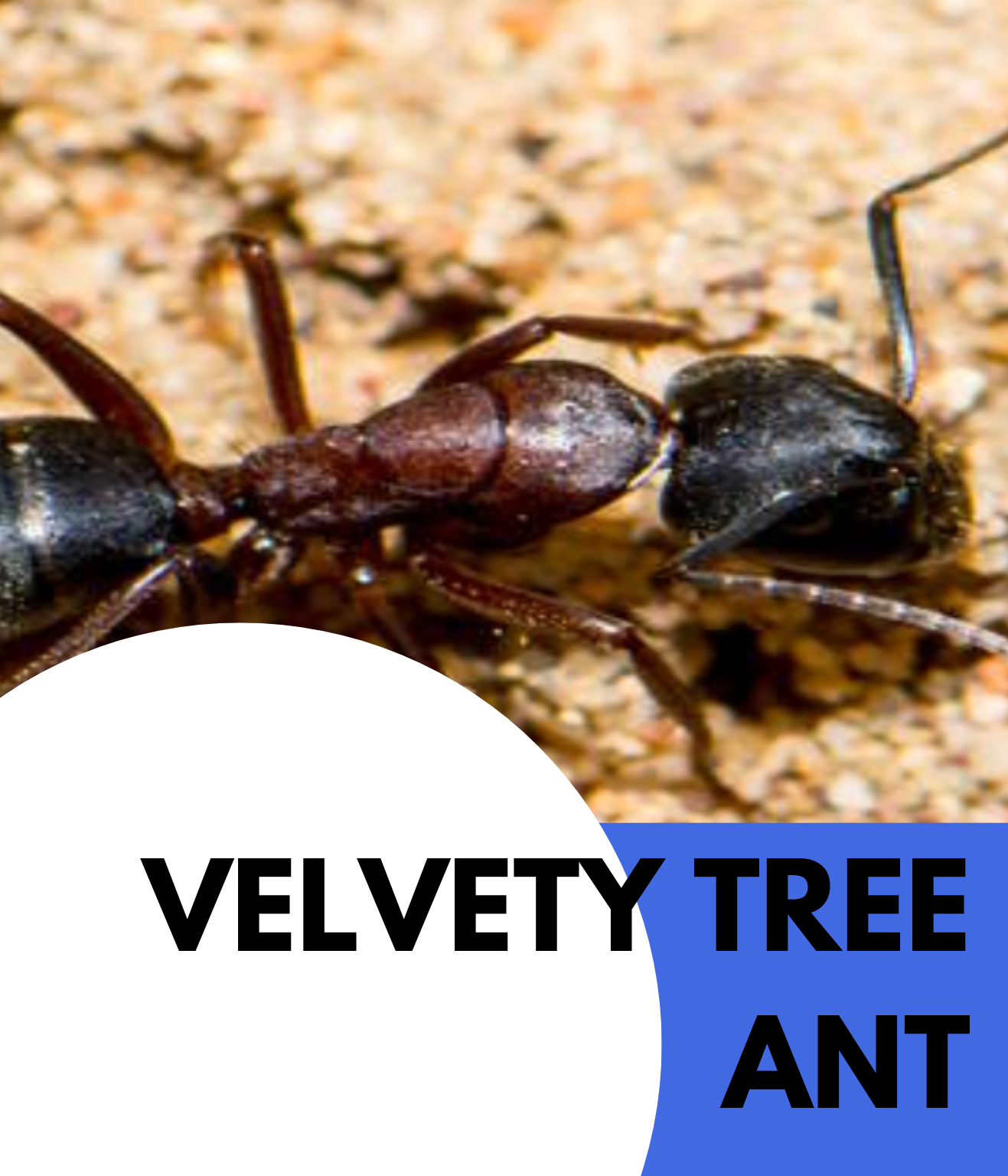
VELVETY TREE ANT
- 1/8 to ¼ of an inch long
- Polymorphic
- Black head, red thorax, and a velvety black abdomen
- Single node
- Feed on sweets, and honeydew
- Nest in dead limbs, stumps, or logs rarely invades structures
- Can bite
- Has single queen colonies
- Has a very distinctive odor when crushed
- Occasional structural invader, usually connected to water sources such as plumbing leaks.
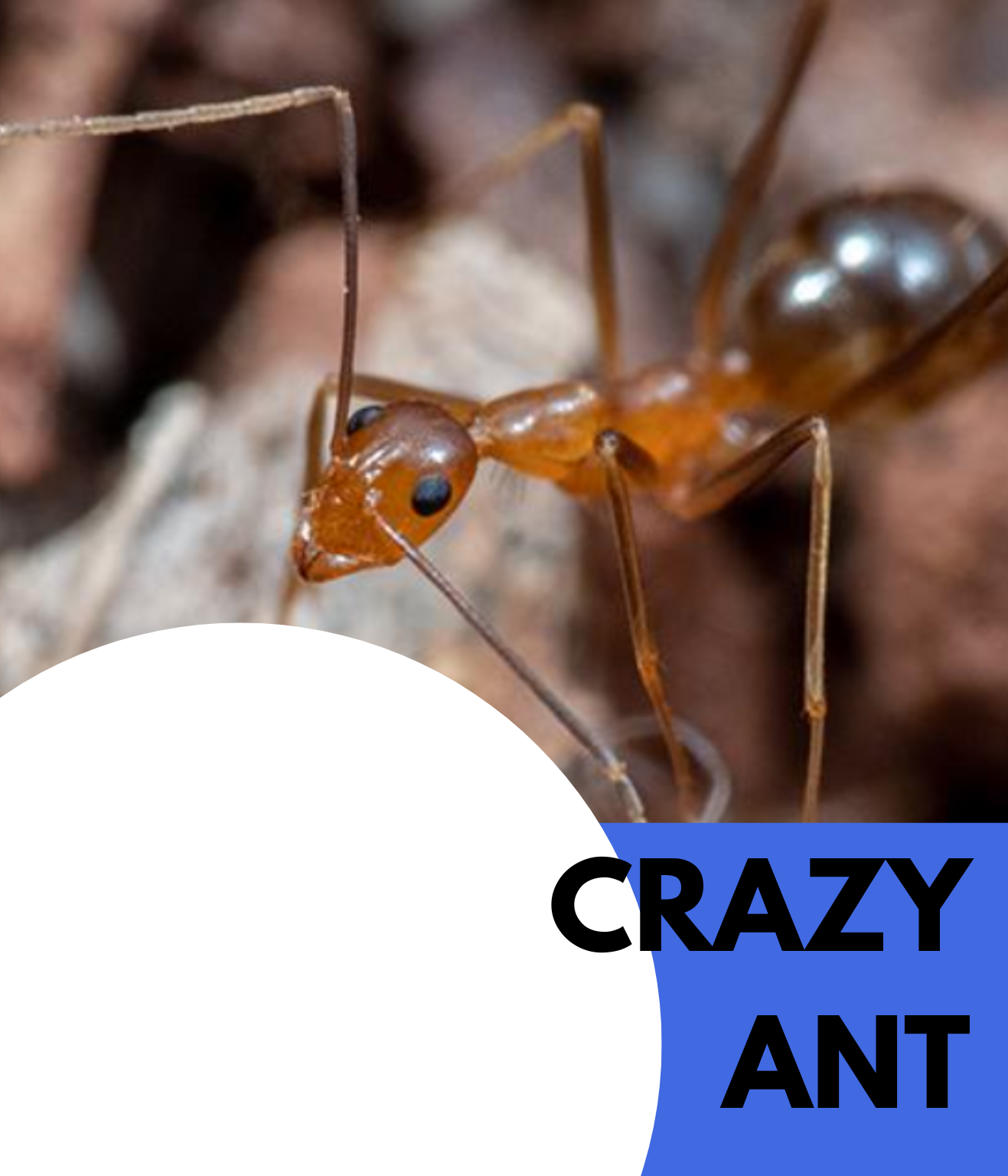
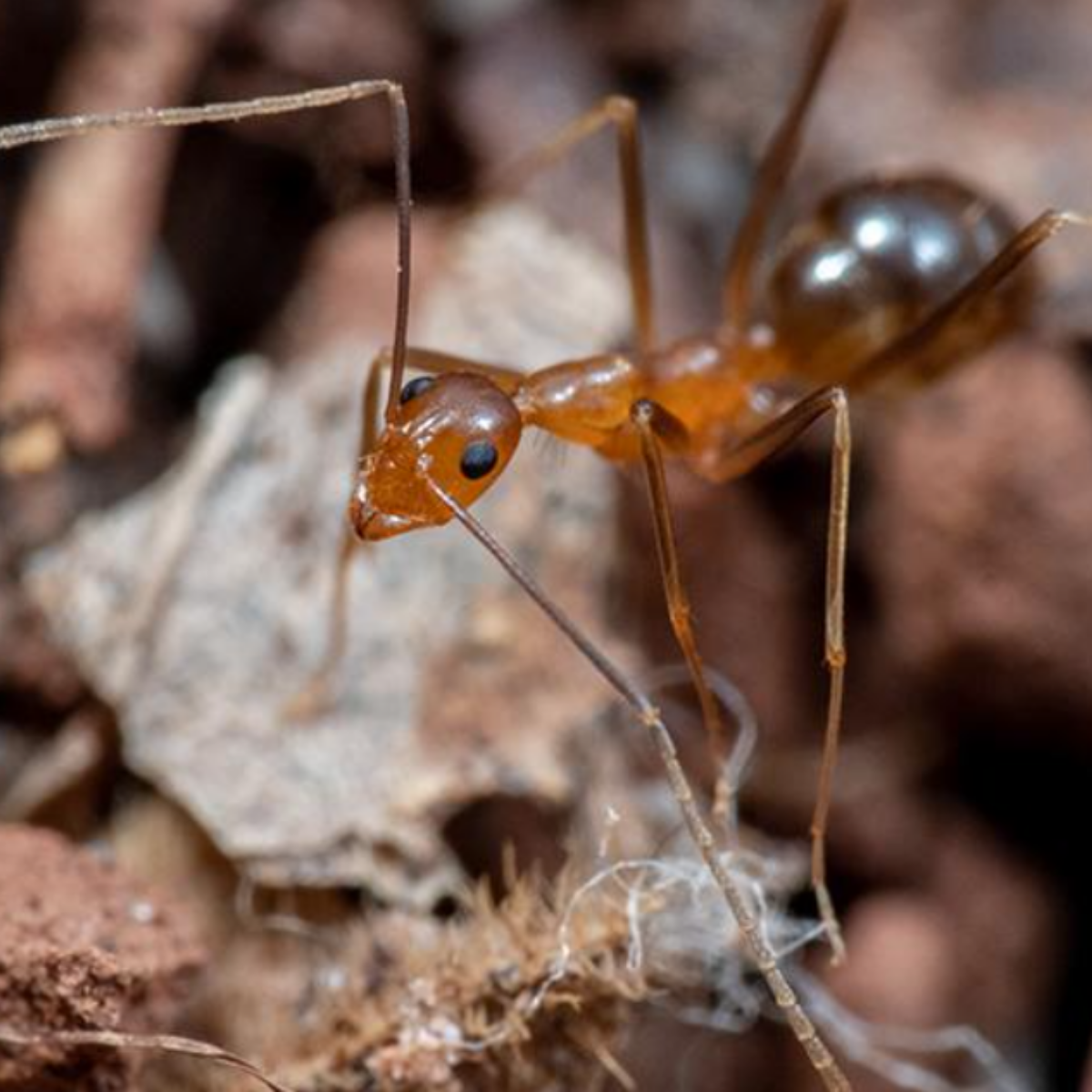
CRAZY ANT
- 1/8 of an inch long
- Blackish brown in color, very long legs
- monomorphic
- Single node
- Feed on protein in summer and sweets in fall and spring
- Can nest far away from its foraging area, mainly outside in soil under debris
- Neither bites or stings
- Has multiple queens
- When disturbed runs around erratically, which is how they got their name

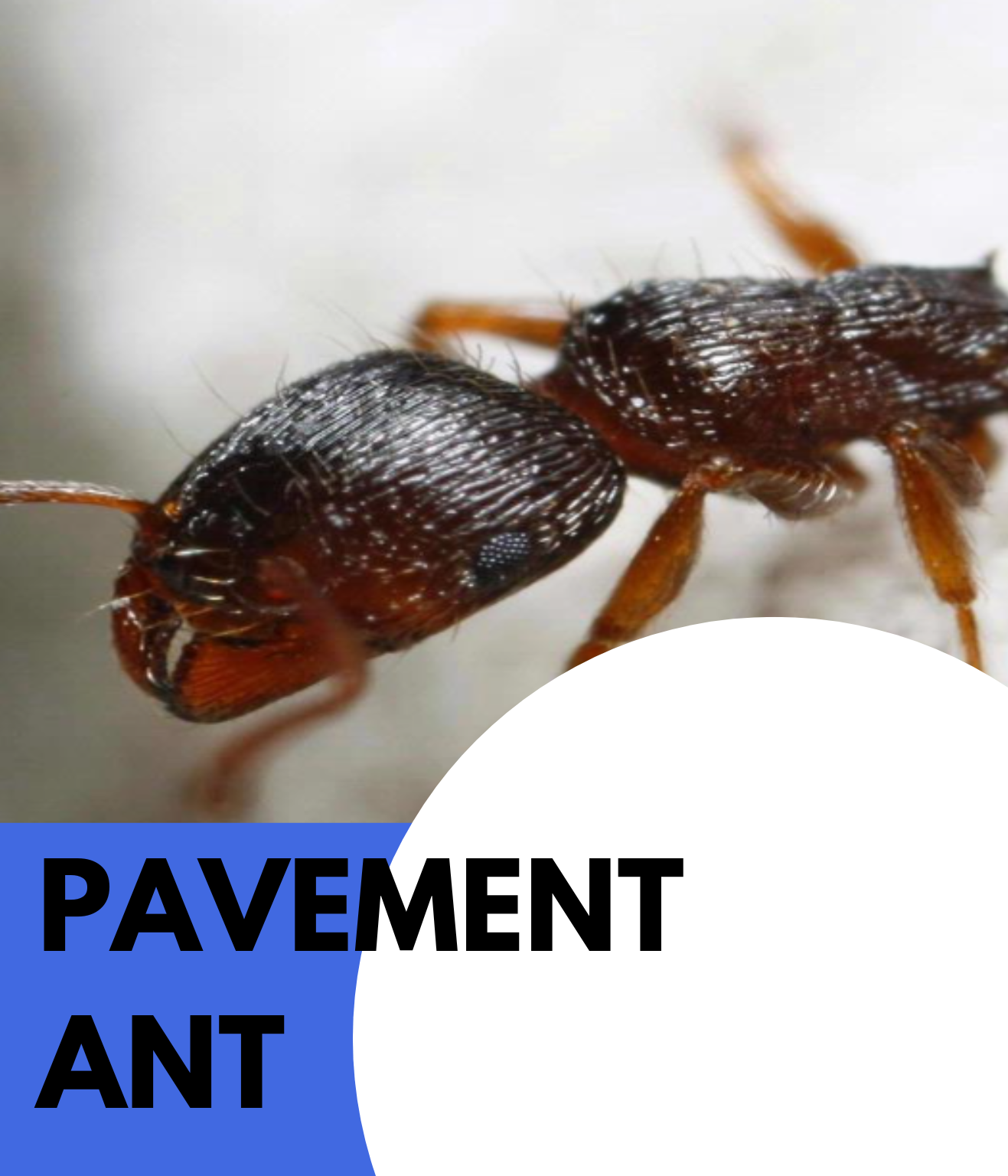
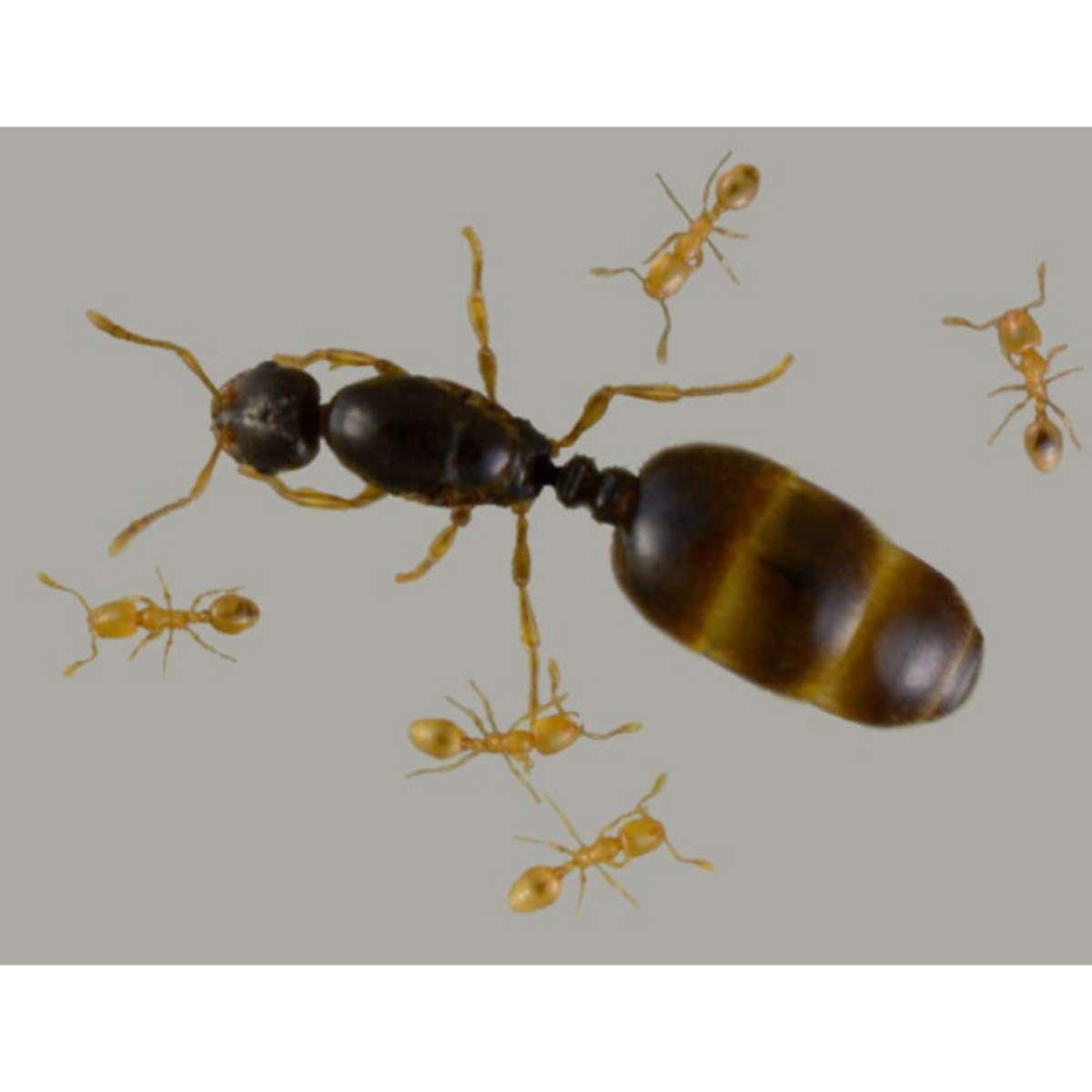
PAVEMENT ANT
- 3/16 of an inch long
- monomorphic
- Dark brown to black, with pale legs
- Two node ant
- Feed on sweets, insects, protein, and grease
- Nest in soil under rocks, wood or boards, next to concrete slabs, and driveways
- Does not sting or bite
- Usually has single queen
- Colonies adjacent to one another will often fight creating turf or pavement wars
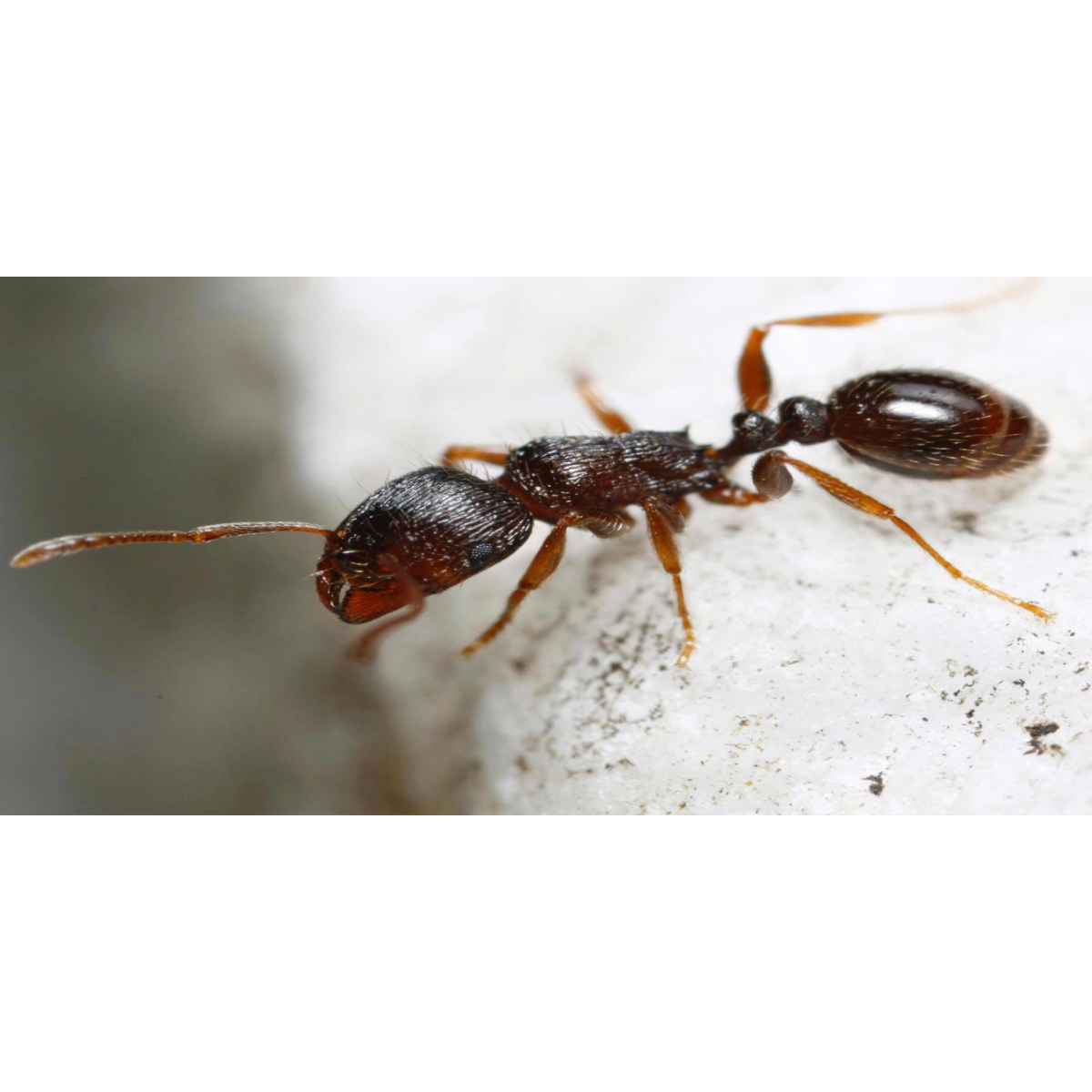
PHAROAH ANT
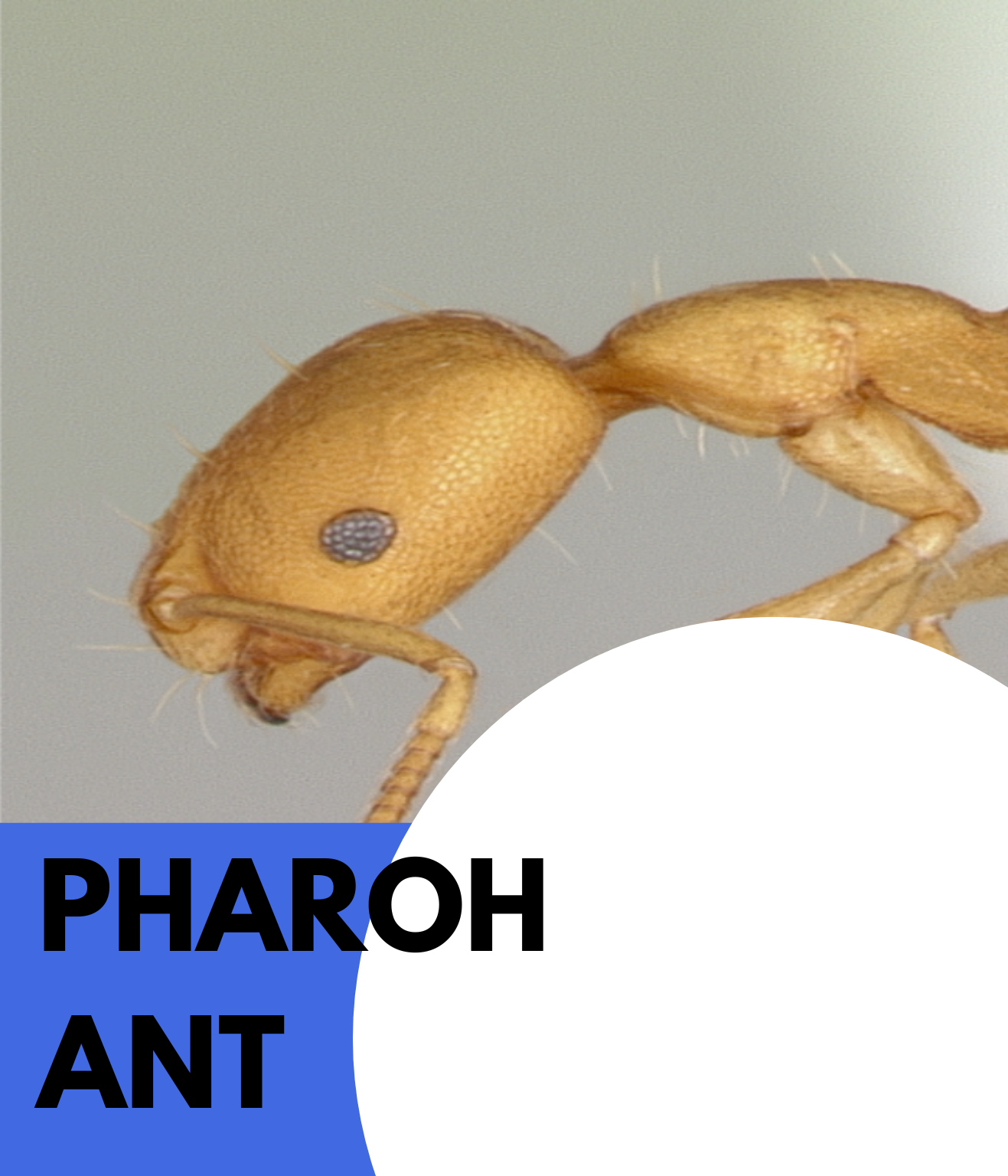
- 1/16 of an inch long
- monomorphic
- Yellow to honey colored orange
- Two node ant
- Feed on sweets, insects, protein, and fats
- Nest in cracks and crevices, and in cabinet or wall voids
- Does not sting or bite
- Multiple queens with colonies as large as 300,000
- Pharoah ants can move a portion of the colony; egg, larvae, and pupa to a new location if disturbed or if the colonies population gets too large. This action is called BUDDING.
Repellent pesticides are not recommended for this ant.
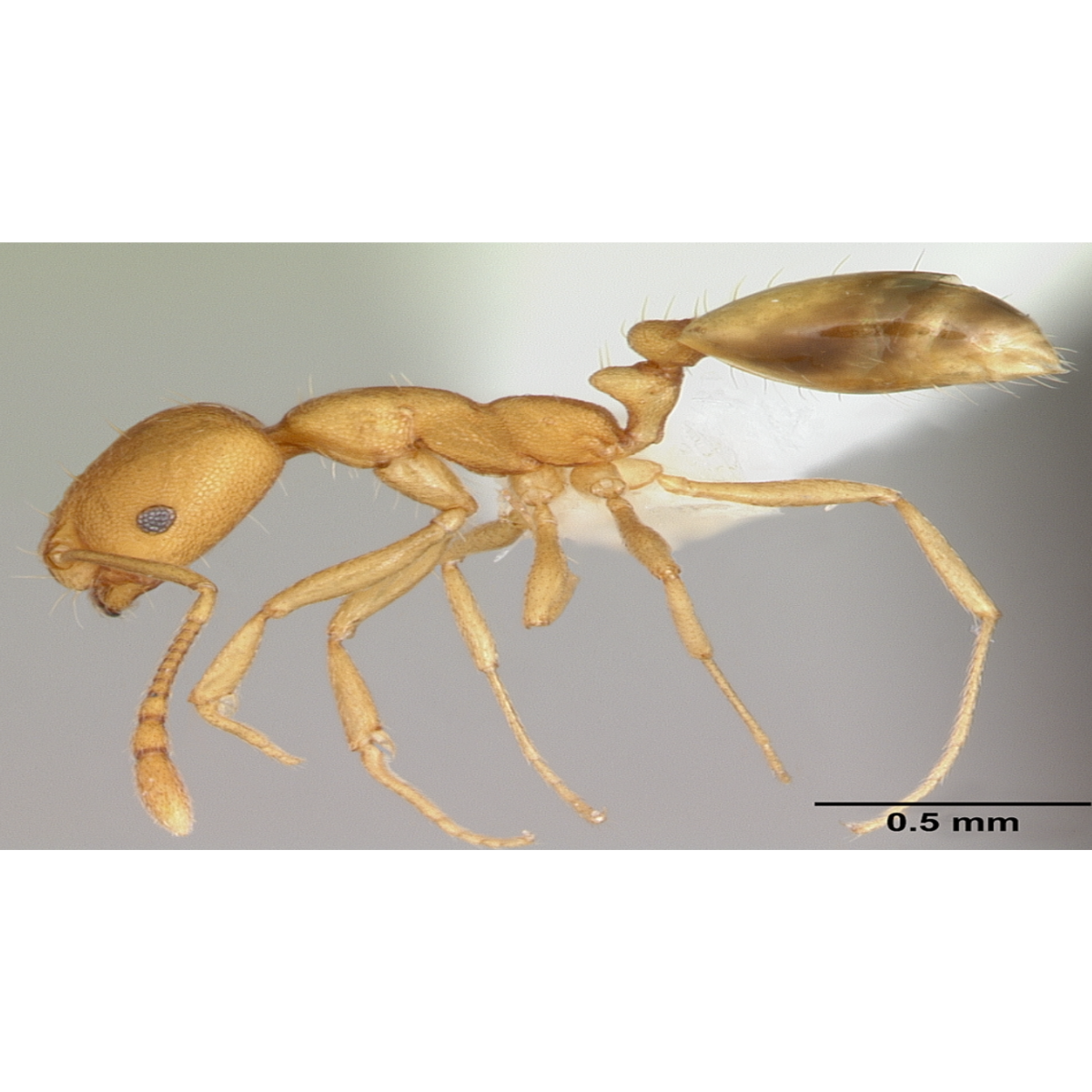
RED IMPORTED FIRE ANT
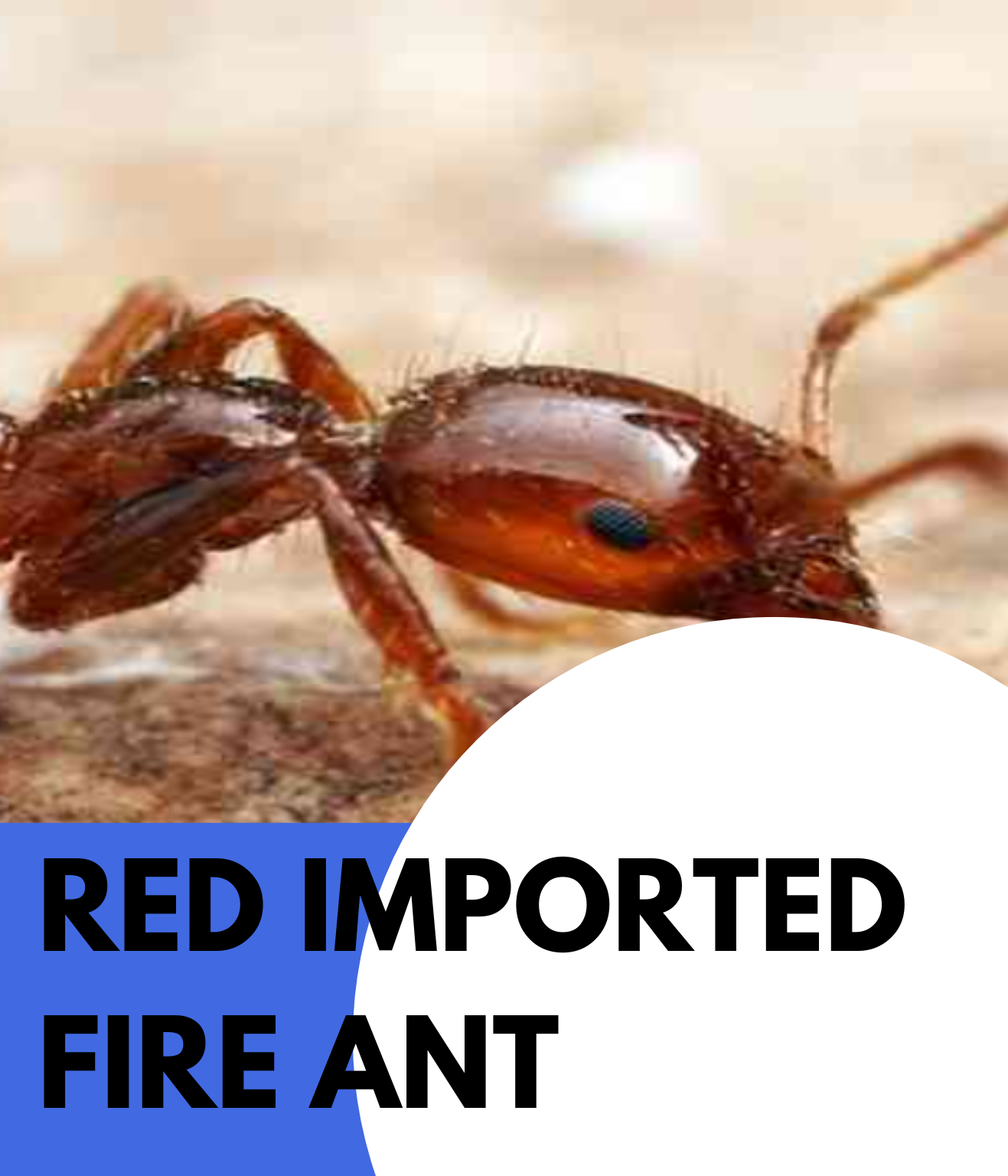
- 1/16 TO 1/4 of an inch long
- Polymorphic
- Reddish with a dark brown abdomen
- Two node ant
- Have round or oval shaped heads and thorax
- Feed on live Insects, dead animals and honeydew
- Fire ants nest outside in mounds with multiple openings. Although they can, they rarely nest in the wall voids of structures.
- Bites and stings repeatedly
- Nests have multiple queens with colonies as large as 500,000
IMPORTANT TO NOTIFY AGRICULTURAL DEPARTMENT IF YOU FIND A SUSPECTED NEST
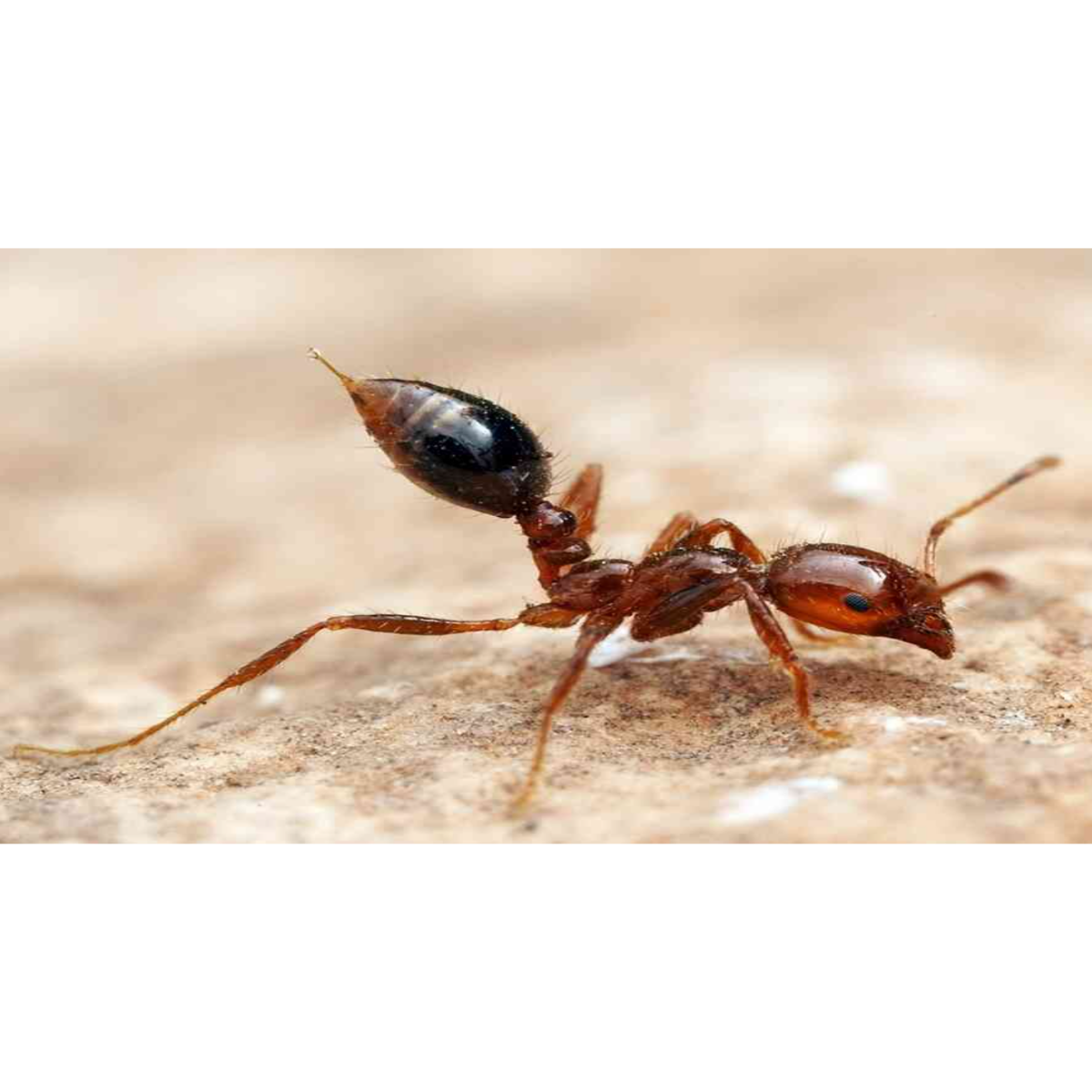
SOUTHERN FIRE ANT
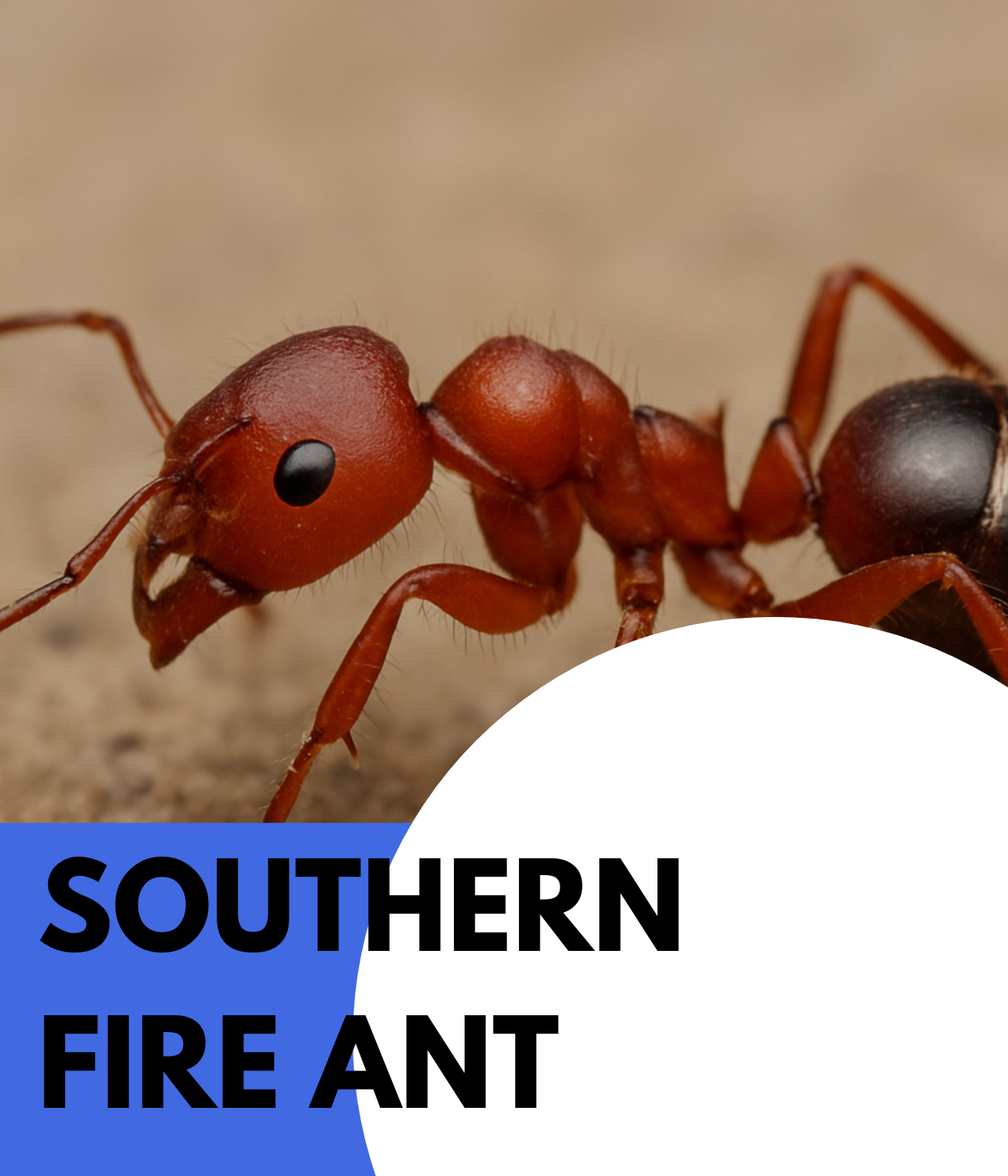
- 1/8 TO 1/4 of an inch long
- Polymorphic
- Amber head and thorax with a black abdomen
- Two node ant
- Have round or oval shaped heads and thorax
- Feed on live Insects, sweet foods, seeds, protein, almonds and honeydew
- Fire ants nest outside in small flattened mounds and occasionally indoors in wall voids, basements, and under carpets.
- Bites and stings repeatedly
- Nests have multiple queens with colonies as large as 10,000
IF YOU ARE NOT SURE WHAT SPECIES OF FIRE ANT YOU ARE DEALING WITH, YOU SHOULD TAKE A SPECIMEN TO AGRICULTURE DEPARTMENT FOR POSITIVE IDENTIFICATION.
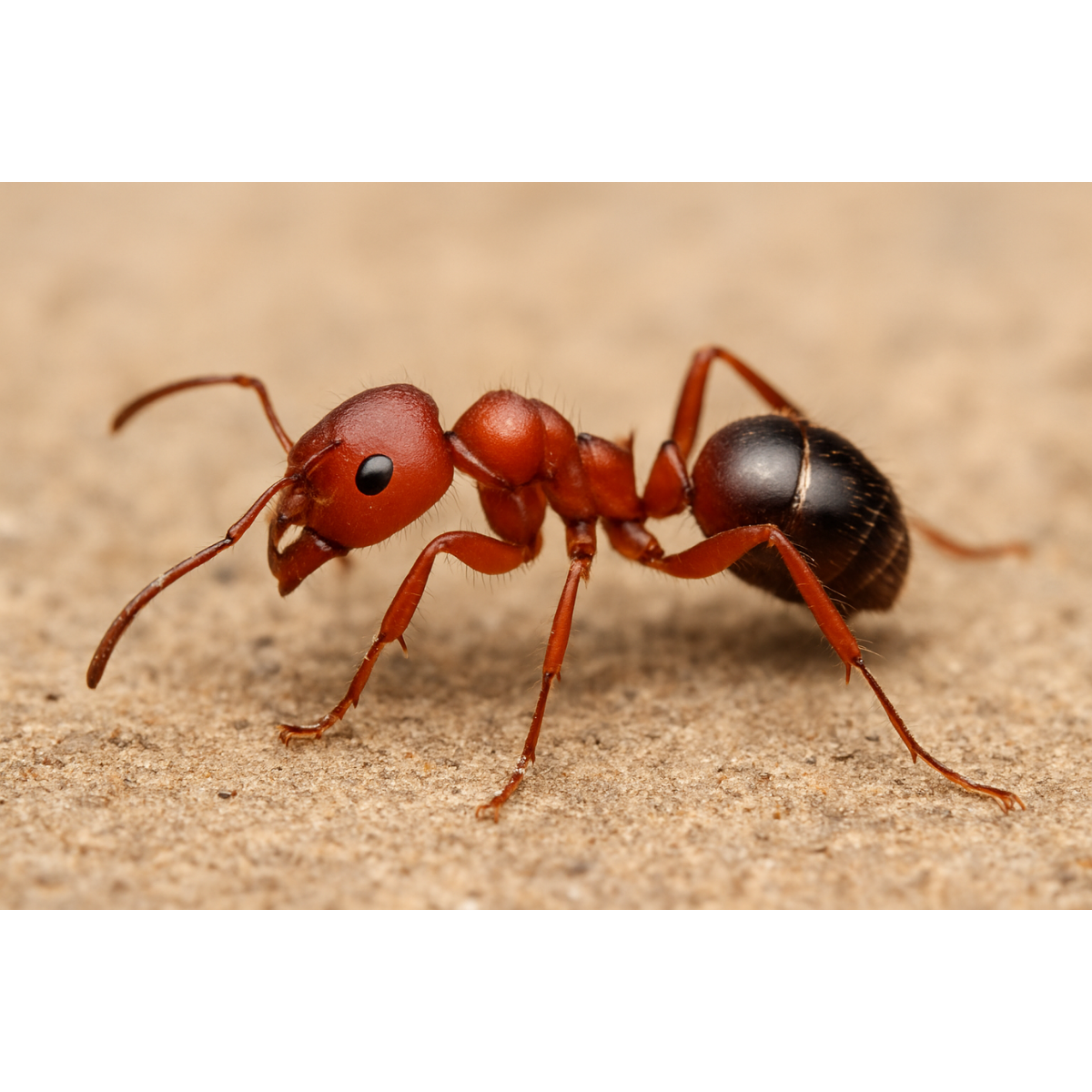
THIEF ANT
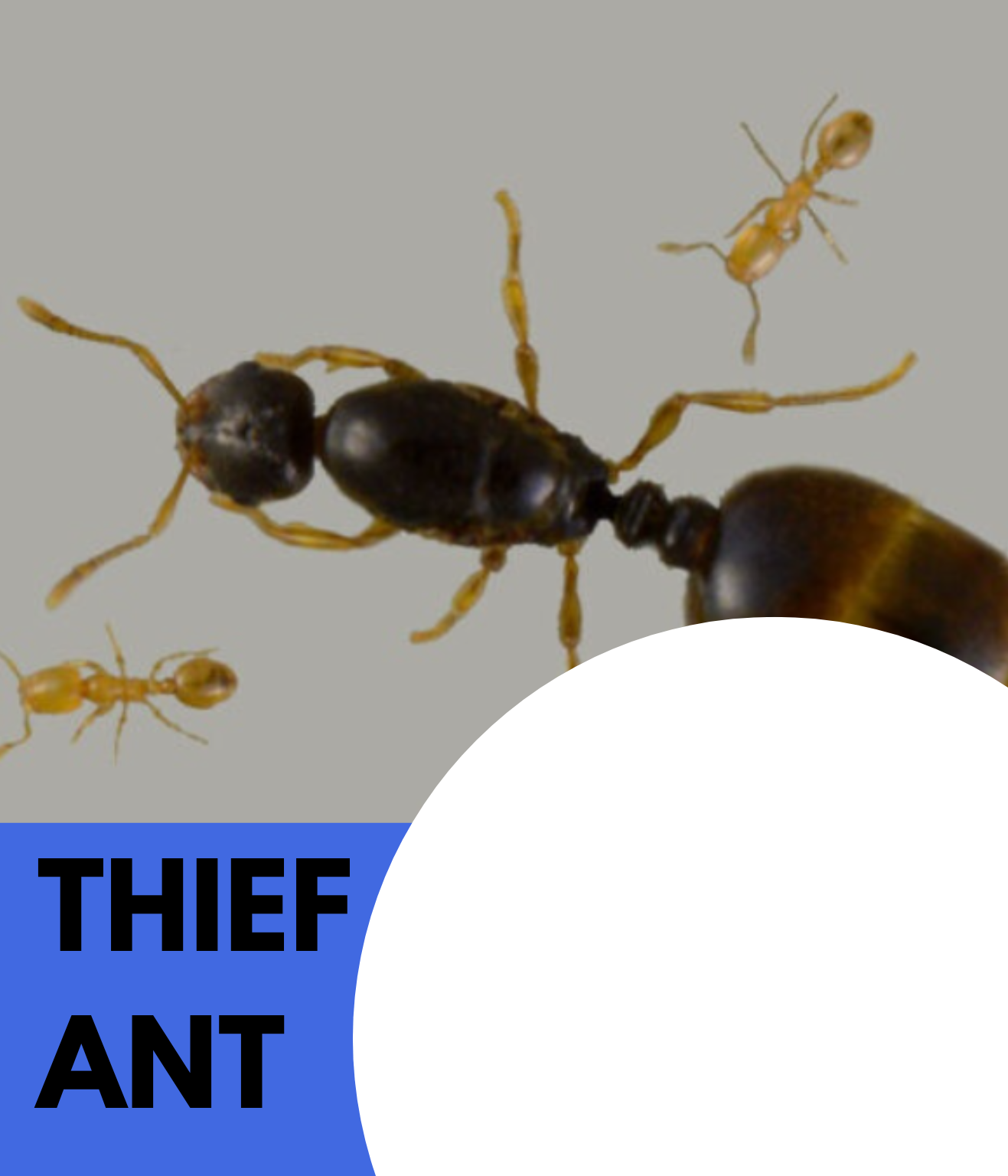
- 1/32 of an inch long
- Monomorphic
- Yellow to light brown
- Two node ant
- Primarily feed on grease and greasy foods, protein, dead insects and sweets
- Nests in wall cabinet voids and baseboards
- Does not sting or bite
- Small colonies that may have several queens
- Called a thief ant because it steals food from other ant nests including their babies.
COCKROACHES
Cockroaches are one of the most common and toughest pests service technicians must control. IPM practices are important as cockroach population size is directly dependent on the availability of food, water, and harborage. Cockroaches are nocturnal, avoid light, and hide in tiny cracks making infestations difficult to find. They have an incomplete metamorphosis with several nymphal stages. The molting between these stages or instars, results in what appears to be white roaches. This is due to the new unhardened wax coating that protects the exoskeleton, which darkens rapidly as air exposure hardens the new wax. This lack of pigment is common in most insects with an incomplete metamorphosis. Cockroaches are not social insects, but appear in groups near common food sources.
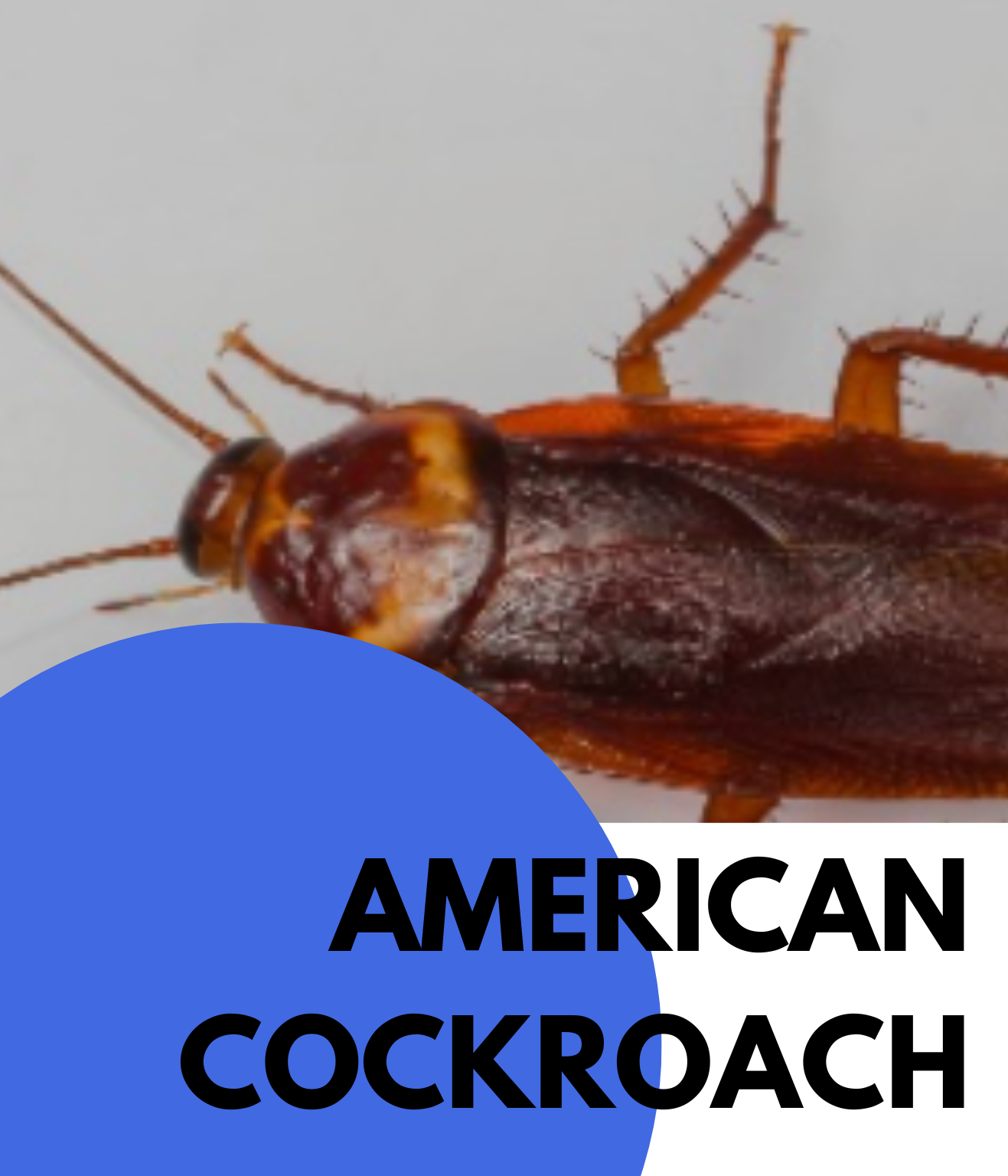
GERMAN COCKROACH
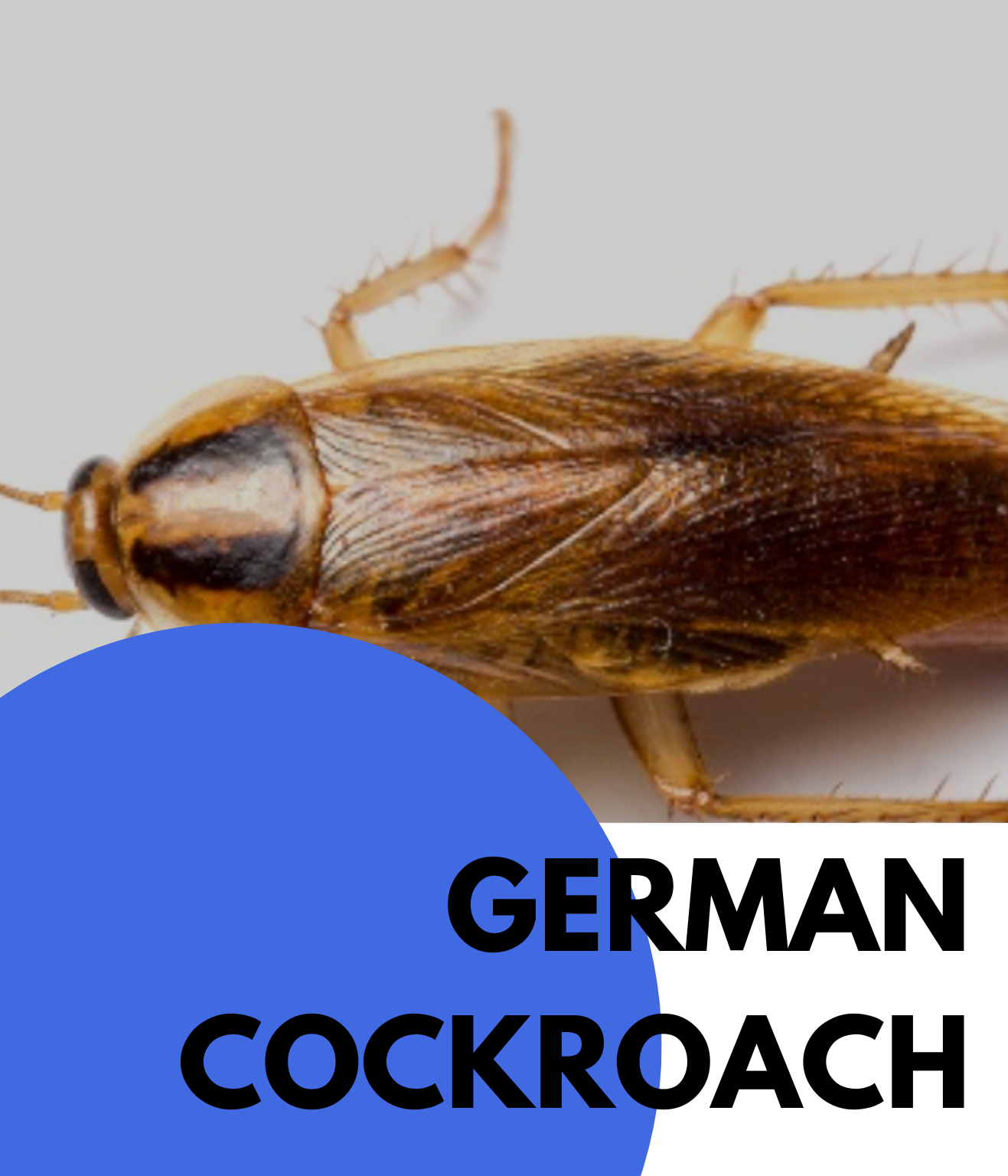
Most prolific, easiest to distribute, great climber
- Tan in color with 2 distinctive dark stripes on their head cover/pronotum
- Approximately ½ in. to 5/8 in. in length.
- Thrive in hot, humid environment
- Female carries egg capsule(ootheca) until 2 to 3 days before the eggs hatch, this is the only roach that does this
- Egg capsule holds 20-50 eggs
- Egg to adult in 100 days, 5-6 instars, incomplete metamorphosis
- Adults have wings but don’t fly
- Life span is 1 year
- Usually found near water and heat, i.e. kitchens and bathrooms
- Most common roach found in restaurants and food plants
- Easily transported in food containers, furniture and used equipment
- Does not tolerate cold, primarily an indoor pest
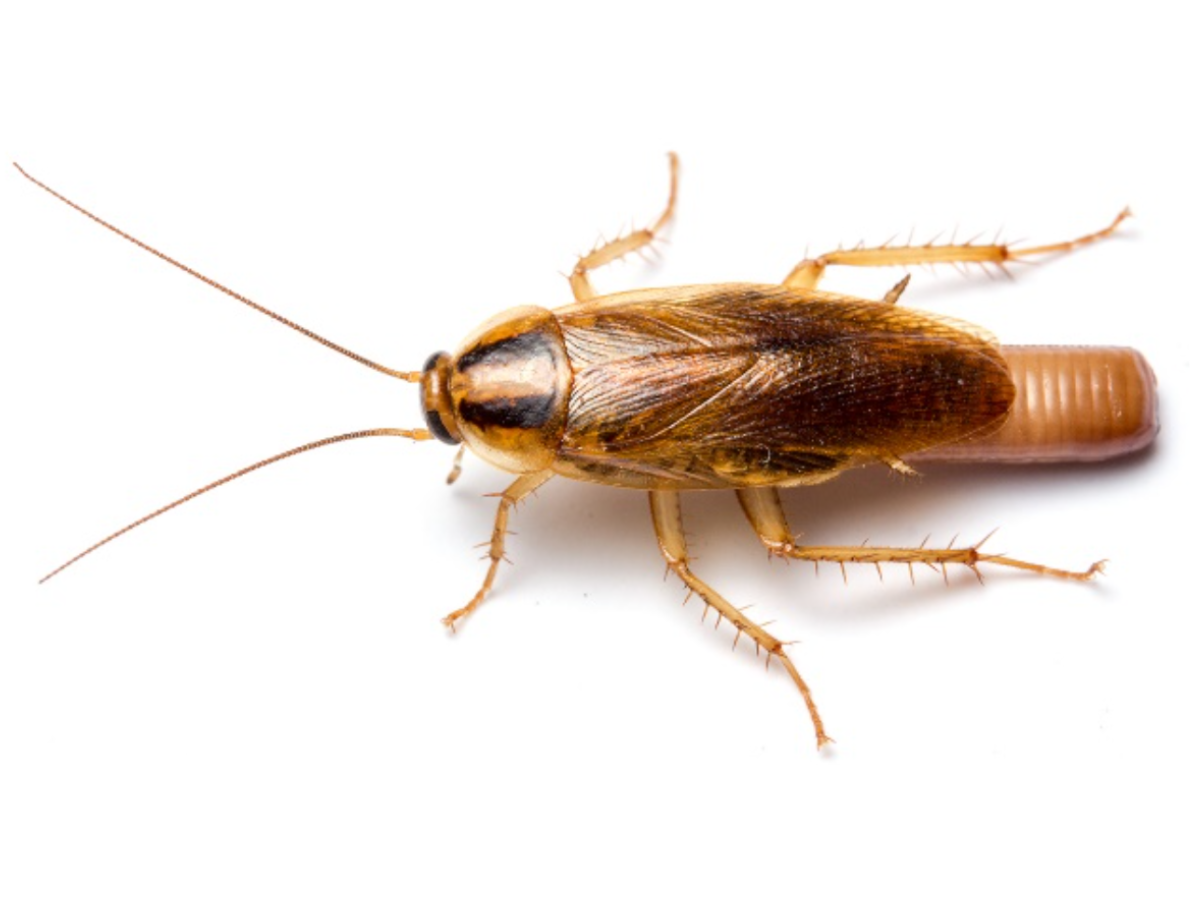
BROWN-BANDED COCKROACH
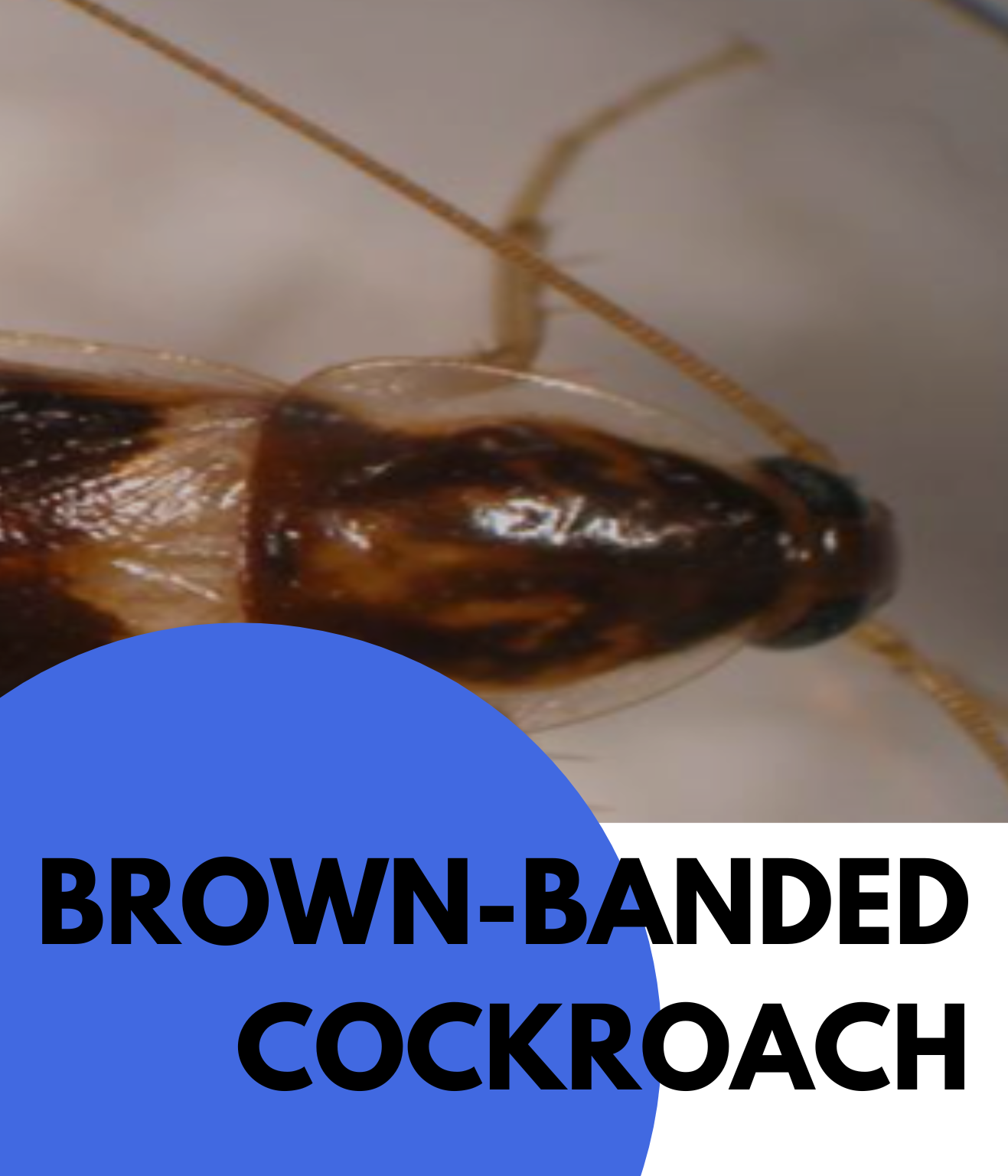
Spreads throughout interior, smaller colonies
- Tan to dark brown with 2 distinct light bands running across body
- Approximately ½ inch in length
- Prefer warm, dry environment
- Female carries egg capsule 2 days before attaching it to a protected surface
- Egg capsule contains approximately 14-16 eggs
- Egg to adult approximately 100 days
- Adult stage has wings and does fly
- Life span 150 to 200 days
- Does not need as much moisture as other roaches, therefore found throughout interior
- Found in residences, apartments, hotels and hospitals
- Easily transported in furniture, appliances, T.V.’s and stereos
- Similar to German roaches, Brown Banded are generally found indoors
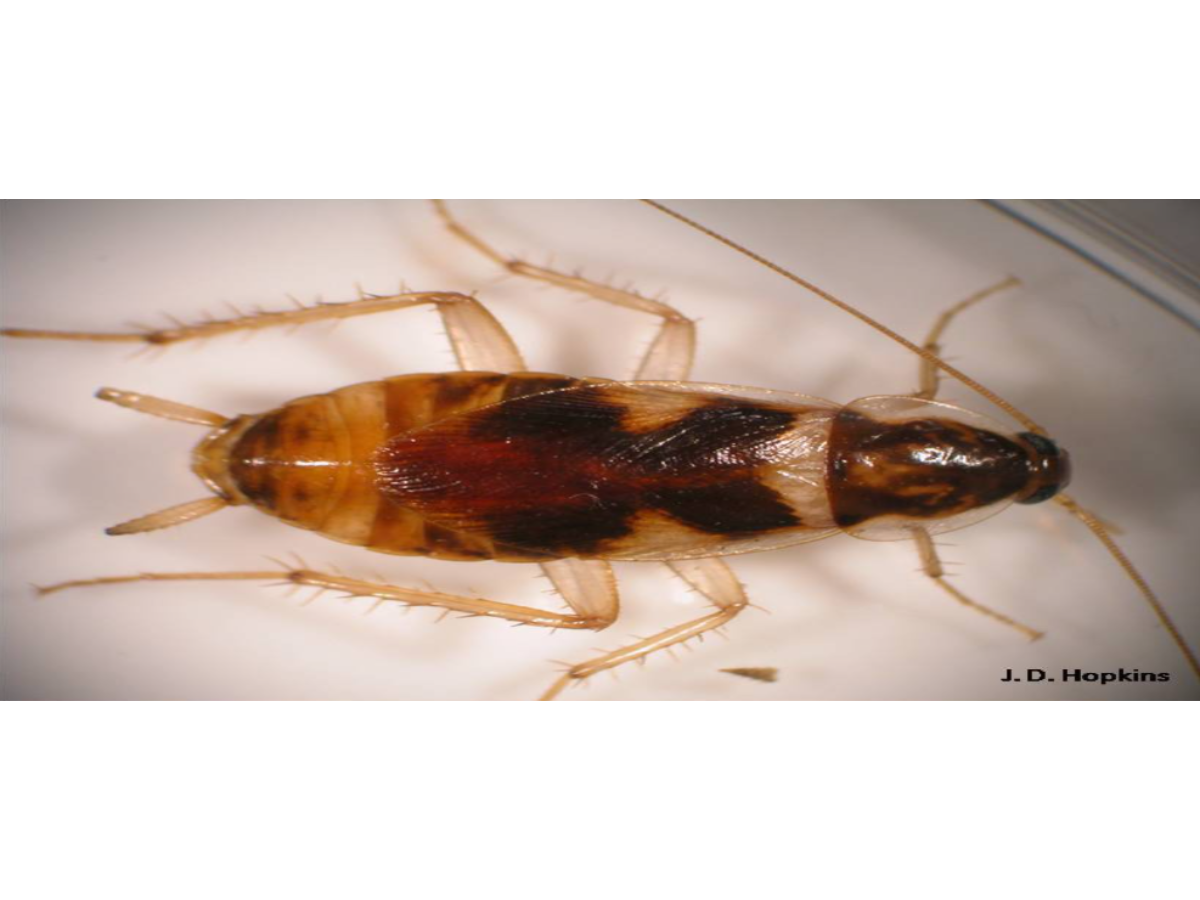
ORIENTAL COCKROACH
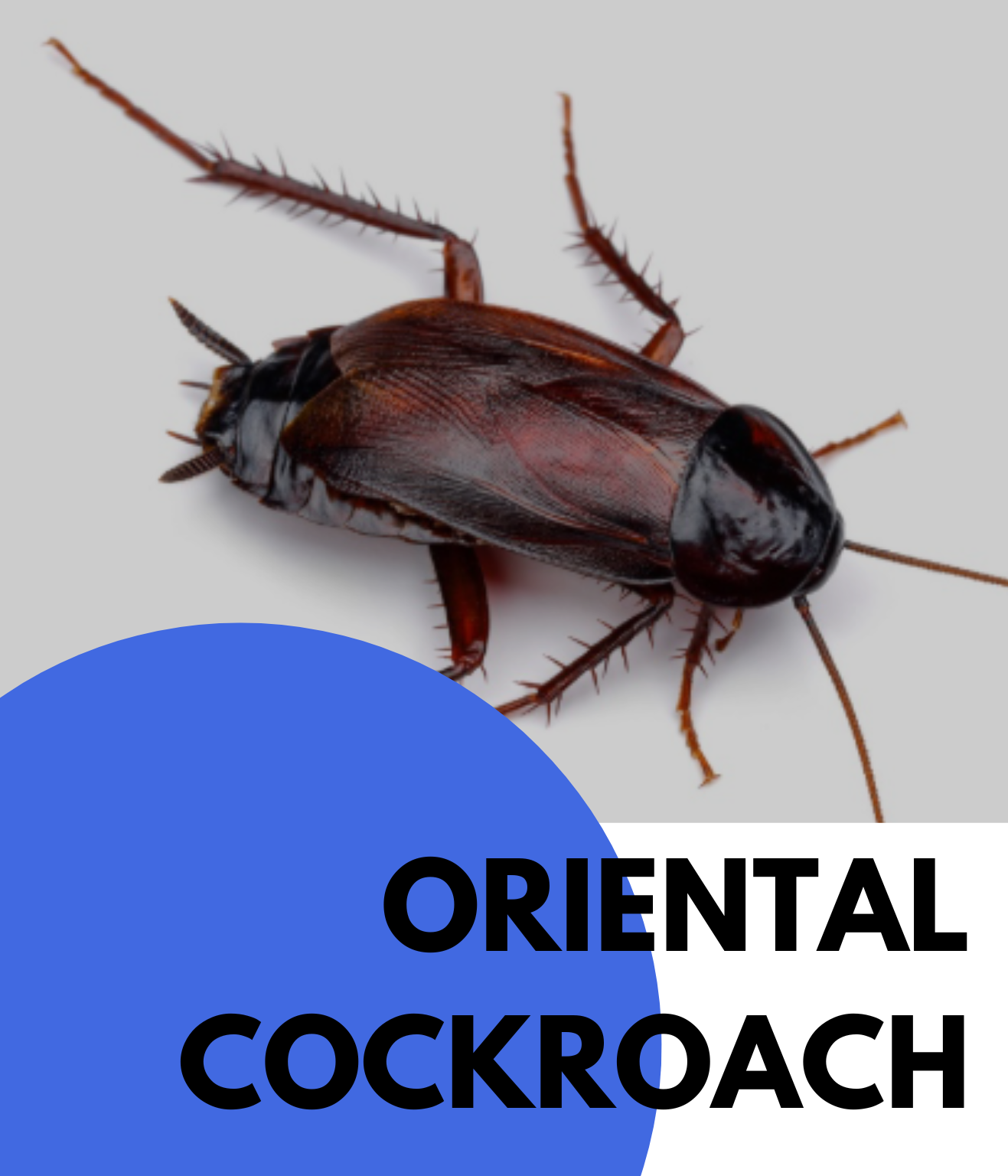
Found mostly outside, related to moisture
- Reddish brown in color approximately 1to 1 ½ inches long
- Prefers hot moist environment
- Female drops or glues egg capsule in protected area 1 day after formation
- Egg capsule contains approximately 16 eggs
- Egg to adult takes 1 to 2 years
- Adults have fully developed wings and fly
- Life span I s3 years
- Similar to the oriental roach, they are poor climbers and usually enter at ground level such as door bottoms and basements.
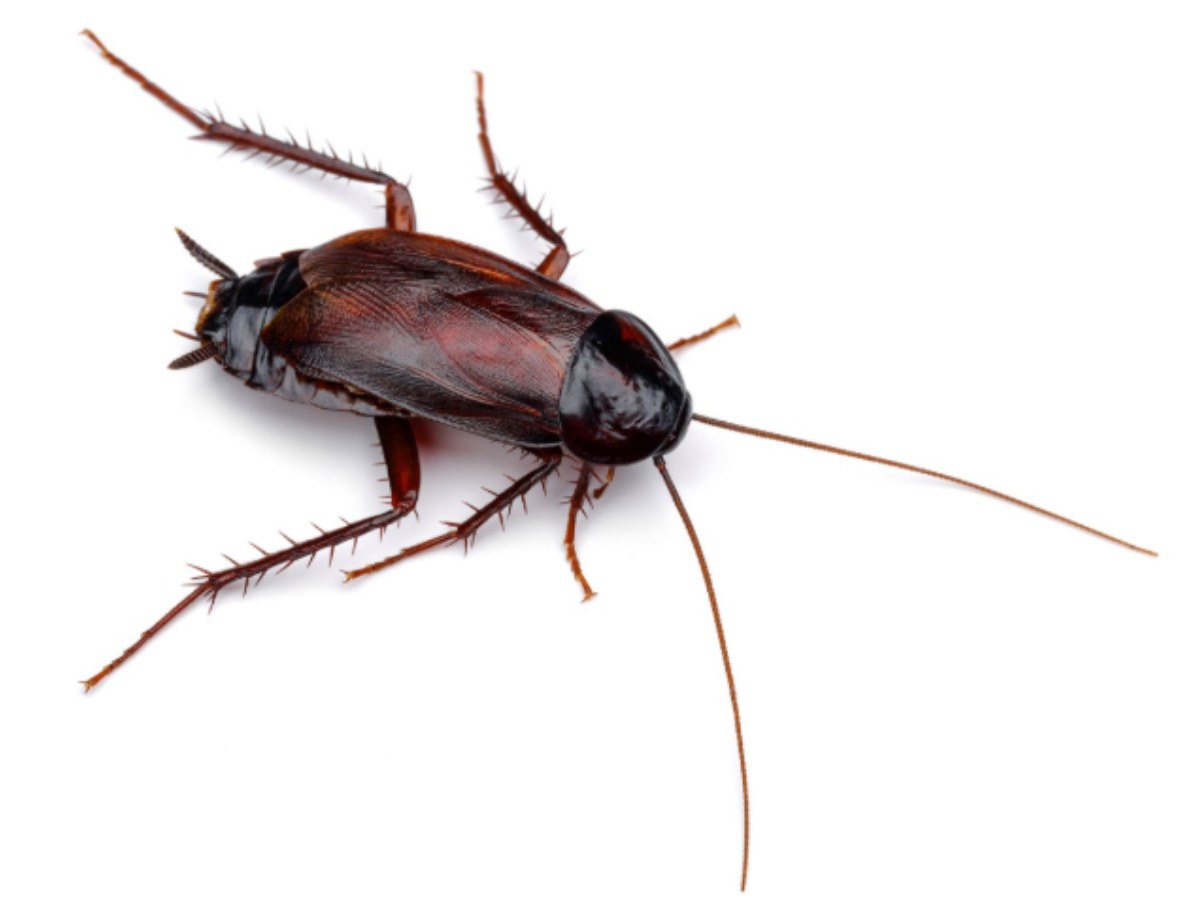
AMERICAN COCKROACH
Mostly outside in sewers and drains
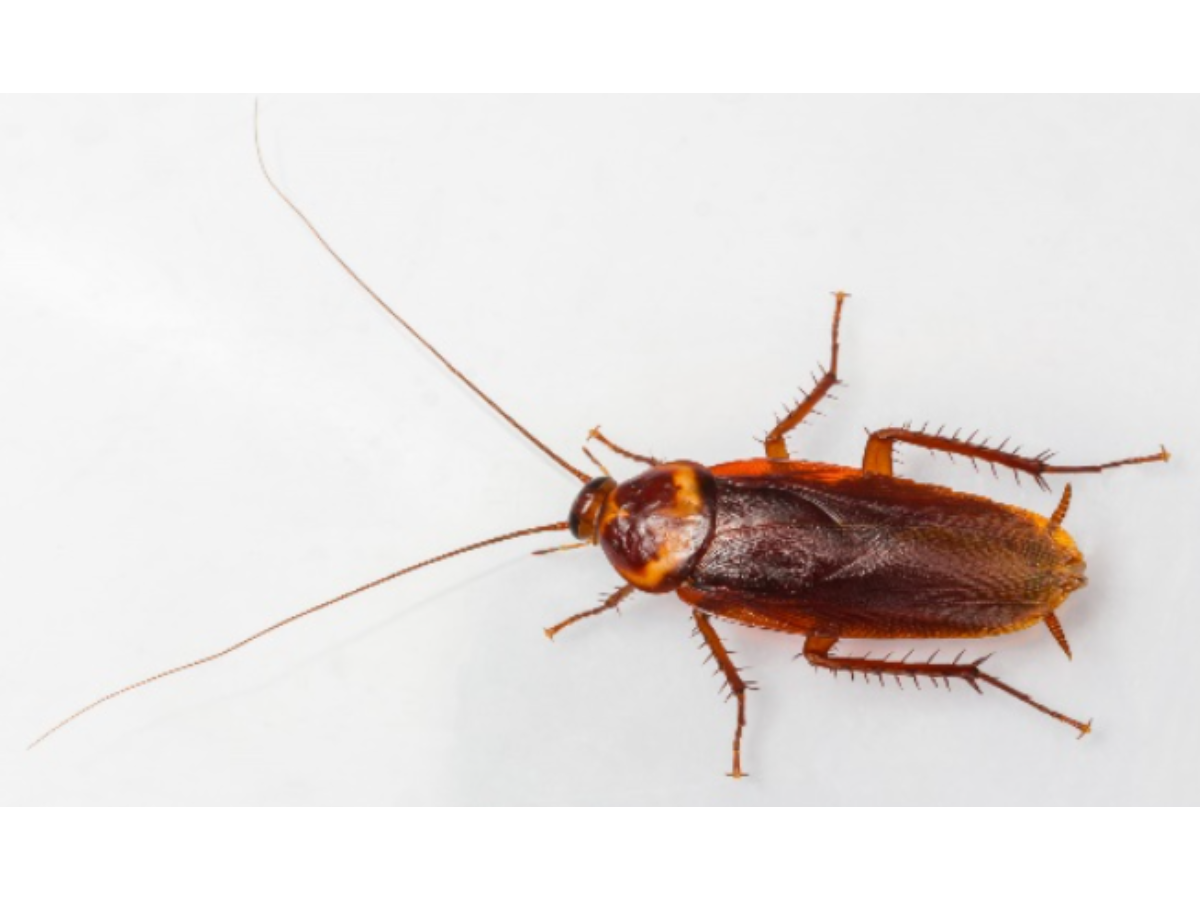
- Approximately 1 to 1 ¼ of an inch long
- Breed in damp warm areas such as mulch pits, storm drains and ivy
- Female carries egg capsule for 30 hours then drops or attaches it to a protected surface.
- Egg capsule contains 14-16 eggs
- Egg to adult is approximately 1 year
- Adult stage has wings, male wings cover ¾ of the abdomen, and female has wing pads only, they do not fly.
- Life span is 1 ½ years
- Usually enters the structure at floor level, such as under doors, basements and drains. Has poor vertical crawling abilities.
- Primarily an outdoor roach
BEES AND WASPS
Bees and wasps are considered both beneficial and dangerous insects when interacting with man. The primary commercial use for the western honey bee is to pollinate food plants in agricultural areas and produce honey. Wasps are also considered beneficial insects because they attack and destroy plant damaging insects and nuisance flies and play a role in the plant pollinating process.
It is when bees and wasps nest in or near human activity areas that certain species become dangerous pests. This is due to their painful sting which in some individuals can cause severe allergic reactions. Allergic reactions, if not treated immediately could be life threatening.

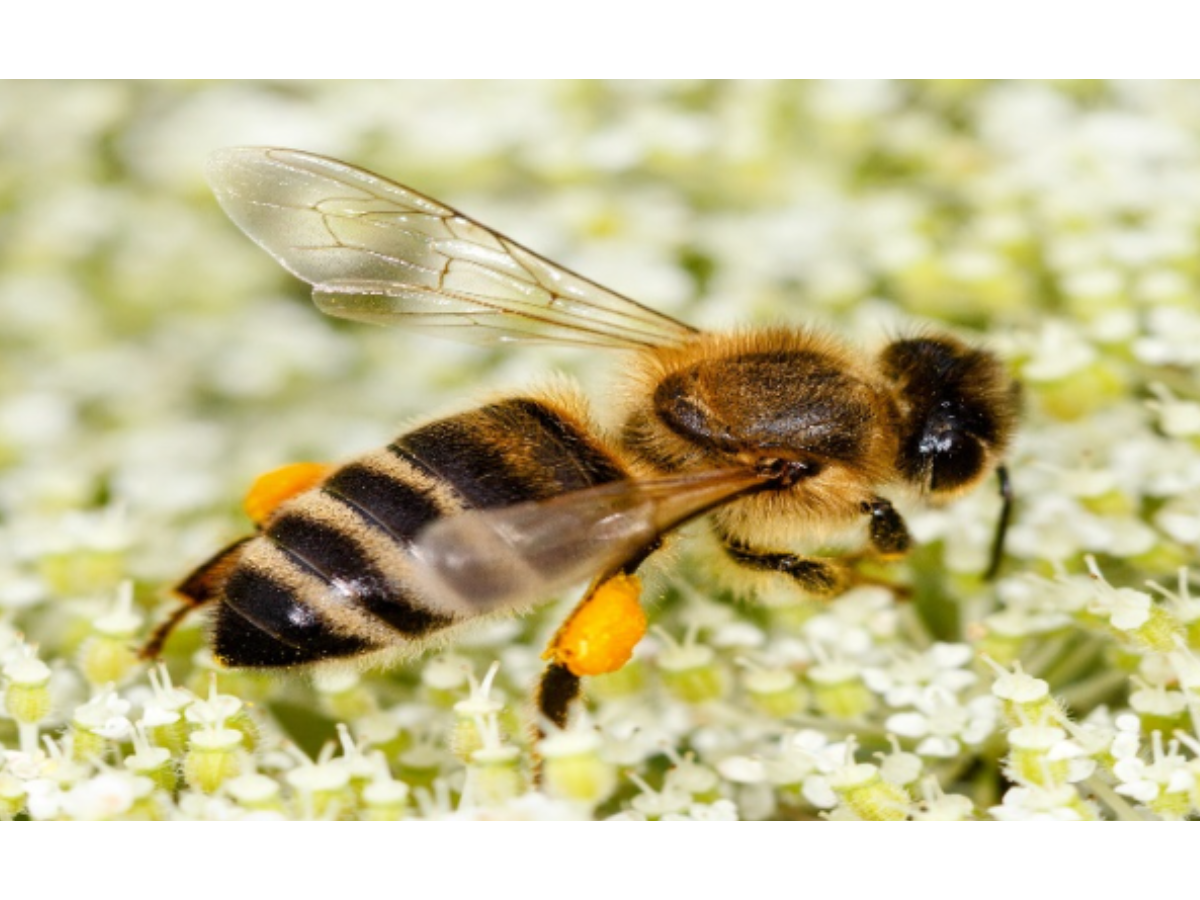
WESTERN HONEY BEE
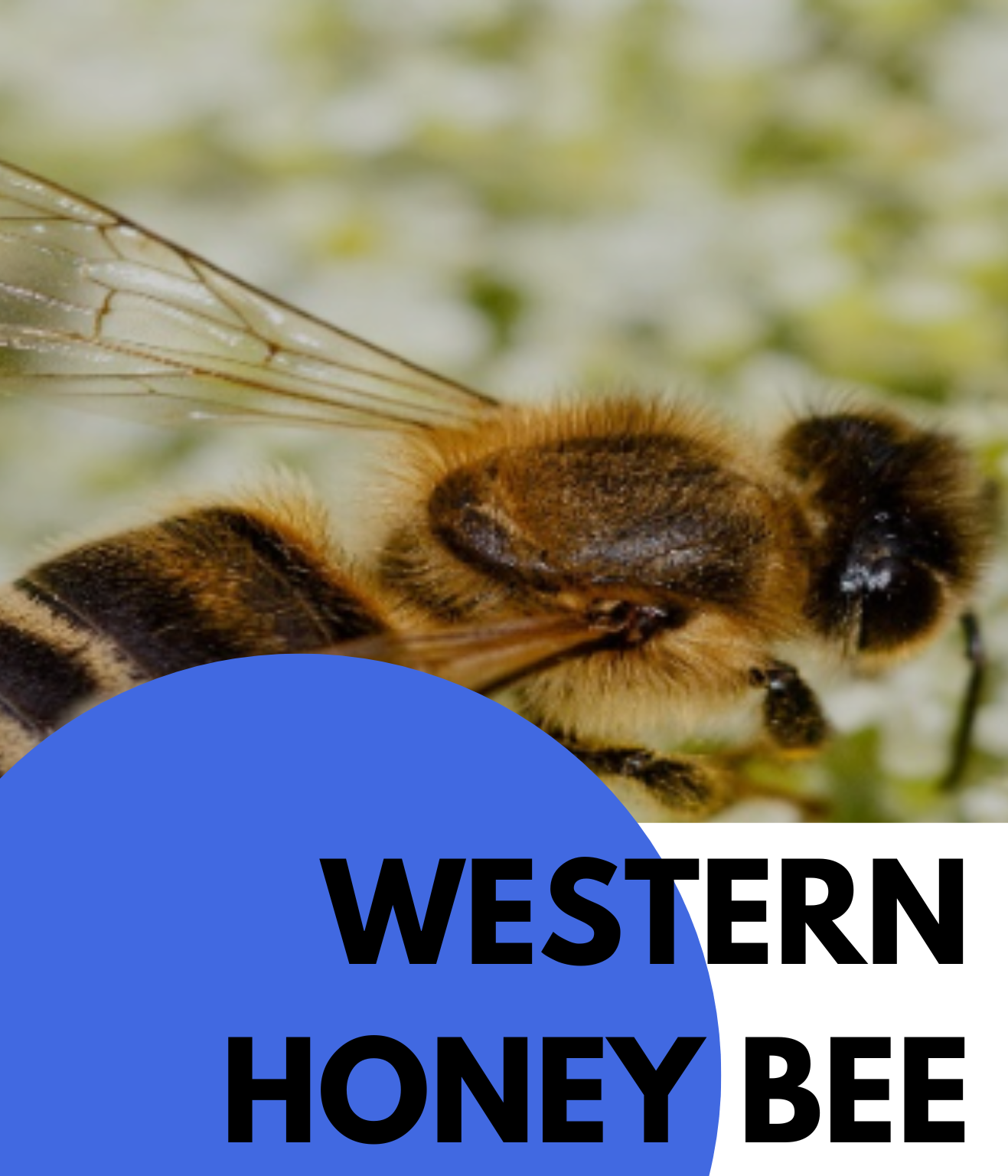
- The western honey bee is a social insect with members of the hive having specific duties such as caring for the queen, nursing the young and providing protection for the hive.
- Approximately ½ inch long, the larger queen is approximately ¾ on an inch long.
- Black stripes on the abdomen with alternating colors of gold or gray
- Nest in dark, dry, protected areas such as tree hollows and between floors and walls in structure voids.
- Females have a barbed stinger that usually pulls away from the bee after stinging. Therefore it only stings once which results in death by disembowelment.
- Western honey bees have large hives with 40,000 to 80,000 workers and one fertilized queen. When the hive gets too large or food sources start to diminish, workers designate non fertile females as future queens and she takes a portion of the workers and drones and swarms forming a new colony.
- Feed on pollen and nectar
- They go through a complete metamorphosis
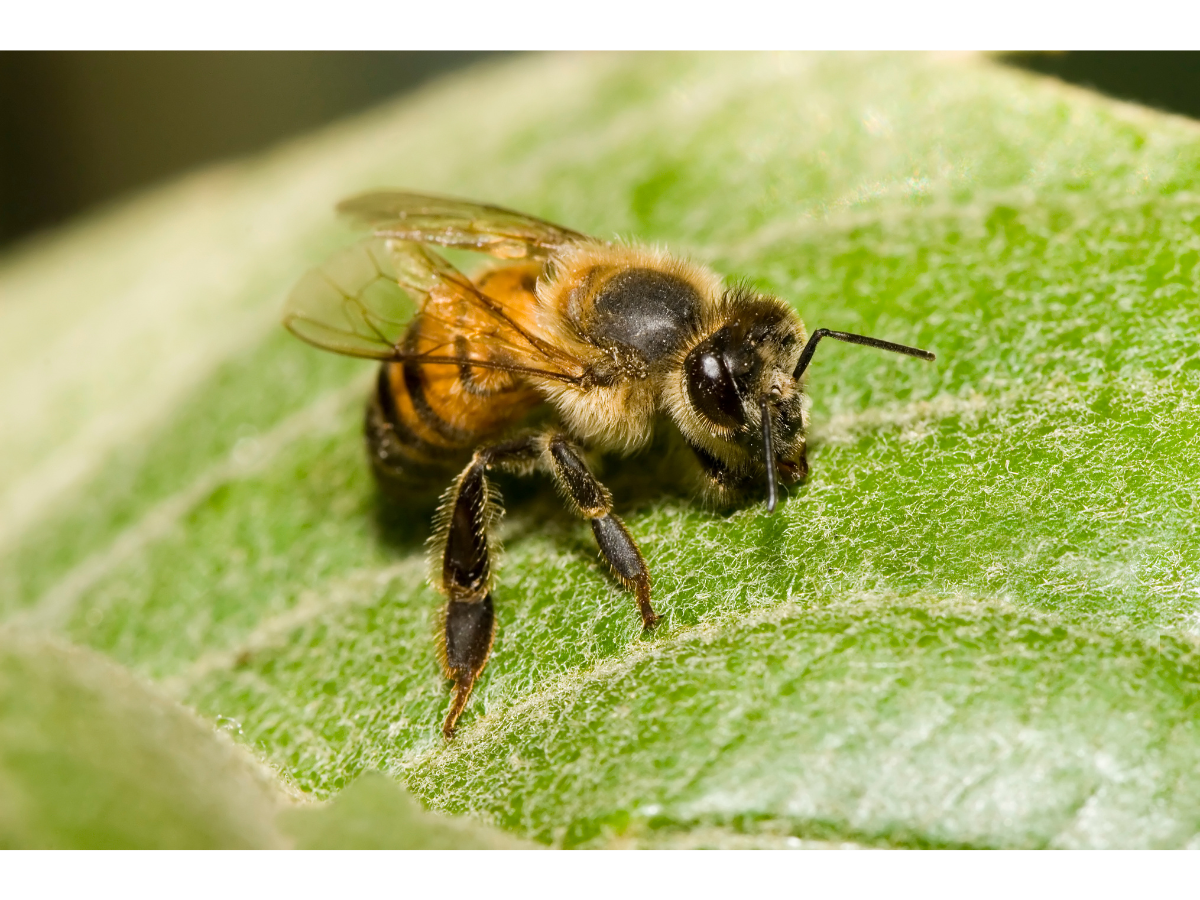
AFRICANIZED HONEY BEE
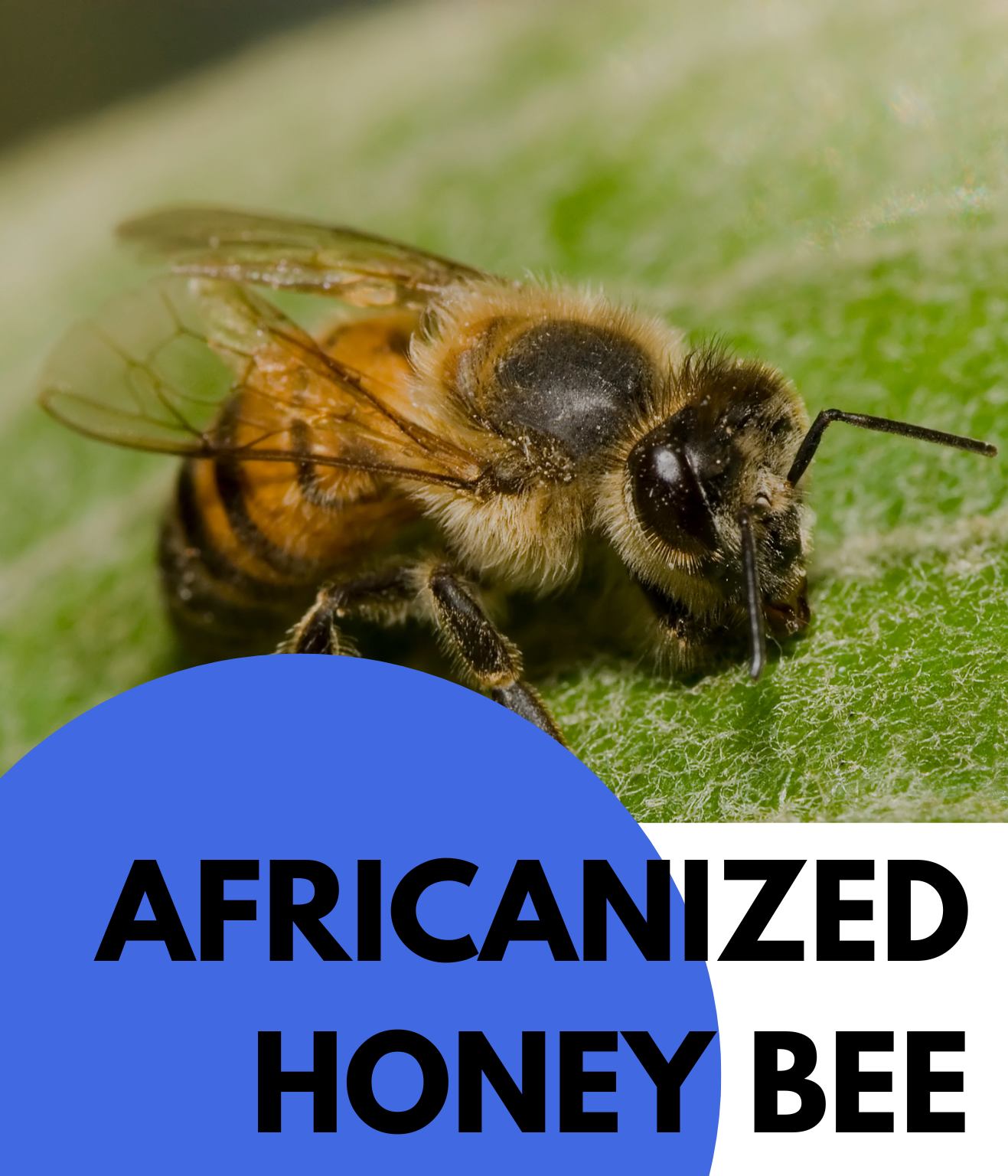
- Identical to western honey bees, only reliable identification is by way of DNA testing
- Exhibit very aggressive behavior if disturbed, will follow intruder much further than western honey bee.
- These bees tend to nest closer to ground level than western honey bees.
LOCAL AGRICULTURE INSPECTORS MUST BE NOTIFIED AND GIVEN A SAMPLE WHENEVER POSSIBLE OF SUSPECTED AFRICANIZED HONEY BEES
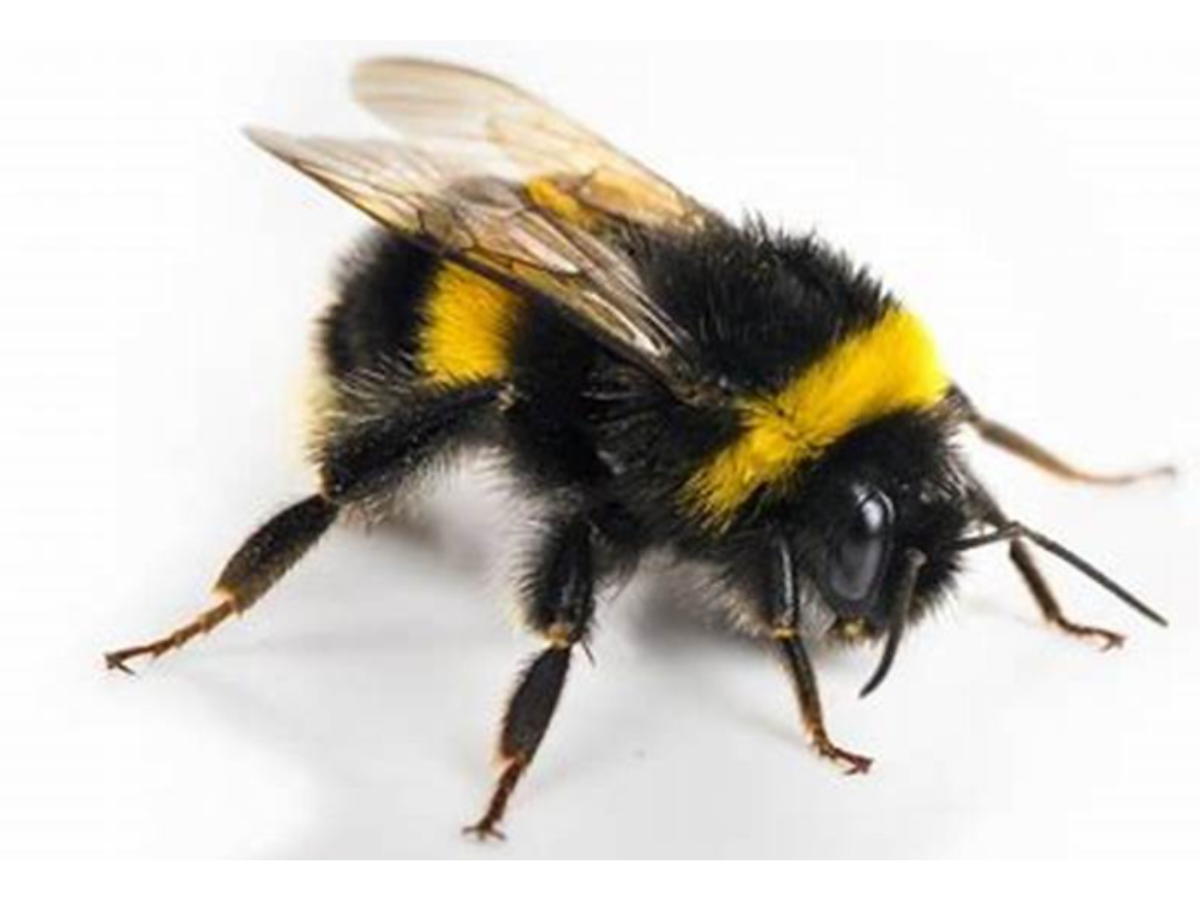
BUMBLE BEES
- Bumble bees are social insects
- They have a complete metamorphosis
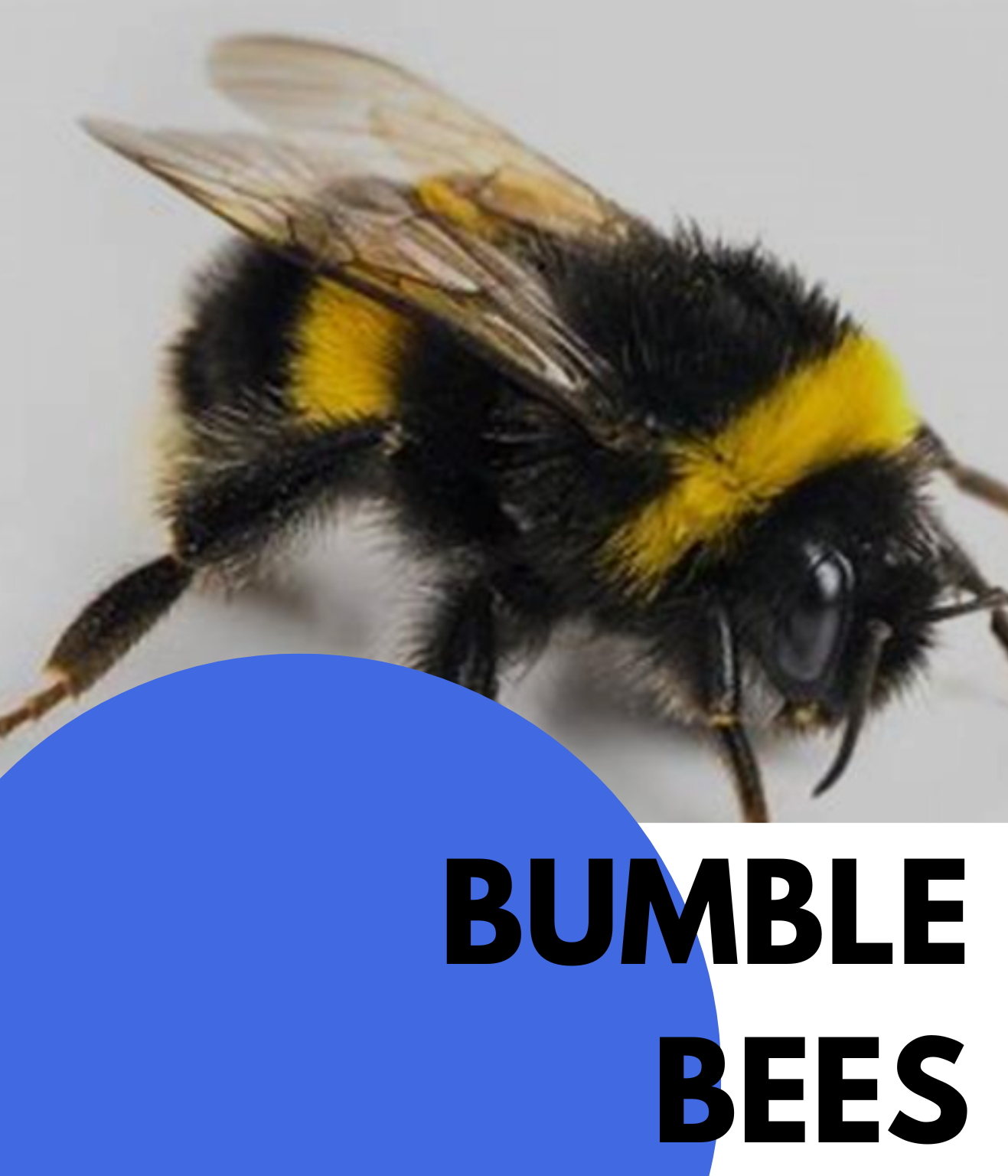
- They are ¾ of an inch long
- Yellow and black, much fuzzier than honey bees
- Usually nest in old squirrel or gopher holes, may also nest in protected structure voids
- Females have smooth stingers, can sting repeatedly, but not known to be aggressive unless disturbed
- Have small hives up to 50 members
- Bumble bees feed on pollen and nectar
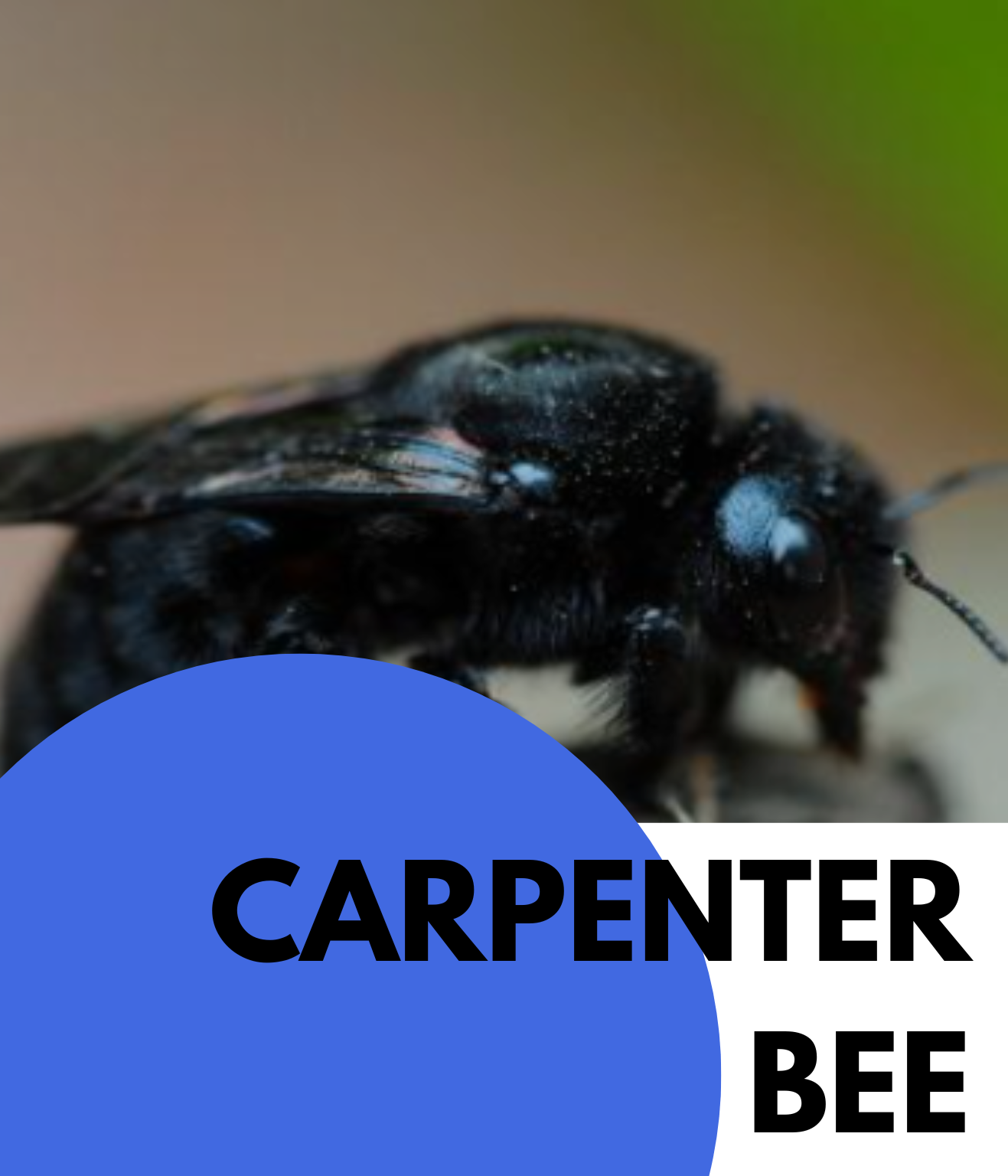
CARPENTER BEE
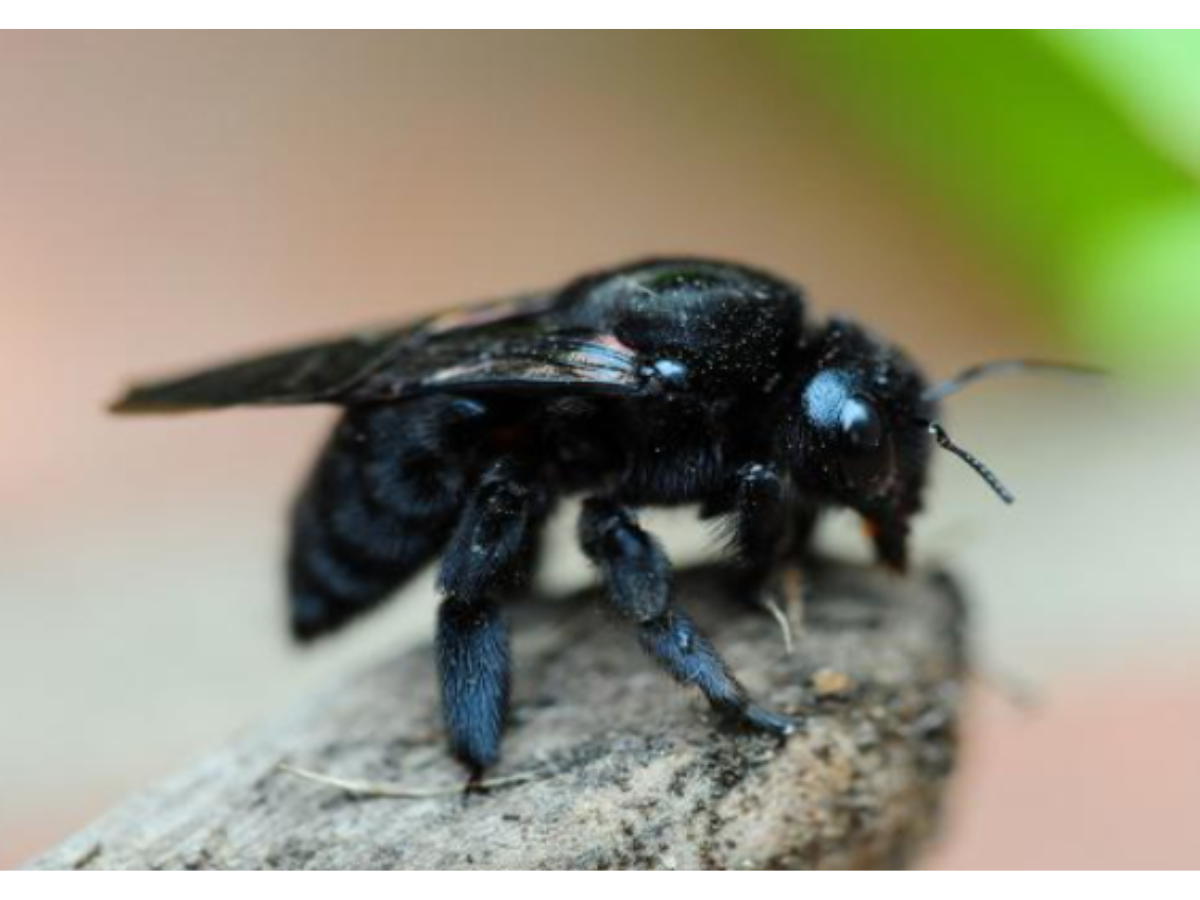
- 3/4 inch long, entirely black may have yellow thorax or shoulders
- Gaster or abdomen is a smooth shiny black
- Usually located in eaves of structures or in fences, arbors
- In soft wood, usually redwood or cedar
- Queen mates and bores into wood about ½ to 1 inch & makes right angle turn
- After the right angle turn she can bore a tunnel up to 12 inches long
- She will lay an egg, deposit food (spiders), and seal the cells along tunnel
- Larvae pupate in cells, over winter, and then adults emerge in the spring
- Holes are perfect circles approximately ½ inch diameter
- Carpenter bees are solitary insects = no worker or soldier castes

YELLOW JACKETS
- Goes through a complete metamorphosis
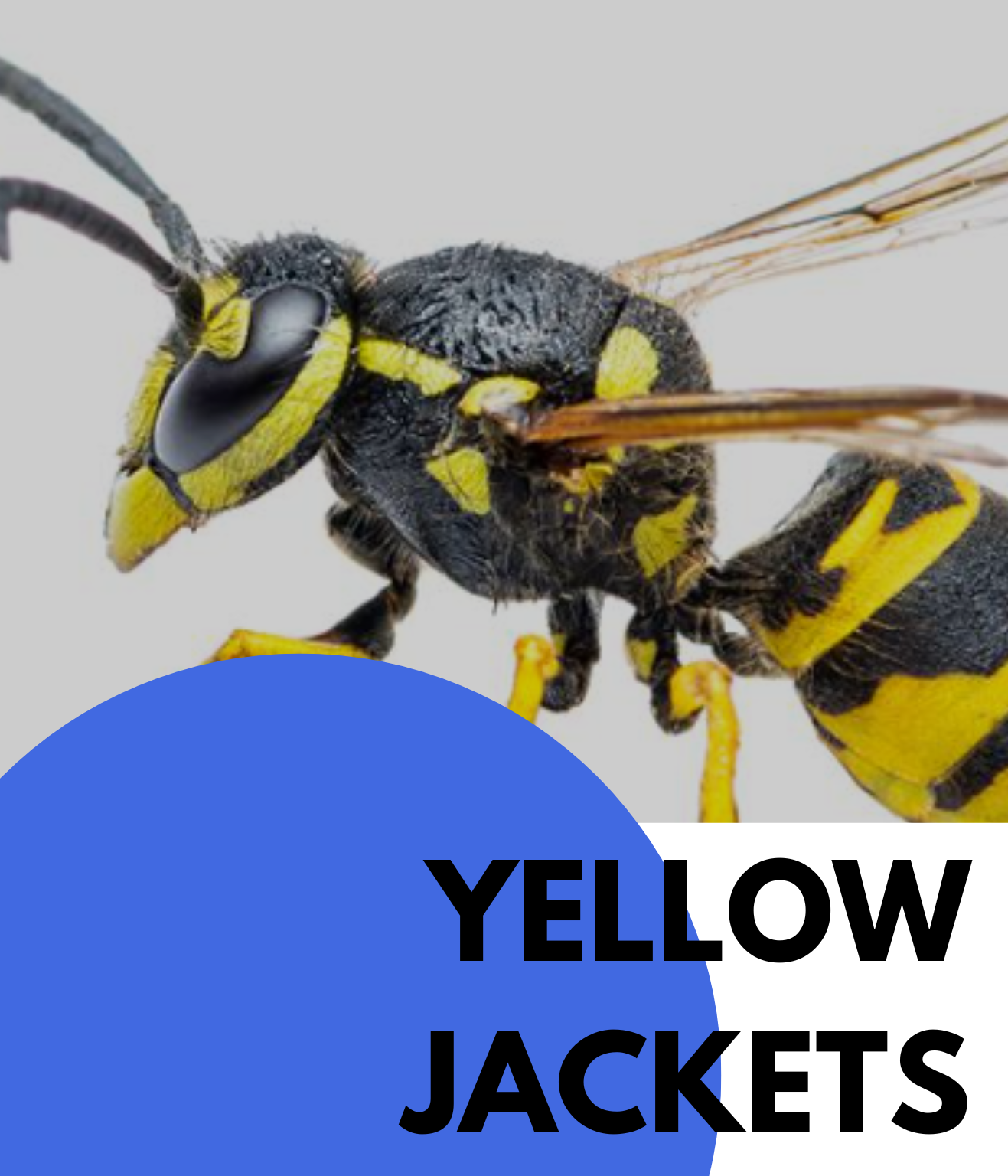
- Approximately ½ an inch long
- Yellow jackets are social insects
- They are yellow and black, and unlike bees are shiny with no hairs
- Usually nest at ground level in old squirrel or gopher holes, although they can also be found nesting in palm trees and in upper locations in structures
- Aggressive nest protectors, stingers have no barbs, will sting repeatedly
- Hive sizes start small in the spring and can grow to over 15000 in late summer
- Feed on insects and switches to sweets in late summer
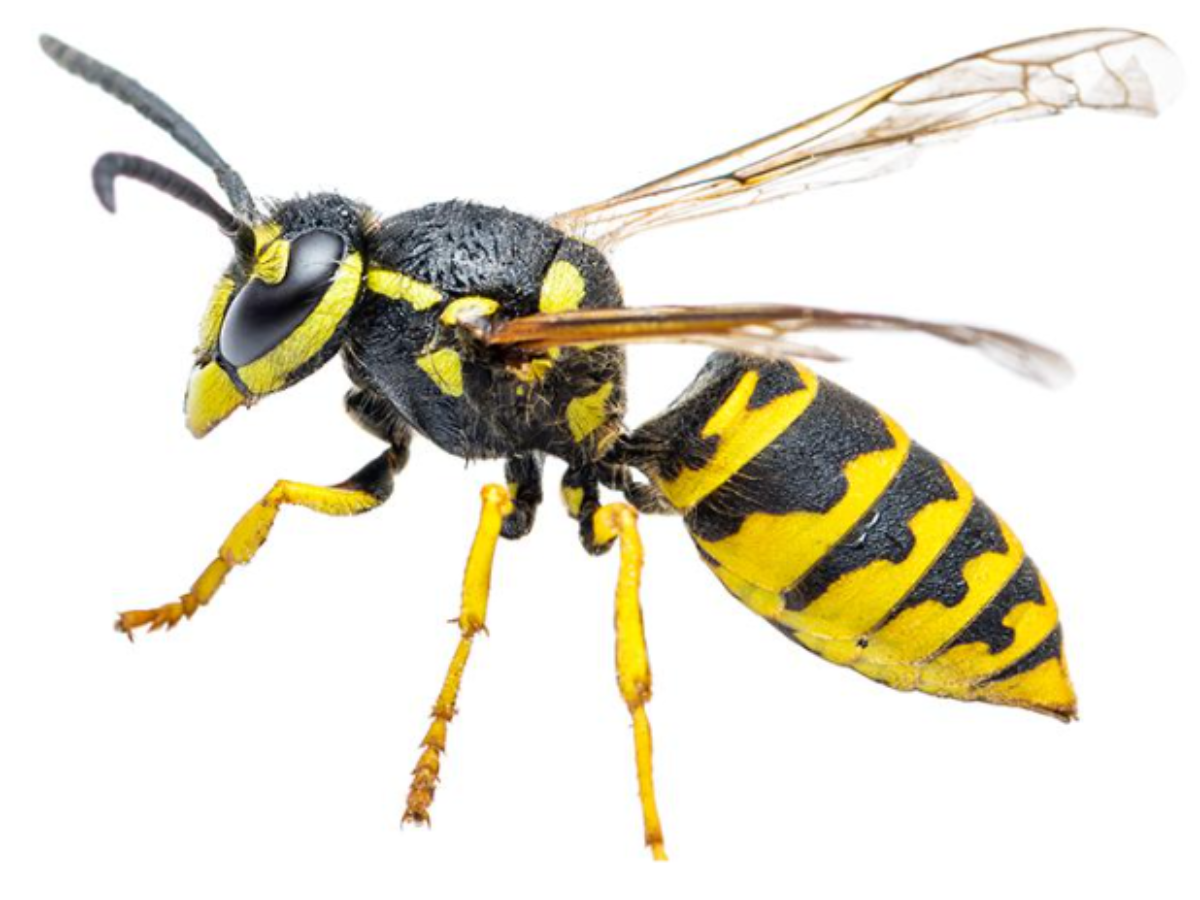
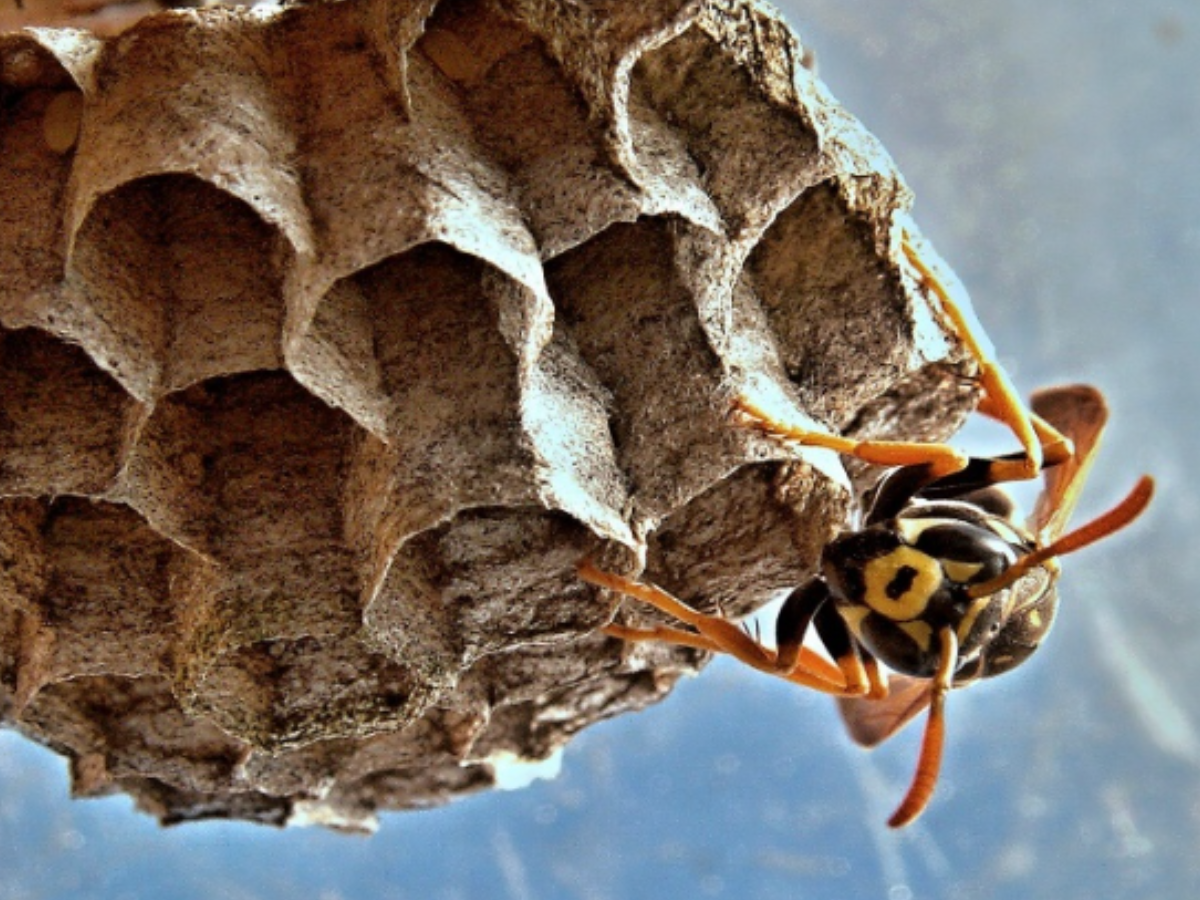
PAPER WASP
- Paper wasps are social insects
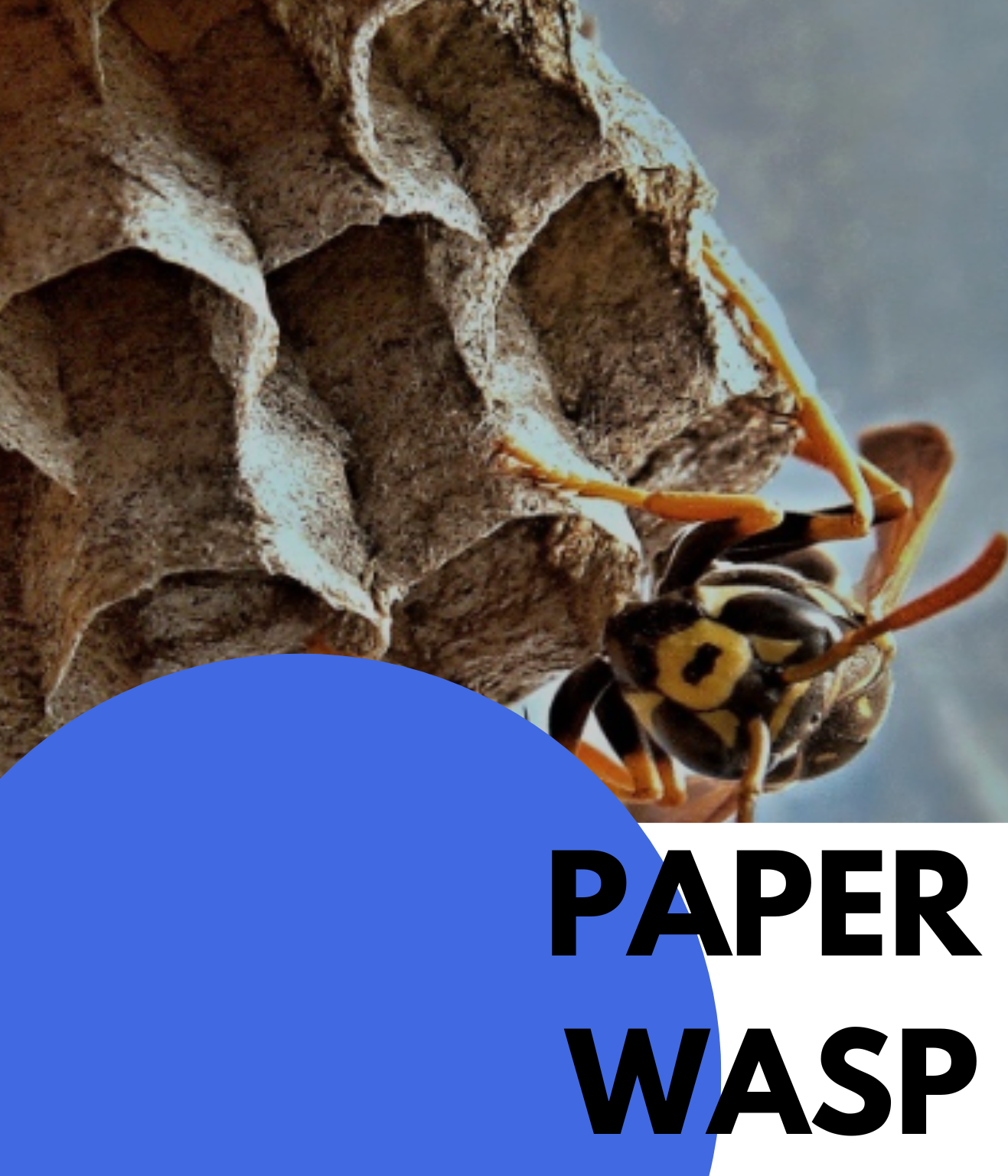
- They are ¾ to 1 inch in length, distinctive waist
- Black with yellow in color, shiny and smooth
- They build umbrella shaped paper like nests, with a cluster of six sided egg cells that they usually attach under roof eaves, in attic spaces or in garage ceiling beams.
- Nests can be as small as 20 egg cells and as large as 100.
- Larva feed on insect parts, adults feed on insects and sweets in late summer
- They have smooth stingers, not aggressive unless disturbed.
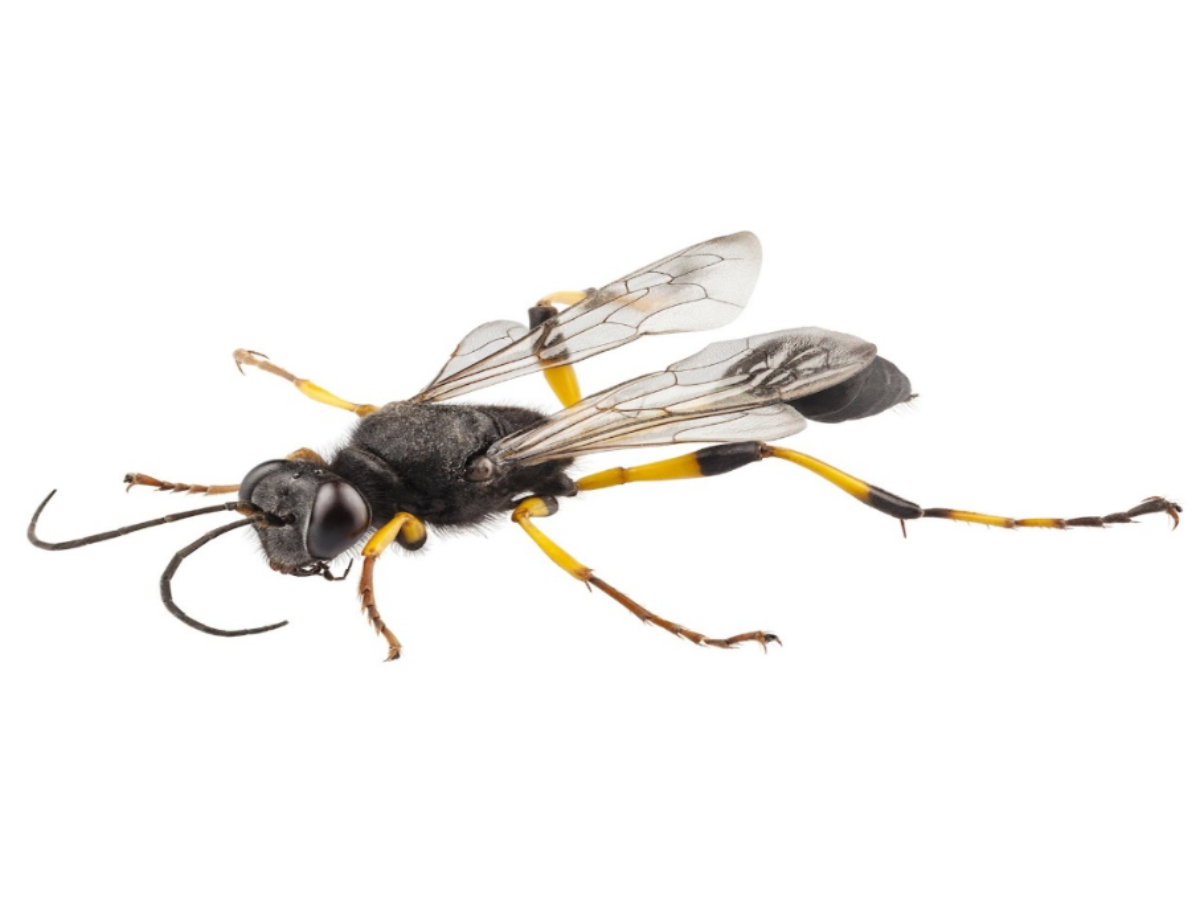
MUD DAUBER
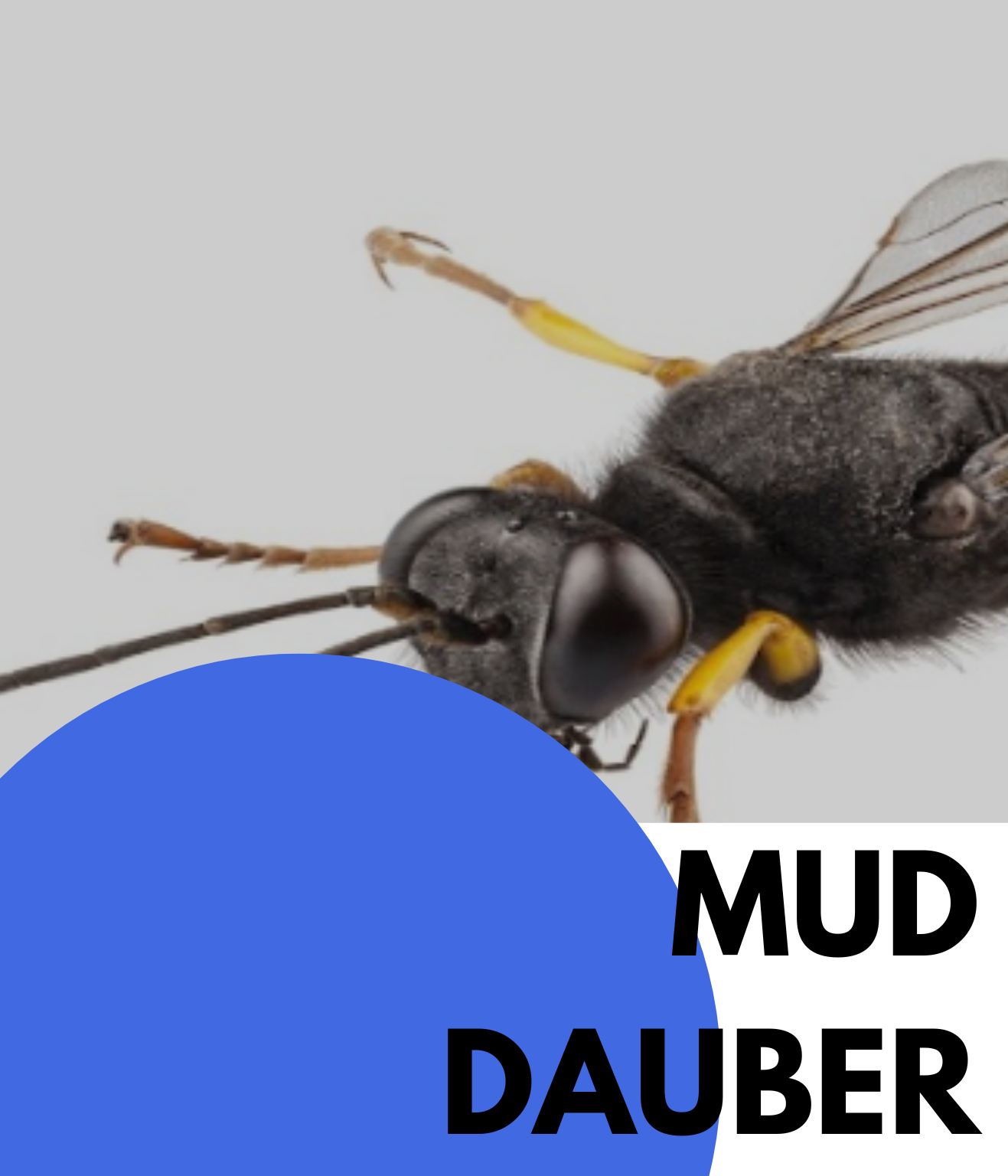
- ½ to 1 inch in length
- Goes through complete metamorphosis
- Body is primarily black with yellow markings on legs has distinctive waist
- Mud daubers are solitary insects
- The queen builds egg chambers of mud and attaches them under eaves, in attics and similar areas. She goes foraging for spiders which she stings, paralyzes, and puts into each chamber for the later emerging larva to feed on. Her last task is to lay an egg in each of the cells and seal them. The task is indeed her last task as she flies off and dies soon after.
It is important to remember that although some species of stinging insects are more aggressive than others; all can sting and should be approached with caution. Use protective clothing consisting of gloves, coveralls, and head protection.
STORED FOOD PRODUCT PESTS
Stored food product pests are those that infest grain products, dried plants, nuts, and processed foods containing those items. They fall into three categories, internal feeders, external feeders, and scavengers.
The stored food pests we will cover are found in 2 types of insects, moths and beetle. All of them go through a complete metamorphosis with the larval stage usually doing the most damage. The first indication of an infestation however is usually the appearance of adult stages on windows and around doorways.
Controlling stored food product pests is primarily a “Source Problem”. Once the source is found and eliminated, cleaning, limited pesticide applications , and monitoring potential and previously infested areas is the best way to prevent reoccurrences.
It is when bees and wasps nest in or near human activity areas that certain species become dangerous pests. This is due to their painful sting which in some individuals can cause severe allergic reactions. Allergic reactions, if not treated immediately could be life threatening.

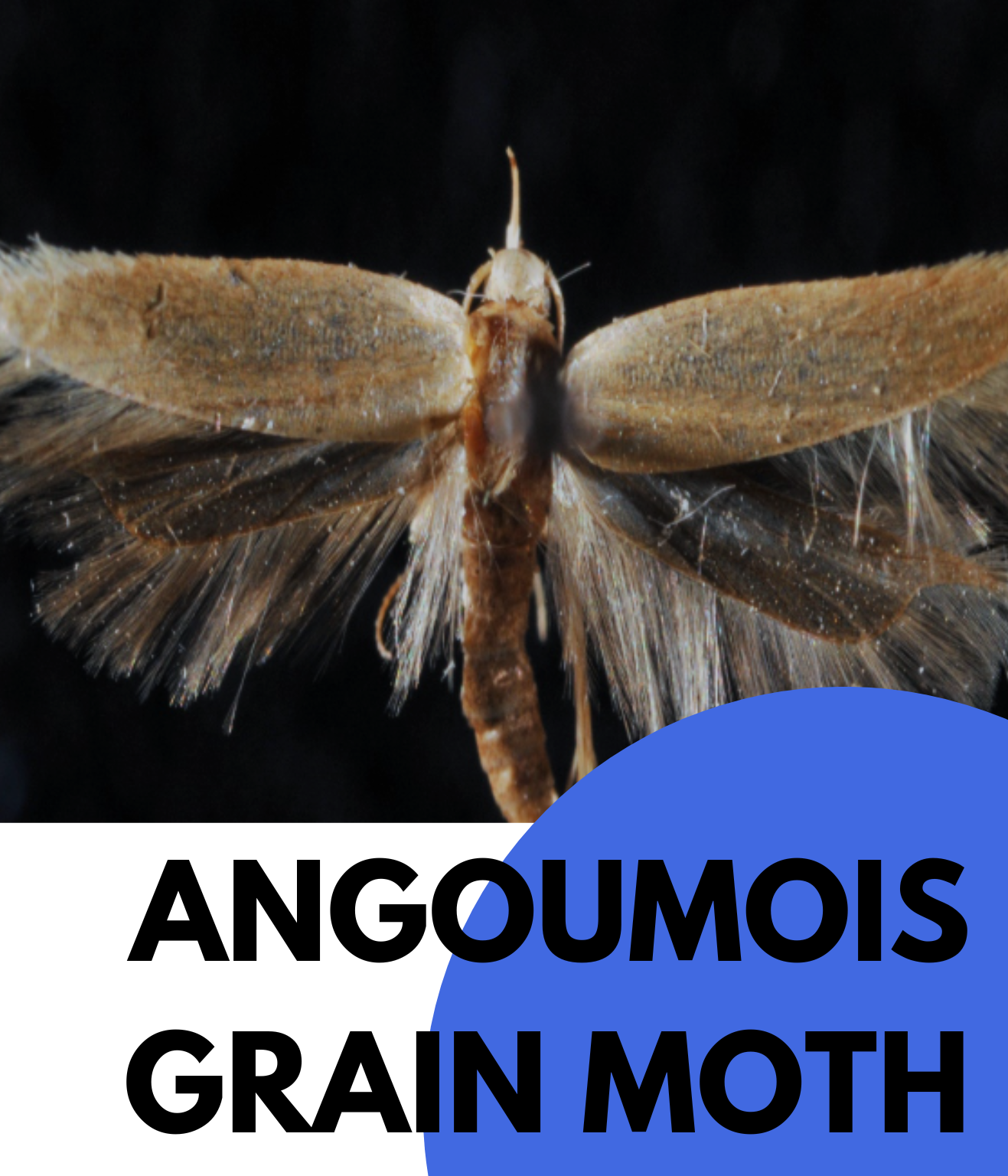
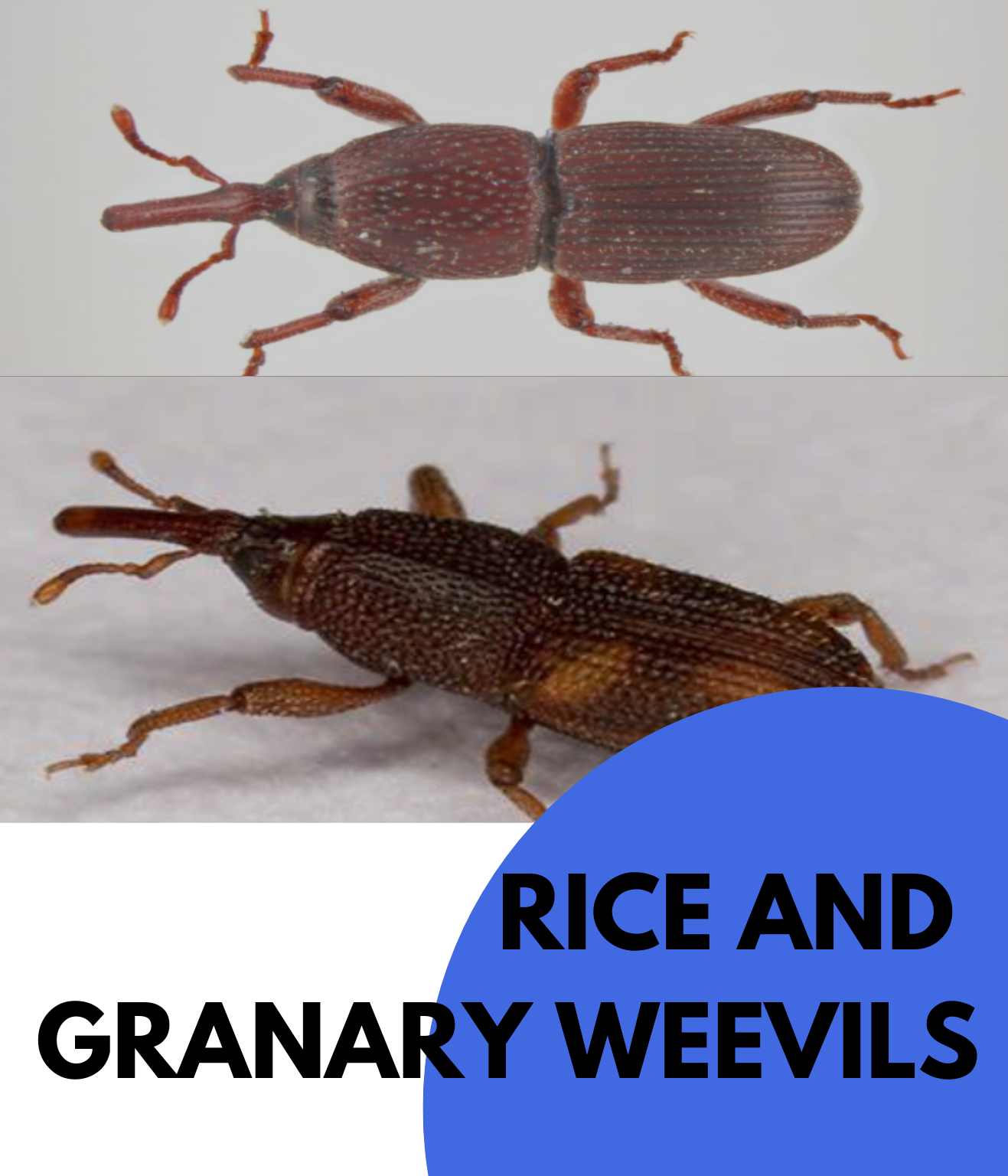
ANGOUMOIS GRAIN MOTH
- Approximately 1/3 of an inch long
- Buff to yellowish brown in color
- Fingerlike appendage protruding from hind pair of wing tips
- Feed on whole kernel corn, seeds, and decorations made from whole kernel products
- Adult glues egg on kernels, larva bore inside, eats kernel interior, pupates and new adult emerges.
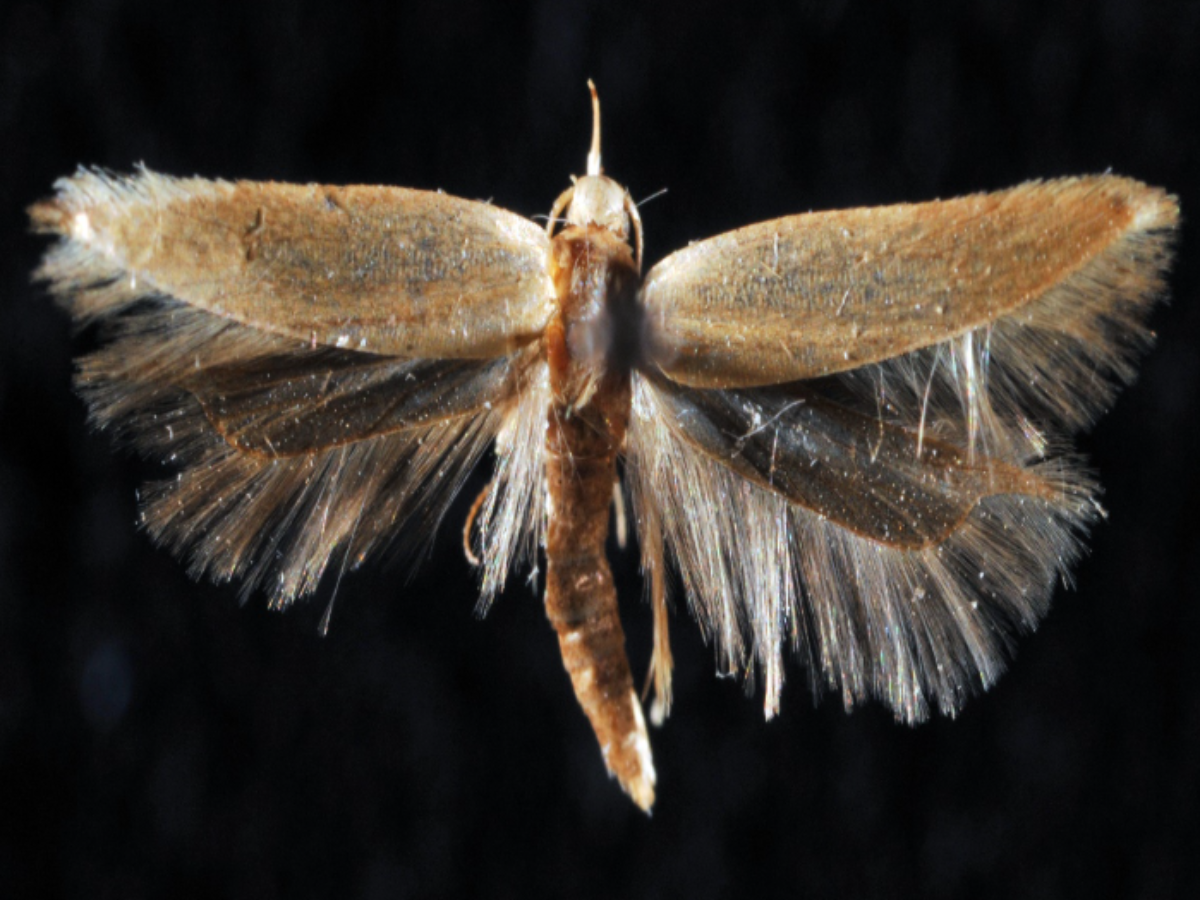
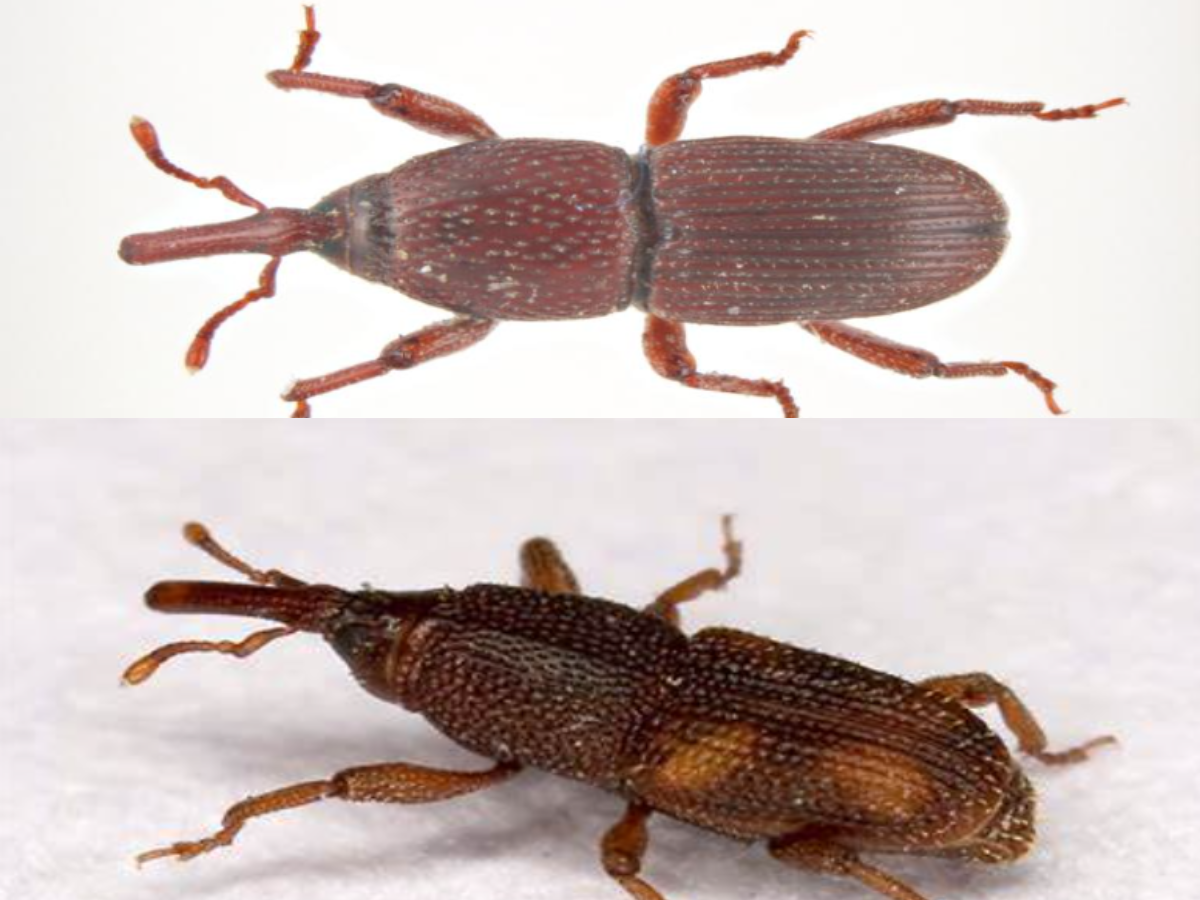
RICE AND GRANARY WEEVILS
- Approximately 1/8 of an inch long
- Distinct long snout or proboscis which is used in the kernel boring process
- The rice weevil is brown with 4 faint yellow spots on its wing covers.
- Granary weevil is uniformly brown in color
- Weevils feed on whole corn, peas, beans, and seeds. They can sometimes be found in macaroni and other types of pasta or processed food.
- Adult drills into a host kernel and deposits a single egg. The larva lives in and eats the interior of kernel, pupates, and emerges as an adult.
- Rice weevils fly, Granary Weevils do not

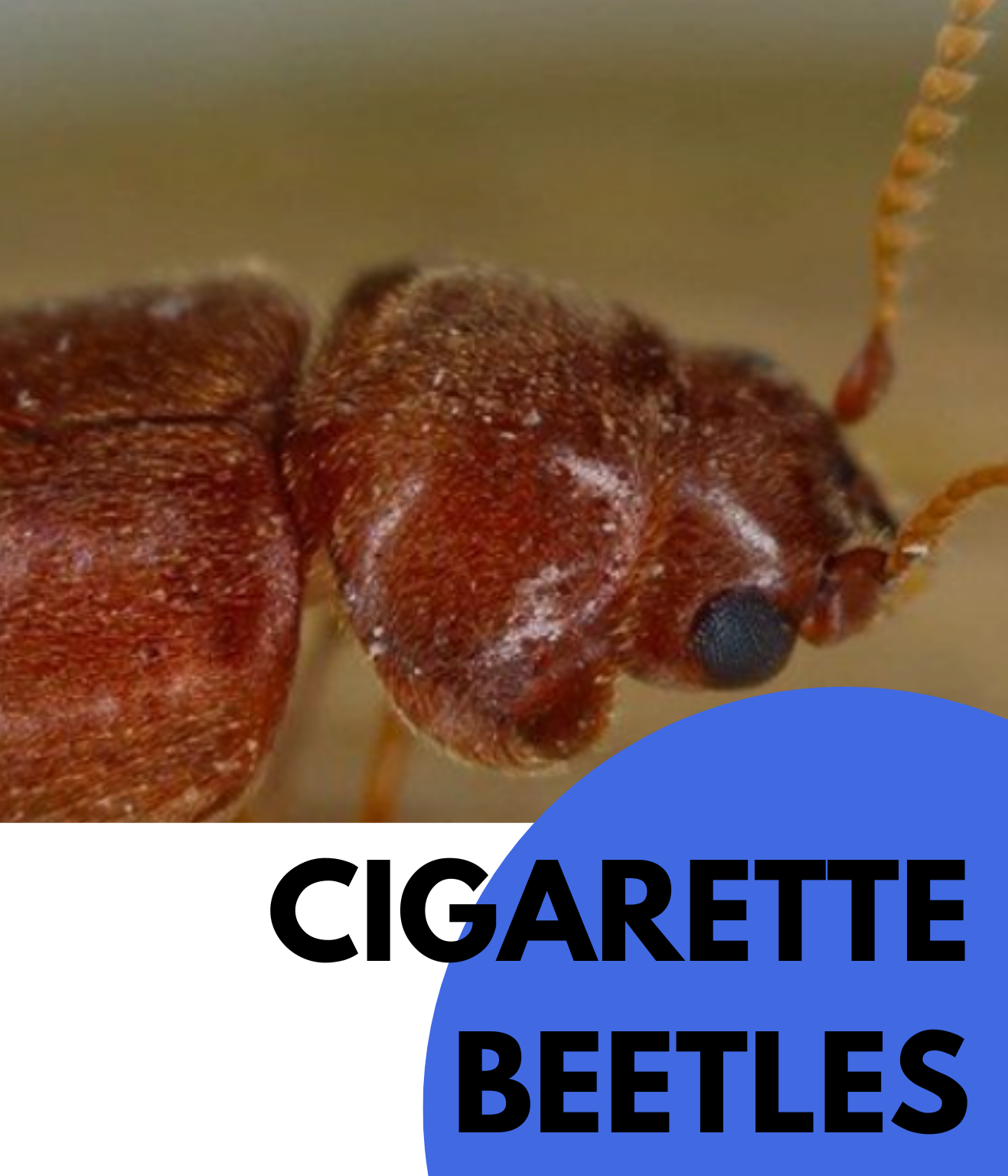
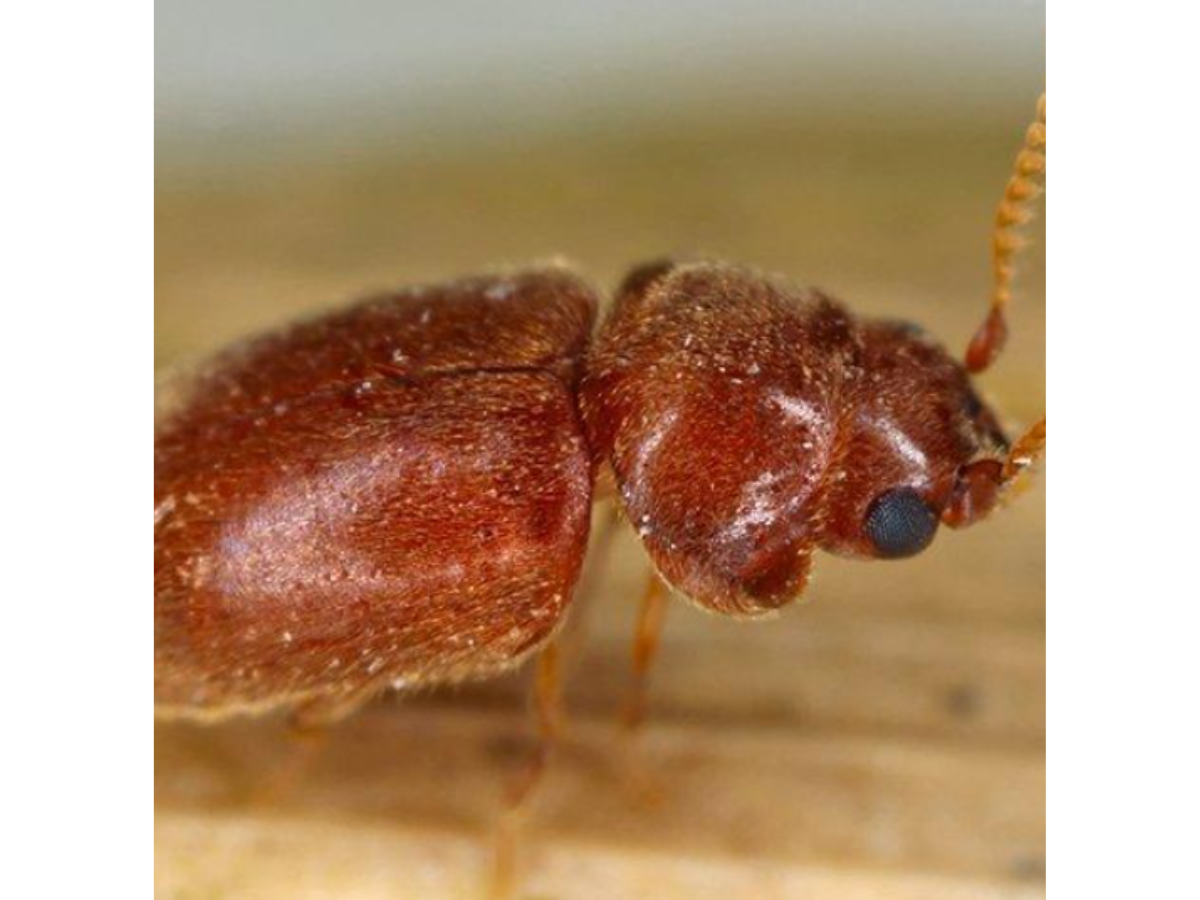
CIGARETTE BEETLES
- Reddish brown in color
- Approximately 1/10 of an inch long, oval in shape
- Smooth wing covering, head tucked down and under, barely visible from above
- Feeds on dried plant products such as tobacco, grains, and spices.
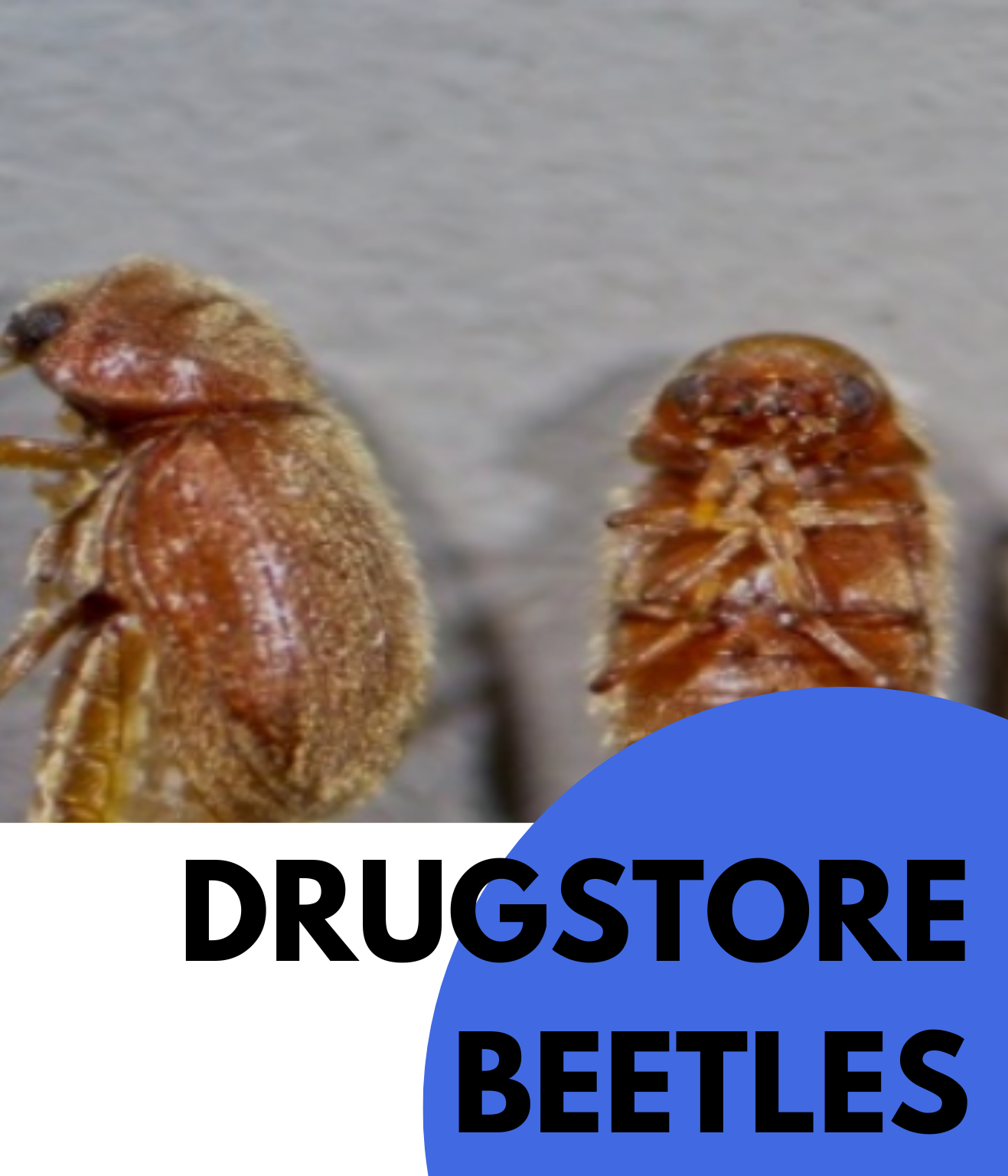
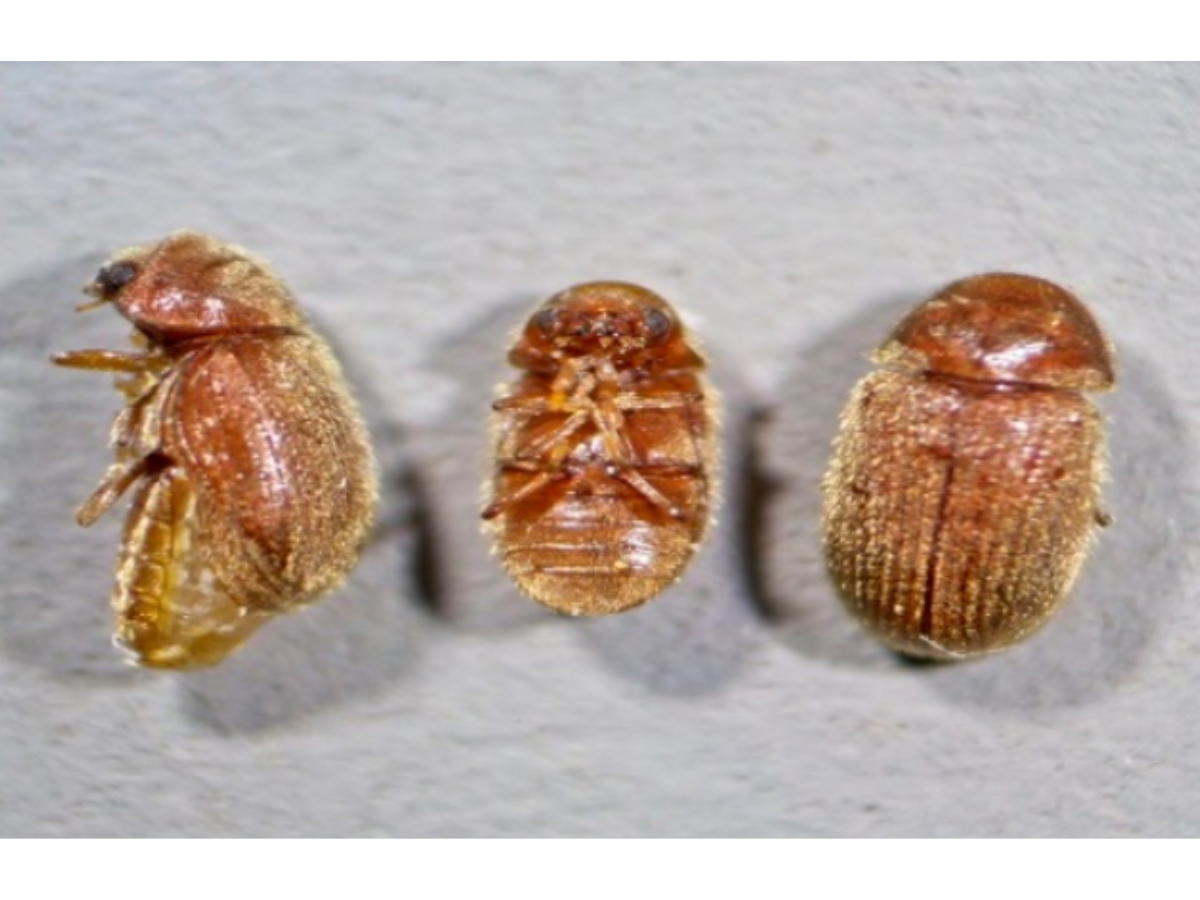
DRUGSTORE BEETLES
- Reddish brown in color with grooves running front to back on wing
- Approximately 1/10 of an inch long, not as round as cigarette beetle
- They feed on dried plants and dried plant products including grains, spices, nuts, etc. They also have been known to feed on pyrethrum powder and plant-based drugs, hence the name.
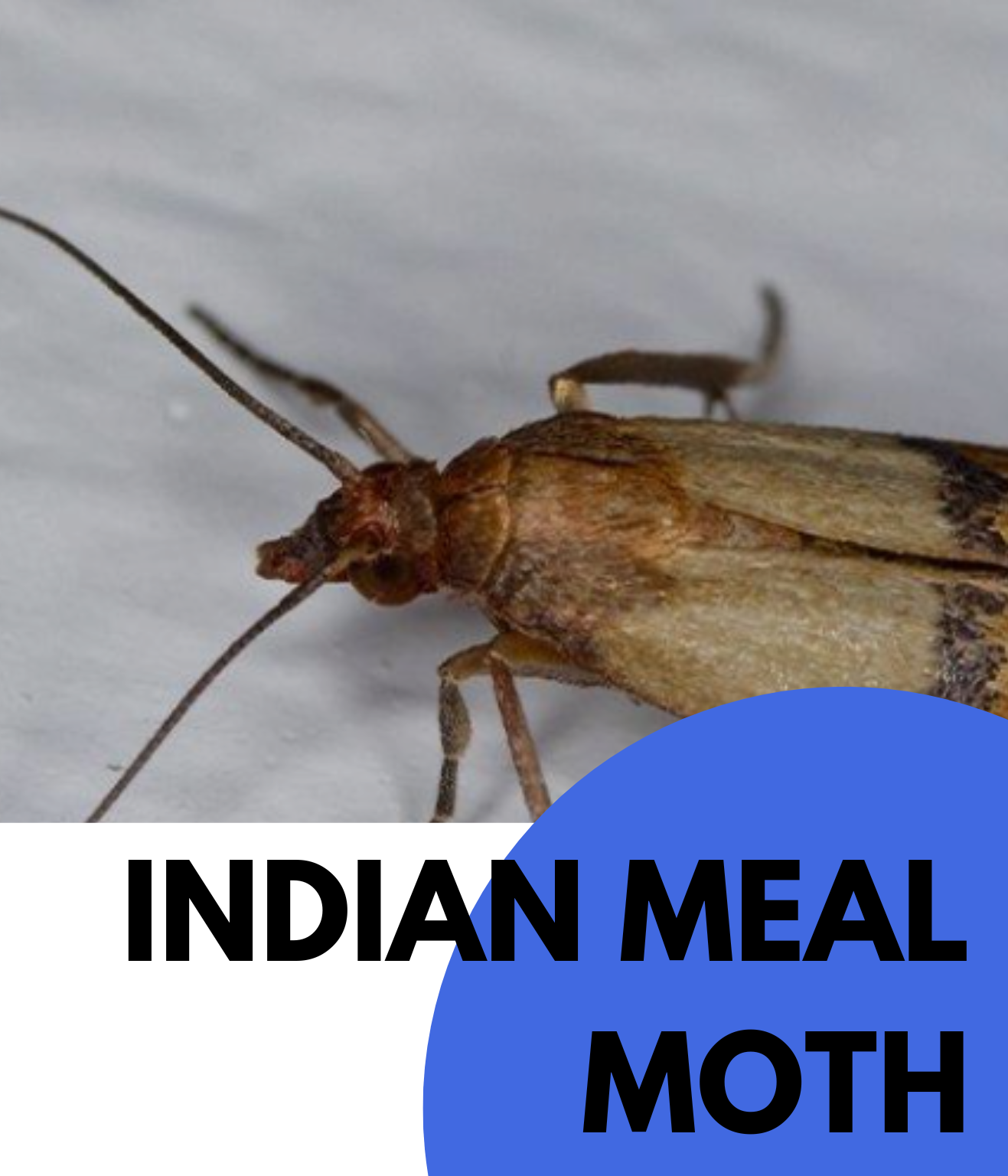
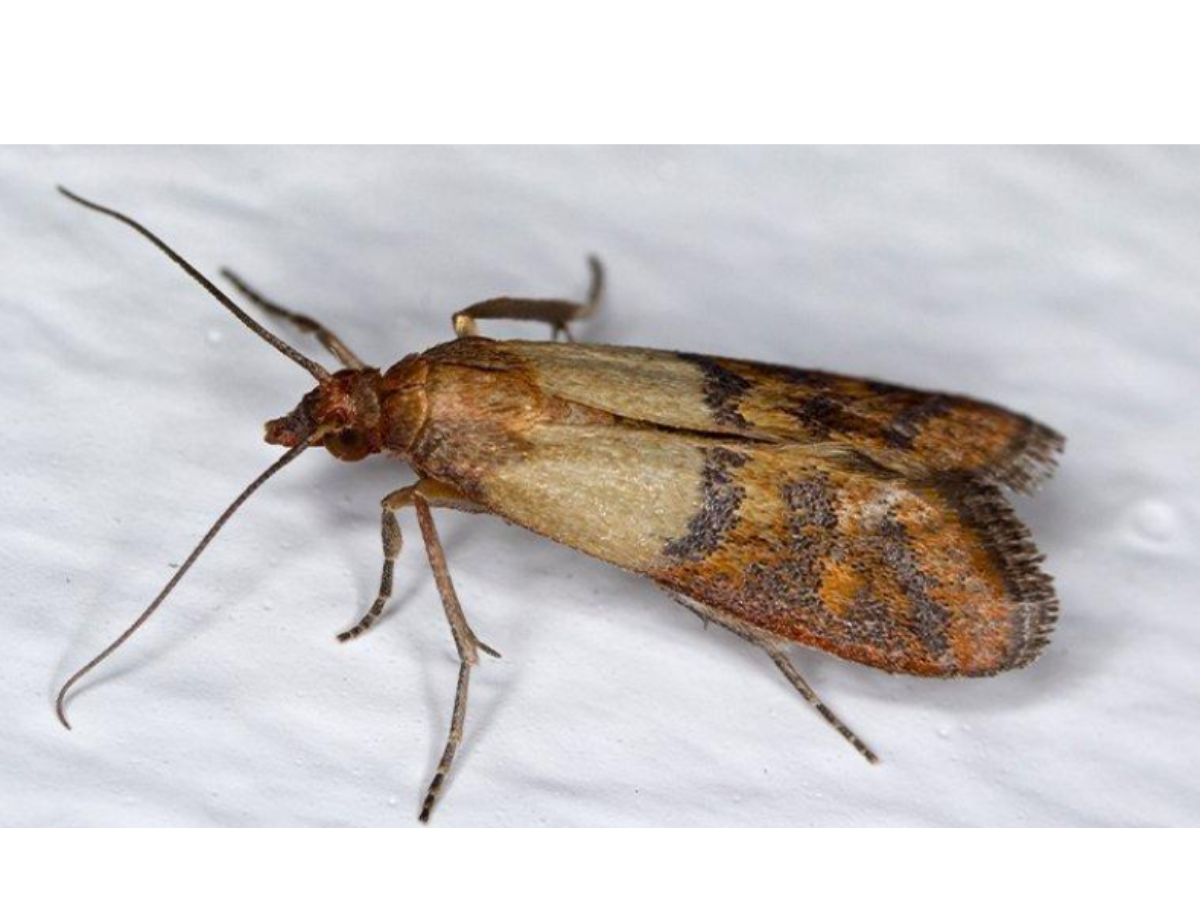
INDIAN MEAL MOTH
- Approximately 3/8 of an inch long
- When the wings ae folded, the first half appear to be gray and the tips appear to be reddish brown or bronze colored. The head and thorax are reddish brown
- Originally a major pest of dried fruits, also infests grain, pastas, nuts and grain products
- Contaminates foods with its webbing, and tends to hang its pupa case from kitchen ceilings, characteristically flies at night in a zigzag pattern.

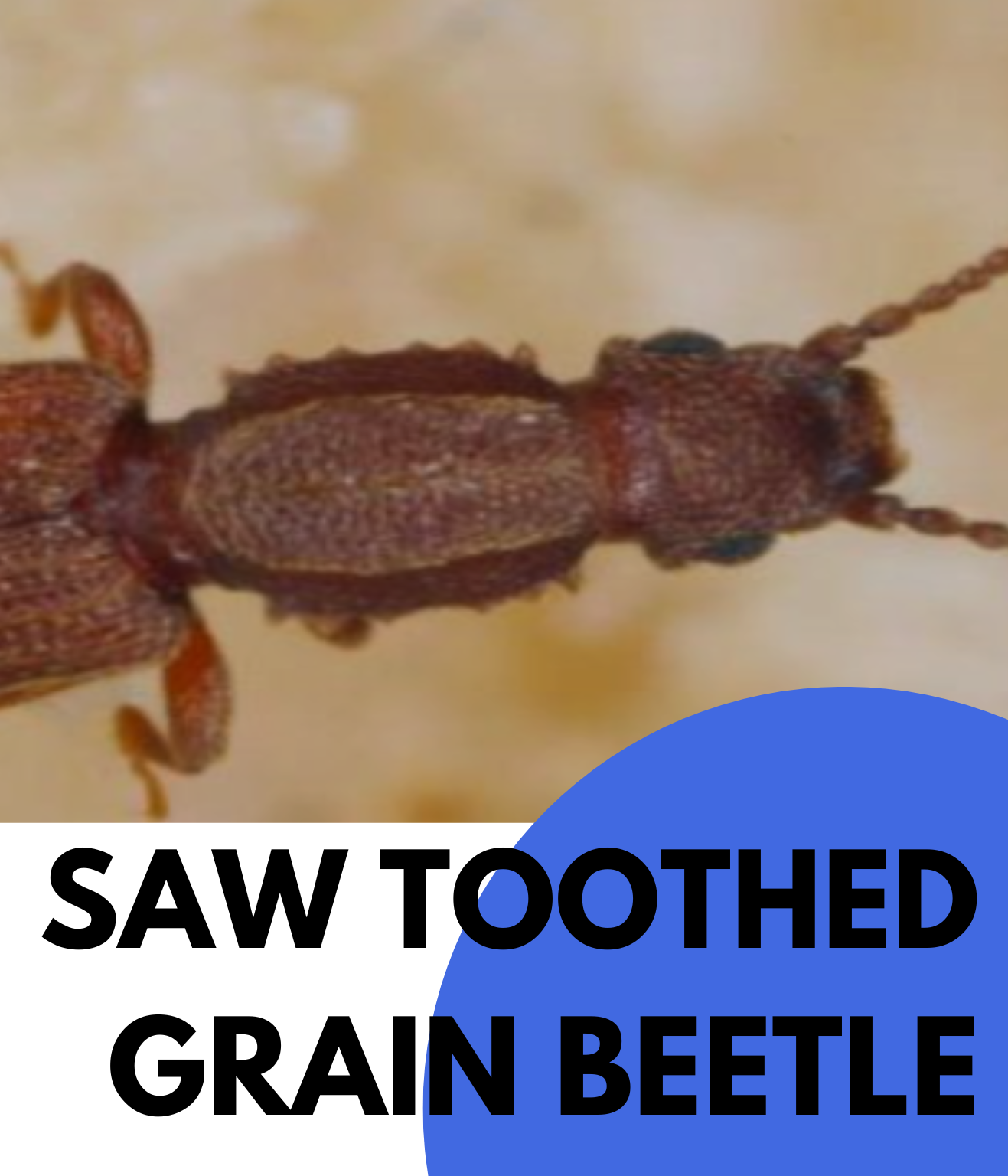
SAW TOOTHED GRAIN BEETLE
- Approximately 1/8 of an inch, very flat making it hard to detect
- Brown in color with 6 saw teeth on each side of the thorax
- Feeds on flour, meal, sugar, drugs, dried fruit, and chocolate.
- Easily penetrates poorly packaged materials and can go undetected for long periods of time.
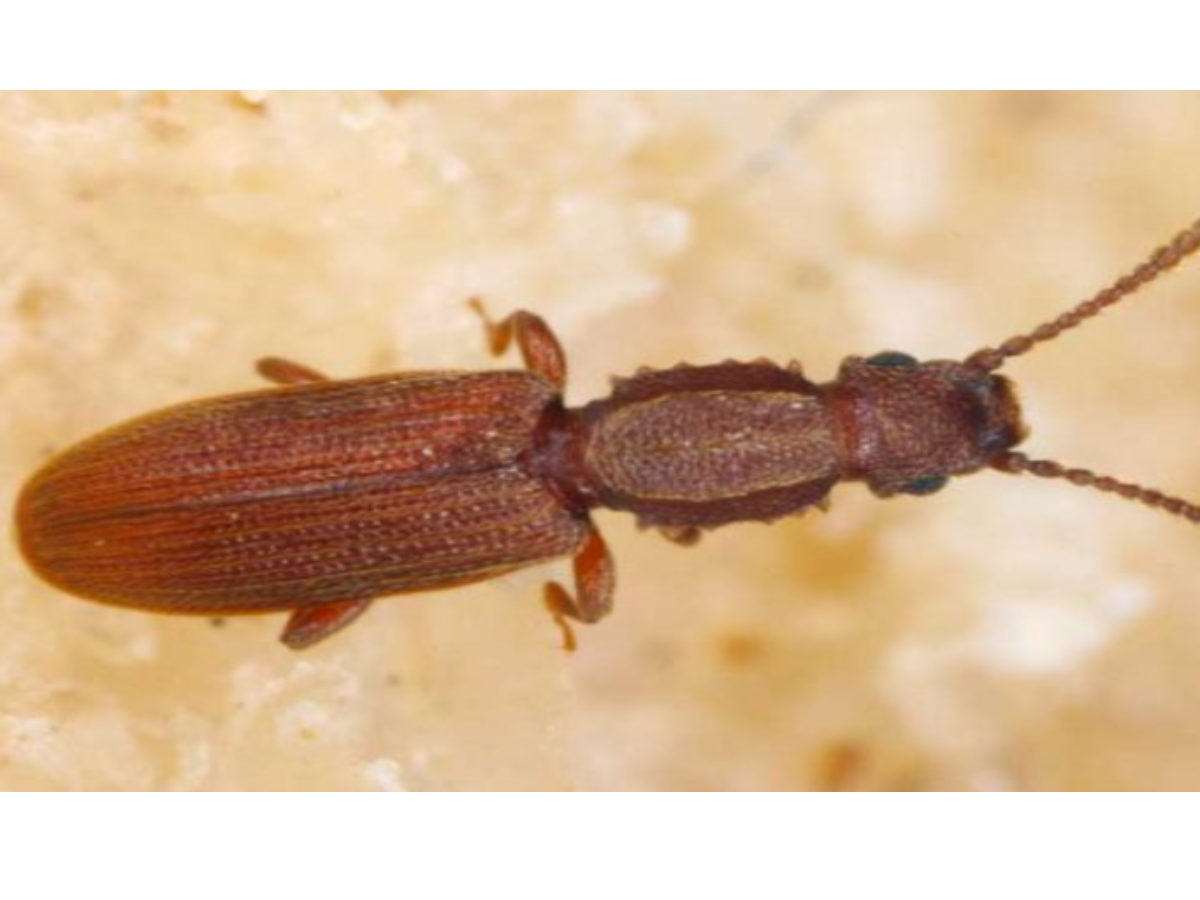
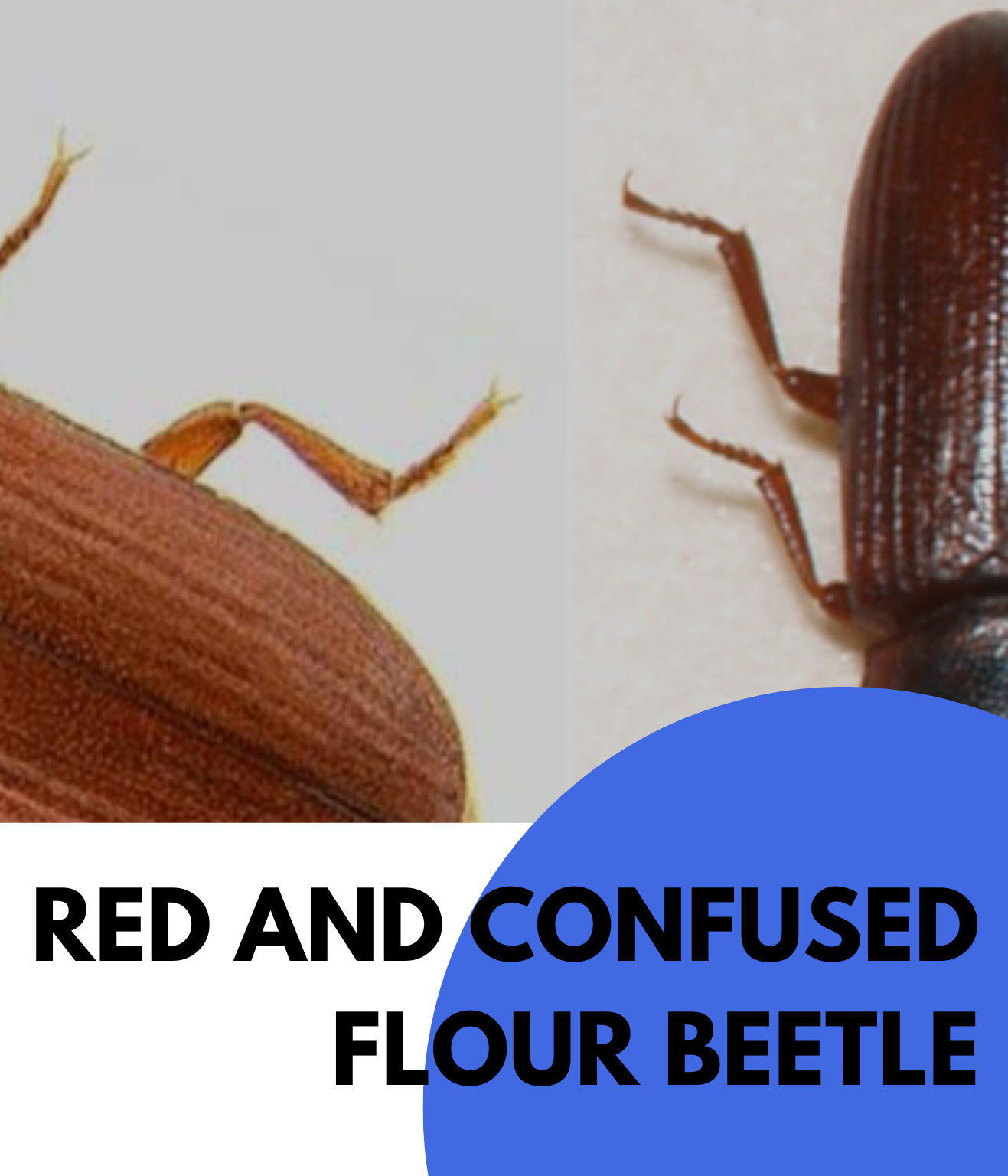
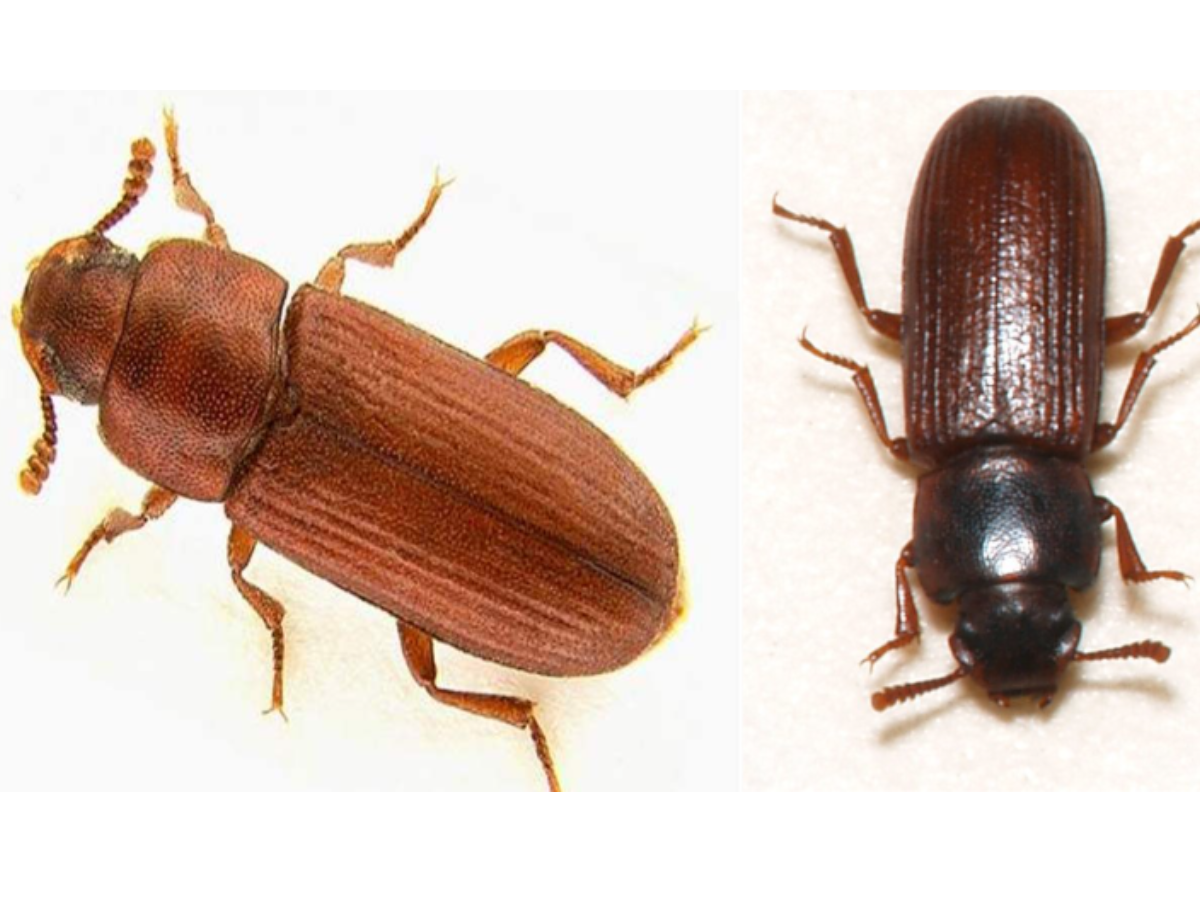
RED AND CONFUSED FLOUR BEETLE
The red flour beetles antenna club grows abruptly, ending in 3 large segments, the confused flour beetles club segments increase gradually ending in 4 segments. The sides of the red flour beetles thorax is curved while the confused flour beetles sides are straighter. Otherwise they look identical.
- Approximately 1/8 of an inch long and flat
- Both reddish brown in color
- Red flour beetle flies, Confused does not
- These beetles feed on dried plants, grain, flour, chocolate, nuts, and seeds
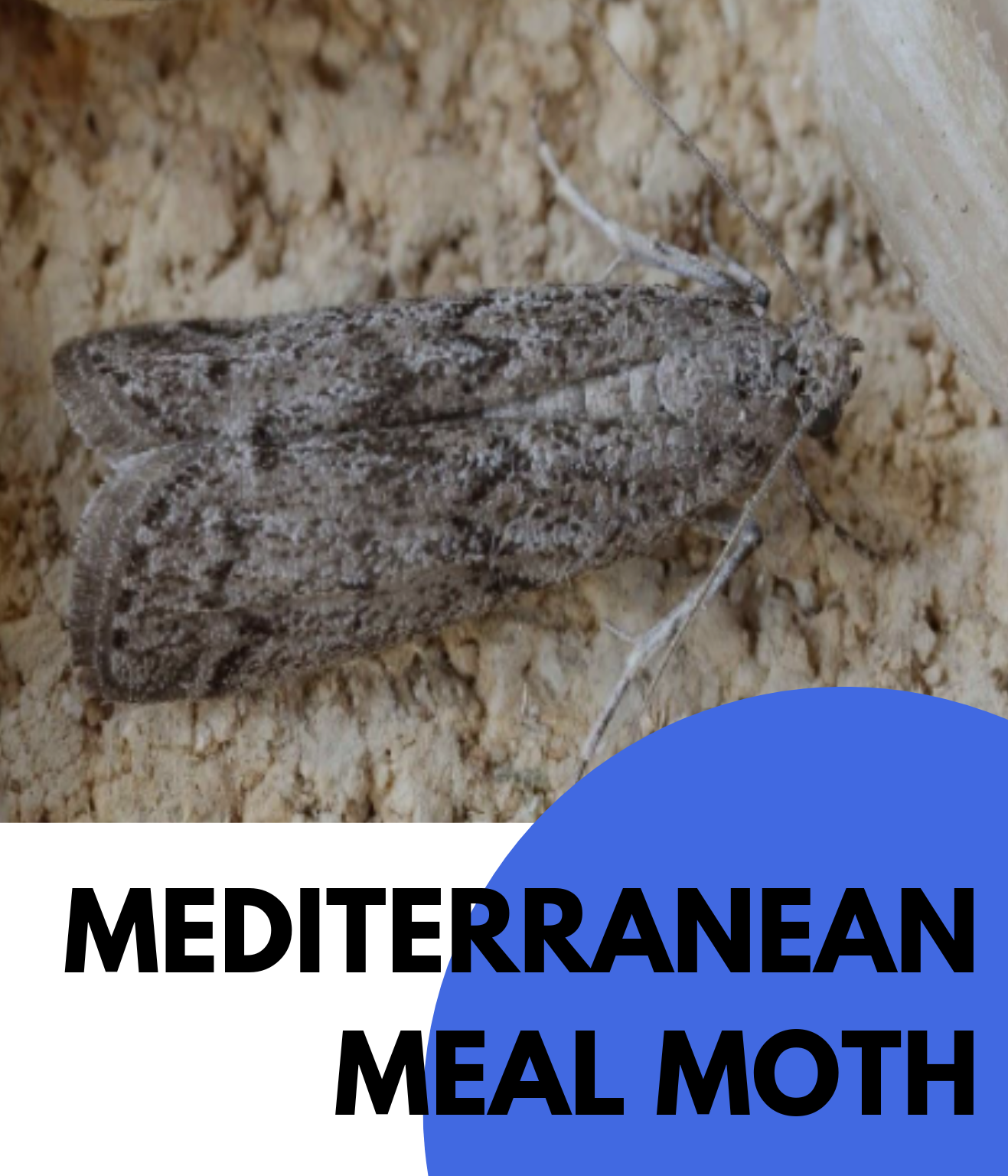
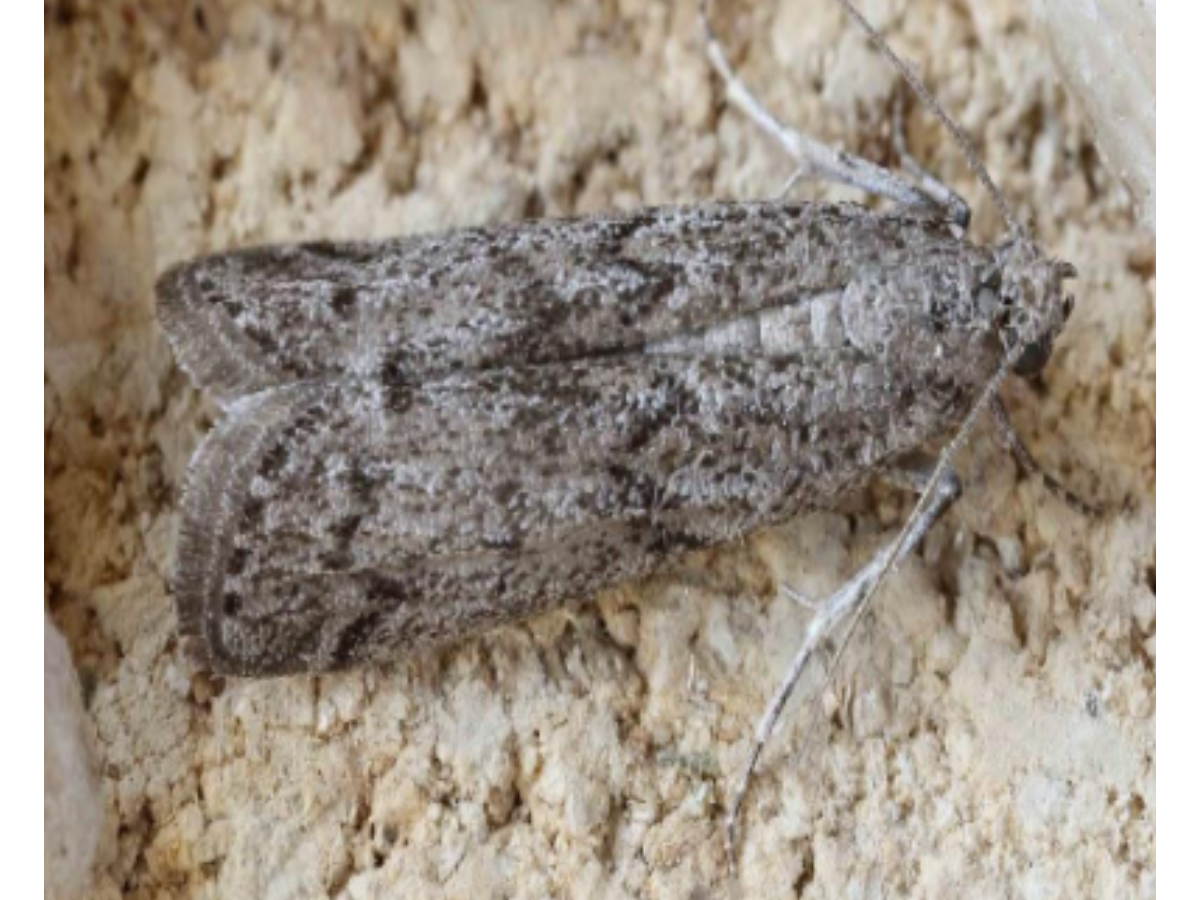
MEDITERRANEAN MEAL MOTH
- Approximately 3/16 of an inch long.
- With wings closed a mottled pale gray with 2 crossing zigzag lines.
- When at rest, raises its head and tail in a distinctive curve.
- They feed on flour, dried fruit, nuts, chocolate, and spices.
FABRIC PESTS
Fabric pests attack and live off of furs, feathers, and natural fibers such as linen, silk, cotton and wool. Since the introduction of synthetic fabrics, fabric pests have become much less of a pest control problem than in the past. Fabric pests, similar to stored food pests, are a source problem.
If all inested material is not located, treated or removed, the problem will persist. Fabric pests are typically either a beetle or a moth and have a complete metamorphosis with a larval stage doing the most damage. Locating and eliminating the source, thoroughly cleaning and vacuuming the infested area, and applying appropriate pesticides will effectively control these pests. Using Pheromone traps to detect future infestations is the last step.

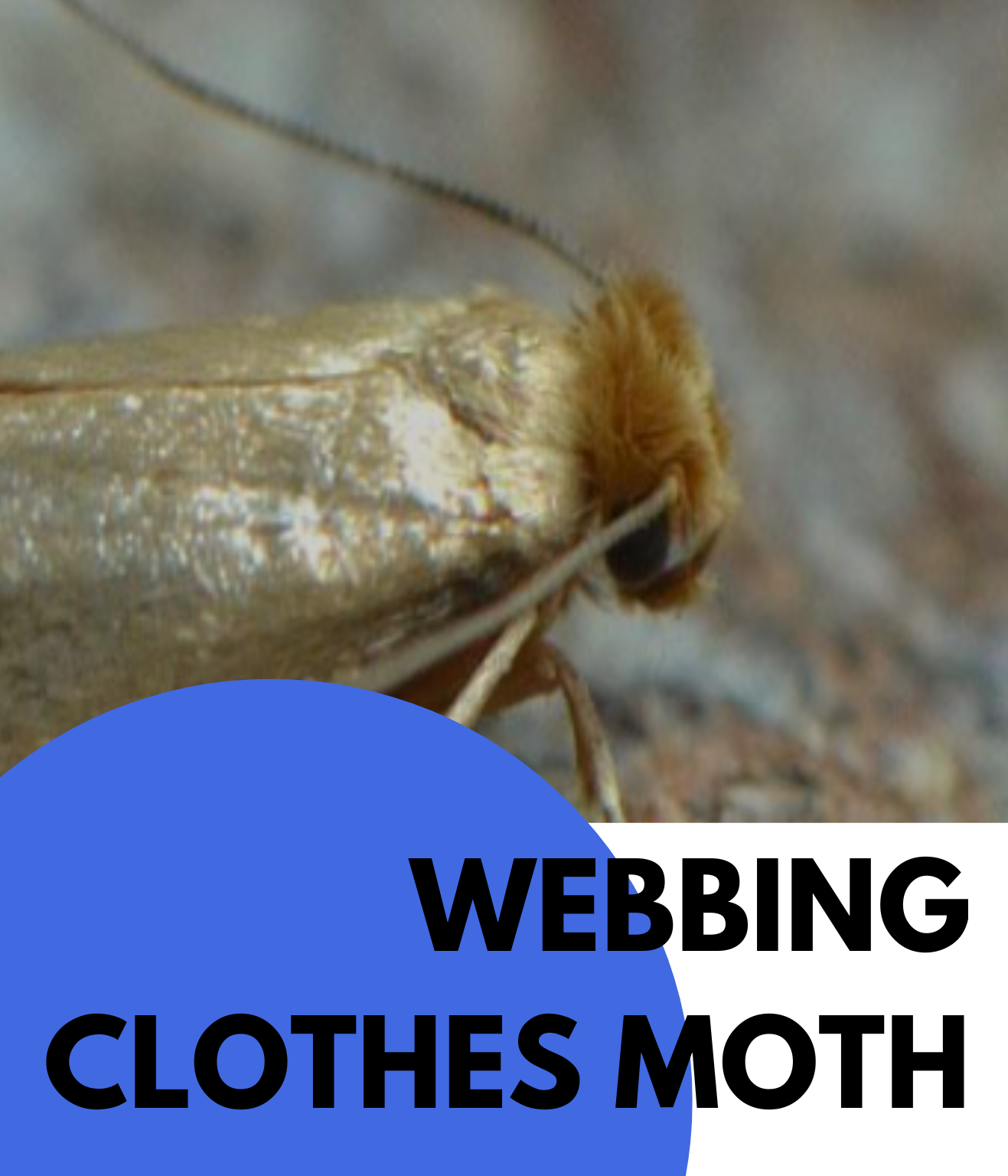
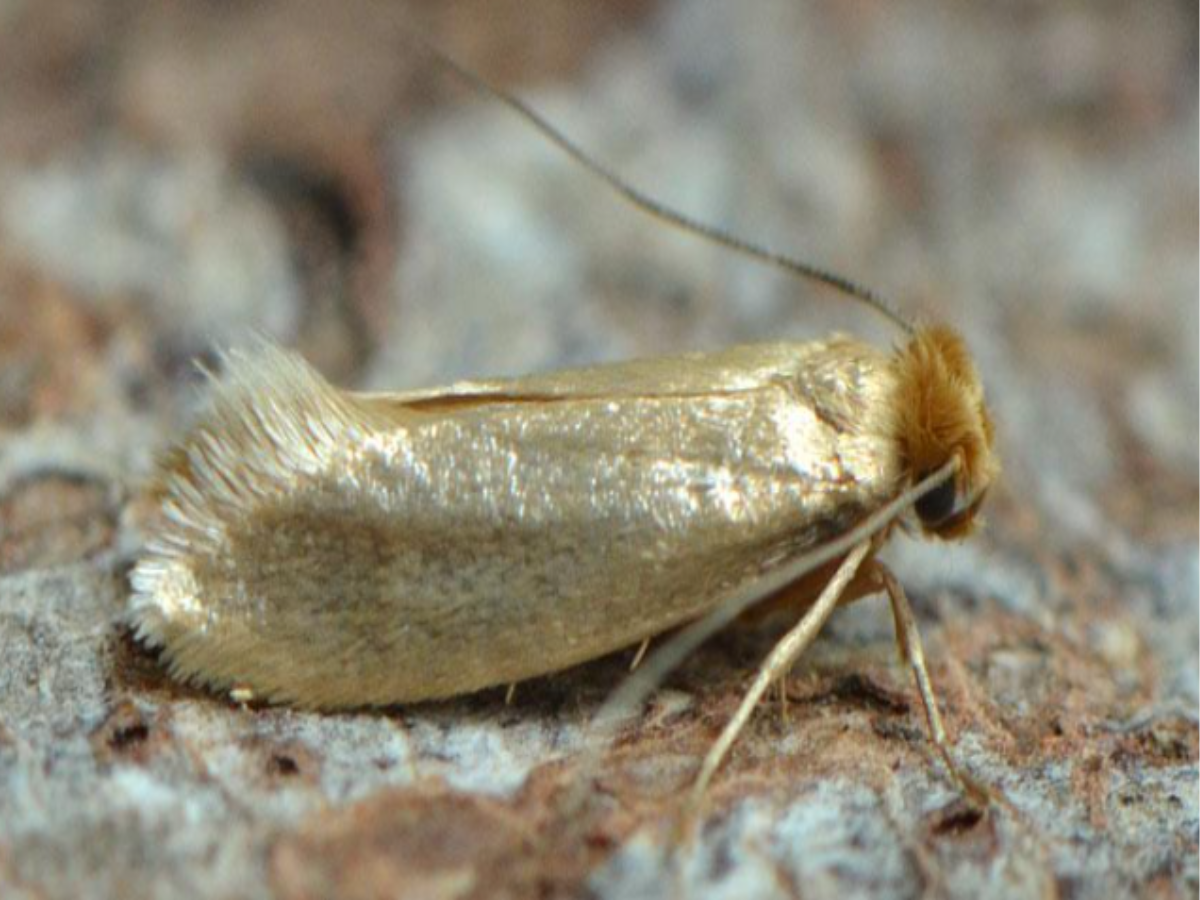
WEBBING CLOTHES MOTH
- The most common clothes moth
- Buff wings, gold body, reddish tuft on head
- Approx. ¼ inch long with wingspan ½ an inch
- Larval stage spins web on fabric it attacks for protection
- Feeds on wool, feathers, fur, hair, leather, and lint, occasionally feed on other natural fibers
- Prefers material that has been stained with perspiration or urine
- Clothing underarms, seams, pleats, or waist band will usually be damaged first.
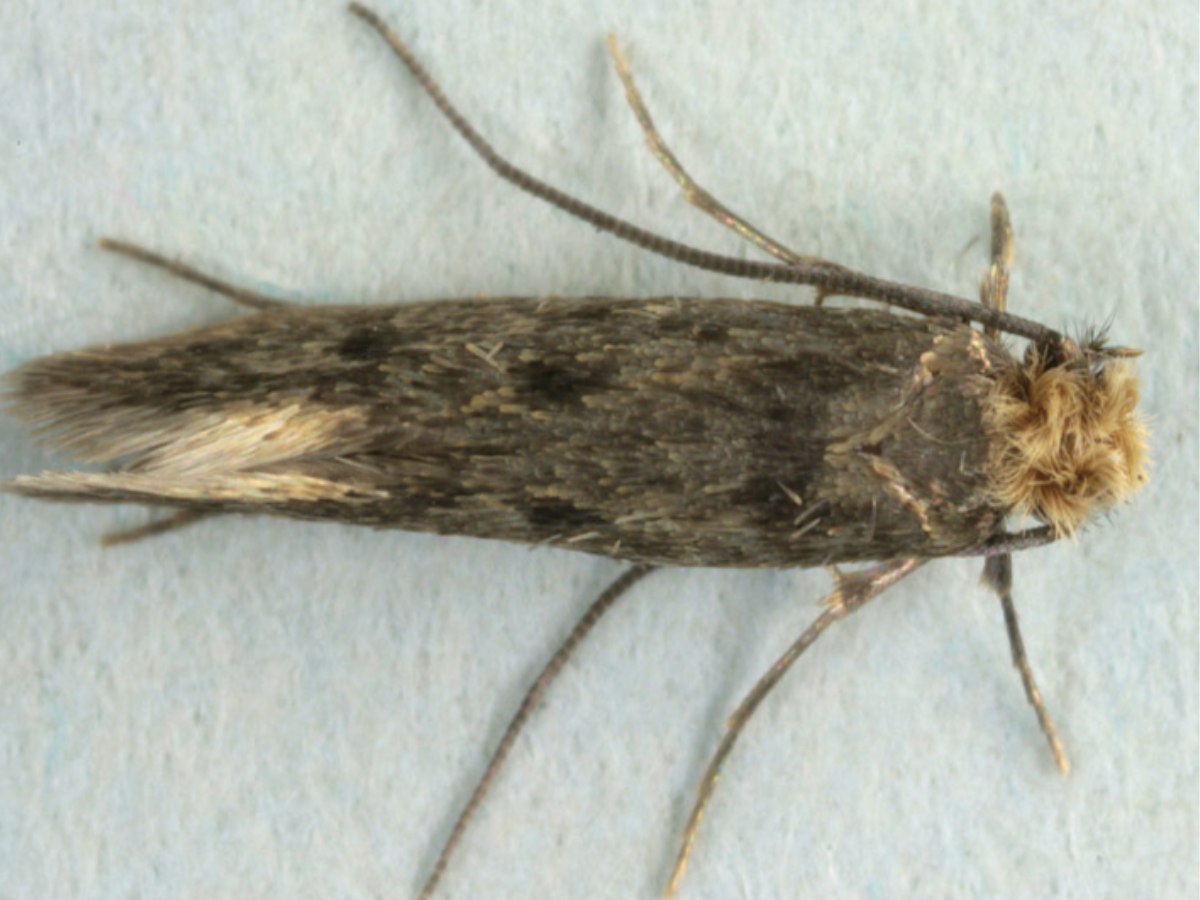
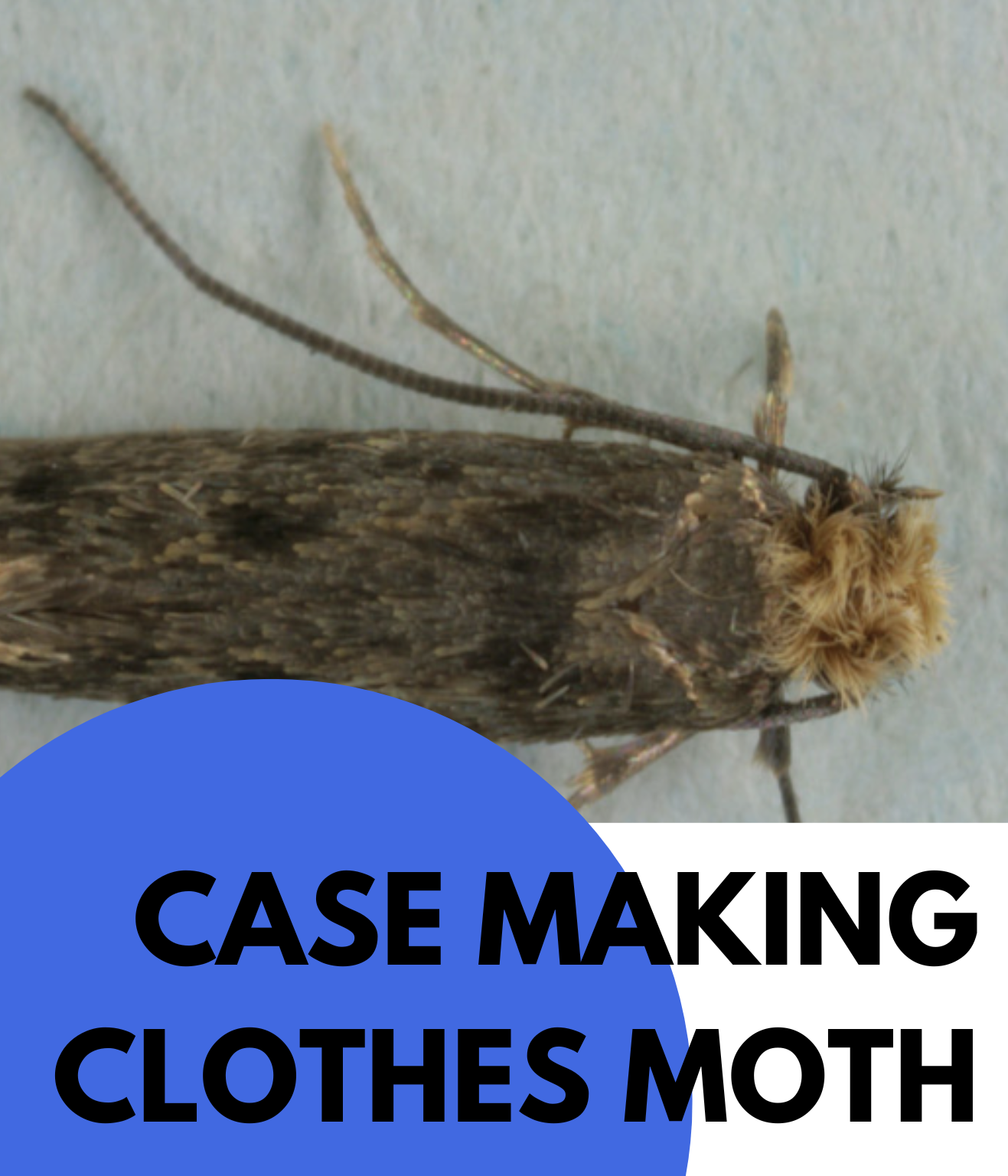
CASE MAKING CLOTHES MOTH
- Body approximately ¼ of an inch long with wingspan ½ an inch
- Brown with dark spots on wing
- Larval stage spins cigar-shaped protective case which it lives in and carries with it until it pupates.
- Feeding habits same as the webbing clothes moth.